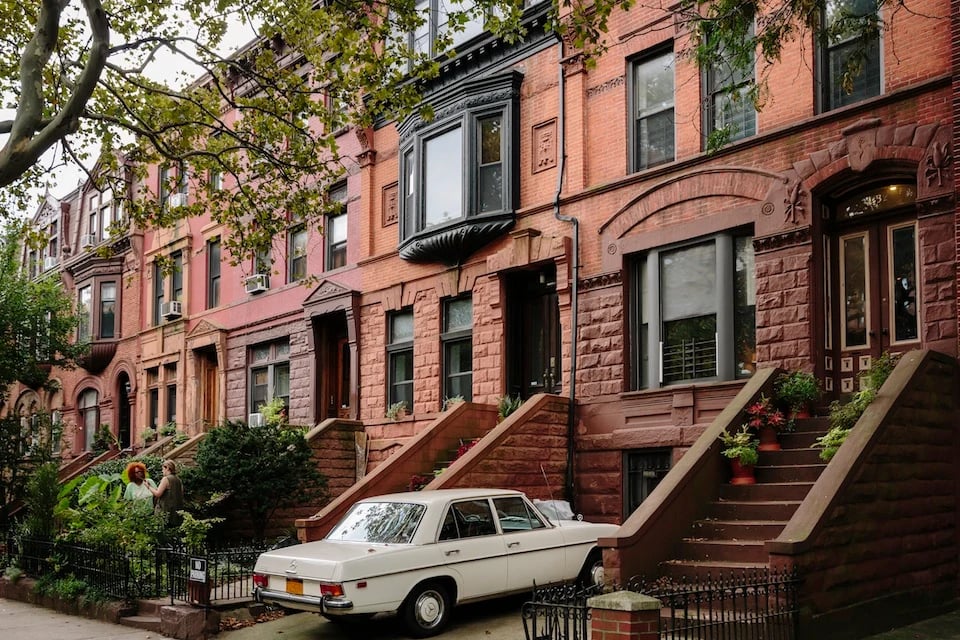
Is Crown Heights a good place to buy? If you want brownstone Brooklyn's architecture with a housing ladder that still has real rungs, it belongs at the top of your list. The neighborhood pairs some of the borough's grandest landmarked rowhouse blocks with a newer condo corridor, prewar co-ops, and true multi-family stock, all organized around Eastern Parkway and the museum corner at its western end.
The pitch and the price are the same thing here: two markets in one neighborhood. The landmarked blocks protect a streetscape that rivals anything west of Flatbush at a friendlier number, while the condo and co-op layers keep the entry price honest. Buyers who need one frozen composition should shop elsewhere; buyers who want room to choose their lane tend to land here and stay.
This guide walks the neighborhood the way we'd walk it with you: the pockets and how they differ, the housing ladder from co-op to townhouse, what actually drives value, and how to buy well in whichever of its markets you're shopping.
In this guide
- The lay of the land: what defines Crown Heights
- Quick comparison: the four pockets at a glance
- Which pocket is right for you?
- Limestones, Kinkos, and Parkway co-ops: the housing ladder
- What drives value in Crown Heights
- Eastern Parkway, Franklin, Nostrand: the corridors
- The four pockets, up close
- The Rahmé Team Crown Heights market read
- Buying strategy: how to actually win here
- Living here day to day
- How to choose
- FAQs
- Work with a local team

Fouad Rahmé
Founder, the Rahmé Team at Compass
The Rahmé Team advises buyers, sellers, investors, and developers across Brooklyn, with 40 years of combined experience, more than 1,000 clients and transactions, and over $800 million in career sales, $167 million of it since 2020. RealTrends Verified ranks the team in the top 1.5% of real estate professionals nationwide.
Contact the team or call (718) 233-3365.
The lay of the land: what defines Crown Heights
Is Crown Heights a good place to buy? For most buyers who want central Brooklyn with real architecture, yes, and the reasons are structural rather than trendy. The mix of property types here runs wider than anywhere else in brownstone Brooklyn: landmark limestone rows, a duplex house type that exists almost nowhere else, pre-war co-ops on a scenic-landmark boulevard, and newer condos on the western blocks, with express trains under the spine and the Brooklyn Museum and Botanic Garden at the corner. The catch is that Crown Heights changes block by block more than most neighborhoods, so the real question isn't whether to buy here. It's which pocket.
Start with the boulevard, because everything else hangs off it. Eastern Parkway is credited as the world's first parkway. Frederick Law Olmsted and Calvert Vaux conceived it in 1866 and coined the word "parkway" for it, and the original stretch was built between 1870 and 1874, running roughly 2.2 miles east from Grand Army Plaza to Ralph Avenue, which was then the city of Brooklyn's boundary. That's the section with the tree-shaded malls, the benches, and the service roads, and it's the section the city made a scenic landmark on August 22, 1978, one of only about ten in all of New York. The road itself keeps going past Ralph, bending north toward Bushwick Avenue for a total of about 3.8 miles, but the malls and the protection stop where the original parkway did. Olmsted called it a shaded green ribbon, and on an October morning with the leaves turning over the bike path, that still holds up.
The Parkway also split the map. The name Crown Heights showed up around 1910 for the blocks south of the boulevard, while the north side answered to Bedford for decades more, and locals still talk in terms of north of the Parkway and south of it. Then 1920 changed the scale: the IRT opened underneath, and the apartment houses followed fast. The elevator buildings and pre-war co-ops lining the boulevard today are pretty much the children of that subway.
At the western end, the neighborhood collects an almost unfair run of institutions. The Brooklyn Museum's 1897 McKim, Mead & White building and the Brooklyn Botanic Garden, 52 acres opened in 1911 at 990 Washington Avenue, share the corner where the Parkway meets the park, and McKim, Mead & White drew the garden's original laboratory buildings too. A few blocks northeast, the Brooklyn Children's Museum, founded in 1899 as the world's first children's museum, still holds its home corner at Brower Park.
The blocks hold older layers as well. On the eastern side, the Weeksville Heritage Center preserves the Hunterfly Road Houses, four wood-frame houses set along the line of a road older than the street grid, the surviving buildings of Weeksville, a settlement James Weeks founded in 1838, a generation before the rowhouse era reached these blocks. The city landmarked those houses in 1970, decades before it got around to protecting the rowhouses. History runs deep here, and the buildings say so.
Quick comparison: the four pockets at a glance
Crown Heights is really a set of pockets, and stock, pace, and pricing shift as you cross between them. Here's the buyer's map, then each pocket up close further down.
The feel | Housing stock | The pace | Transit | Best if | |
|---|---|---|---|---|---|
The Parkway spine | Scenic-landmark boulevard, tree malls, big pre-war facades | Elevator co-ops and pre-war apartment houses | Steady, with a handful of street-closure days a year | Express and local trains directly underneath | You want the trains, the trees, and pre-war rooms in one address |
The landmark blocks north | Carved limestone and brownstone rows, Kinko porches, deep stoops | Historic-district rowhouses, Kinko duplex houses, two-to-four-family buildings | The quietest streets in the neighborhood | Local stops on the spine a short walk south, the A and C at the top | You're a detail hunter, or you're running the live-one-rent-one play |
The Franklin corridor west | Filled-in storefronts, newer buildings among older frames | Condos, conversions, some rows at the edges | The busiest pocket, evenings included | The Franklin Avenue express stop plus the shuttle | You want to walk to the garden, the museum, and the park |
South of the Parkway | Limestone rows on calmer side streets | Rowhouses, flats, and apartment buildings | Steadier and more residential | The Nostrand branch stations, plus the spine to the north | You want space per dollar and the garden's south flank |
Which pocket is right for you?
Space-first rowhouse buyers do well here, especially ones who care about original detail. The landmark districts protect whole streetscapes of carved limestone and brownstone, and the inventory is wide enough that patient buyers can actually hold out for the right block instead of settling for the right borough. If that's you, start on the landmark blocks north of the Parkway and work outward.
It also fits buyers running the live-in-one-unit, rent-the-other play. Two-family rows are common, and the Kinko houses were literally built for it in 1905: two stacked duplexes, each with its own front door and house number, so the arrangement doesn't feel like a compromise. Investors chasing small multi-family buildings look here for the same reason, though the underwriting takes real care, more on that in the market read. Co-op buyers who want pre-war rooms and a one-seat express ride should start on the Parkway spine, and walk-to-everything buyers belong on the Franklin corridor.
Who tends to look elsewhere? Anyone who wants one uniform look, because Crown Heights refuses to be one thing. Anyone allergic to landmark paperwork, since a big share of the best blocks now sits under LPC review. And anyone who needs the shortest possible ride to Midtown; the express trains are quick, but this is central Brooklyn, not the waterfront.
Limestones, Kinkos, and Parkway co-ops: the housing ladder
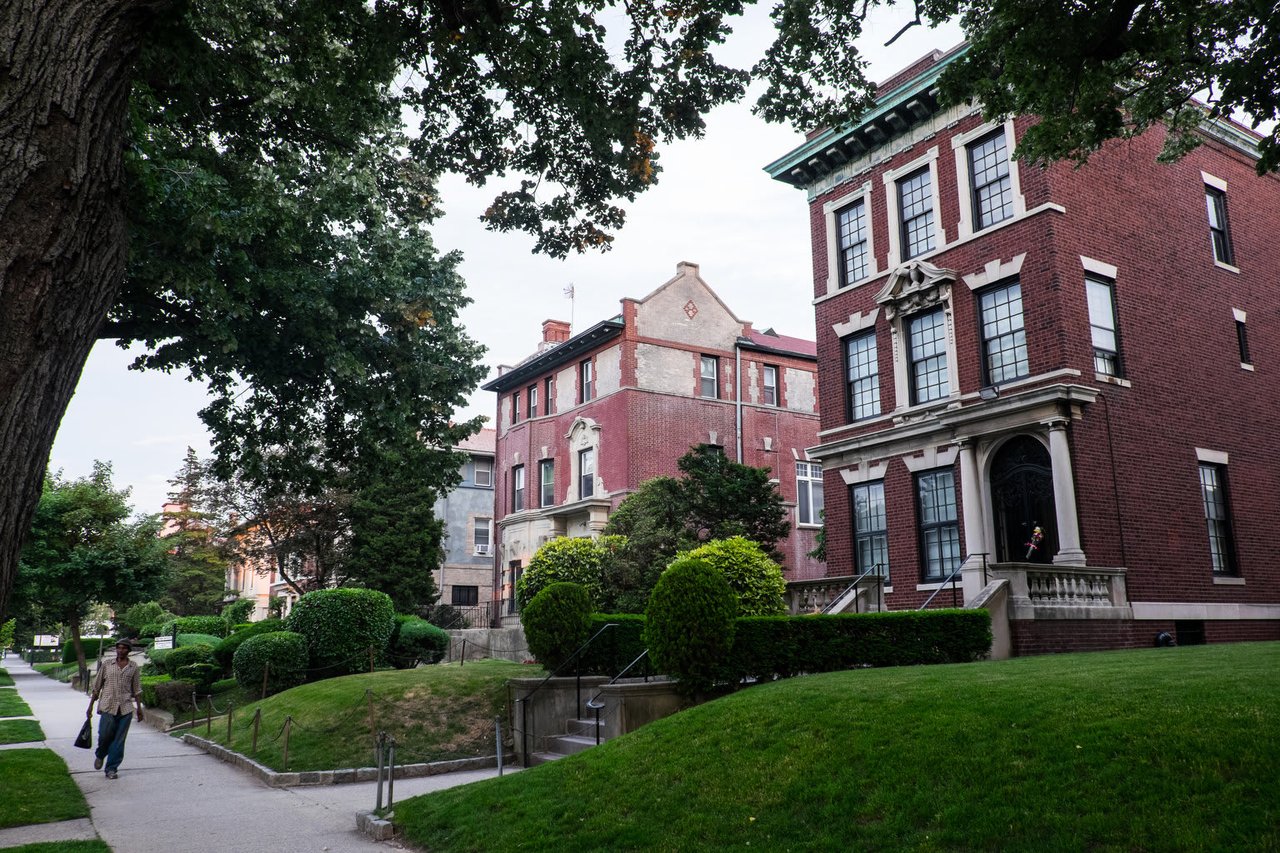
Four rungs, and the spread is the point. The rows come first: limestone and brownstone houses across the Crown Heights North historic districts, in a run of styles, Romanesque Revival, Queen Anne, Neo-Grec, Renaissance Revival, that the LPC protected in phases starting in 2007. St. Johns Place, Sterling Place, Park Place, and the avenue blocks around them carry some of the most detailed facades in the borough, bay fronts and carved stoops in stone that goes gold in late light. South of the Parkway, the limestone rows keep going at a calmer pitch.
The Kinko houses are the rung you won't find in the next neighborhood over. The Kings & Westchester Land Company, "Kinko" for short, built the first of them on Sterling Place in 1905, and Mann & MacNeille designed most of the rest between 1907 and 1912 in the Arts and Crafts style, on St. Johns Place, Brooklyn Avenue, Sterling Place, and Hampton Place. Each house holds two stacked duplexes, and each duplex got its own front door, house number, stairway, porch, and cellar; the lower unit opens to the garden, and the upper ones originally came with private roof gardens and cellar dumbwaiter deliveries. The 1905 ads sold privacy, and that's still the draw: live in one full duplex, rent the other, and nobody shares a hallway. The type got copied around brownstone Brooklyn, but the originals are here, inside the third historic-district phase.
The pre-war co-ops came with the subway. After the IRT opened under the boulevard in 1920, elevator apartment houses went up along Eastern Parkway and the blocks off it, and many later converted to co-ops. High ceilings, big rooms, the malls out the front windows, and monthly maintenance that folds in taxes: for a lot of buyers, this rung is the working front door to the neighborhood.
And the condos finish the ladder, a mix of conversions and newer buildings that thicken toward Franklin Avenue and the western blocks, where amenity packages and fresh mechanicals trade against historic character. Whatever the rung, run the monthly math and not just the asking price: landmark houses keep their own repair calendars, co-op boards keep their own rules, and a Kinko's two addresses need their paperwork read closely.
What drives value in Crown Heights
Fixed supply, recently fixed. The Crown Heights North districts came in three phases: the first in April 2007 with more than 450 buildings, the second on June 28, 2011 with more than 600, and the third and largest on March 24, 2015 with roughly 640. By the LPC's own count, that brought the total number of landmarked buildings and sites in Crown Heights to 1,752. The protection is newer here than in the elder brownstone districts, which means the streetscapes were locked in while the neighborhood still had room to run. Nobody is building another landmark limestone row, and after 2015, nobody is tearing one down either.
The institution corner. A major art museum in an 1897 McKim, Mead & White building, a 52-acre botanic garden, and Prospect Park across the plaza, all stitched to the neighborhood's western end, with the world's first children's museum holding down Brower Park in the middle of the north side. Institutions like these pull visitors, jobs, and buyers on their own schedule, not the market's.
Transit depth. Express and local trains run under the Parkway between Franklin Avenue and Utica Avenue, the Nostrand branch peels off to serve the south side, the A and C run along Fulton Street at the northern edge, and the little Franklin Avenue Shuttle stitches the western blocks to the Brighton line at Prospect Park, with a stop practically at the garden gate. Very few neighborhoods this deep into Brooklyn hold this many ways out.
And the ladder itself. Four distinct rungs means four distinct buyer pools bidding in the same zip codes, which keeps turnover and liquidity healthier than a one-product neighborhood can manage. When one rung cools, the others keep the lights on.
Eastern Parkway, Franklin, Nostrand: the corridors
Eastern Parkway does three jobs at once. It's the front lawn for the co-op buildings, a commuter path with the trains underneath and the bike lane on top, and the borough's event corridor. Most of the year that means joggers at seven a.m. and chess on the benches. A handful of days a year the boulevard closes for large public gatherings, which means crowds, rerouted buses, and no street parking anywhere near the western end; the same is true on big museum and garden weekends, and our Brooklyn parking guide covers how to read a block's parking before you buy.
Franklin Avenue is the western spine, and the storefronts tell the clearest version of the neighborhood's recent history: restaurants, coffee, and wine shops filling in older retail frames over the past couple of decades, tracking exactly with how the western blocks have traded. The avenue connects straight down toward the garden, the museum, and the park, and the shuttle runs alongside it, which is why this corridor works for people who barely think about the rest of the subway map.
Nostrand Avenue is the workhorse: a long, dense retail line running the neighborhood's whole height, with its own stations below the Parkway and errands solved on foot at pretty much any hour. Kingston and Utica carry the quieter eastern crossings, and on the south side, CUNY's Medgar Evers College anchors the Bedford Avenue corridor.
And Brower Park holds the quiet green center of the north side, the Children's Museum on its corner with weekend lines out the door. It's the counterweight to the boulevard: the Parkway performs, Brower Park just sits there being pleasant.
The four pockets, up close
The Parkway spine is for buyers who want the boulevard itself: pre-war co-ops with the malls out the window, express platforms downstairs, and the garden a few stops or a straight bike ride west. Building quality varies more than facades suggest, so the financials matter as much as the floor plan here.
The landmark blocks north are the architecture pocket. Between the Parkway and Atlantic Avenue, the historic-district streets, St. Johns, Sterling, Park Place, and their neighbors, hold the carved rows, the Kinko porches, and the quietest evenings in the neighborhood, with Brower Park as the local green. This is where detail hunters and live-one-rent-one buyers should spend their Saturdays.
The Franklin corridor west is the convenience pocket: the express stop, the shuttle, the storefront strip, and the museum-garden-park corner all within an easy walk. The stock skews condo and conversion, the sidewalks stay busy late, and you pay for the location in both price and pace.
South of the Parkway is the value-and-quiet pocket: limestone rows and flats on calmer streets, the Nostrand branch stations for the commute, Medgar Evers College on Bedford, and the garden's southern flank close by. Keep walking south past Empire Boulevard and you're in Prospect Lefferts Gardens, which runs its own version of the limestone-and-flats mix; buyers shopping down here usually compare the two, and that's a sane way to shop.
The Rahmé Team Crown Heights market read
Read the market here by rung, not by neighborhood average. The landmark rows are scarce and get scarcer every year, since the districts froze the supply. The Kinko houses are scarcer still, a finite set built across seven years a century ago, and when one lists, buyers who know what they're looking at move quickly. The Parkway co-ops turn over more often and price across a wider band, driven by building health and maintenance as much as by the apartment itself. The condos track new supply on the western blocks. Averages that blend all four will tell you almost nothing about the block you're actually bidding on.
For the two-to-four-family buyers: the demand logic is real, express transit plus institutions plus a deep renter pool, but the underwriting deserves respect. Rent rolls, regulation status, and the operating costs of century-old stock vary house by house, and the difference between a great small building and a headache usually sits in the paperwork, not the facade. Bring an attorney who reads these buildings for a living.
Published averages age faster than this page will. For this quarter's picture on any rung, call us and we'll pull the current Crown Heights figures from live inventory and our own closed-sale records.
Buying strategy: how to actually win here
Pick the pocket before the property. Two listings can sit six minutes apart here and belong to different markets, so choose your pocket first, then your streets, then let the search run inside them. Walk any short-list block more than once, a weekday morning for the commute and a weekend afternoon for the sidewalks, so nothing about the rhythm surprises you later.
If the house sits in a historic district, and on the north side there's a good chance it does, budget time for landmark diligence. Exterior work runs through the LPC, straightforward interior projects can qualify for a Certificate of No Effect, and a renovated listing should come with its permit trail. The rules protect exactly what you're paying for, but they reward buyers who plan approvals into the timeline instead of discovering them mid-project.
Then the rung-specific homework. For a Kinko or any two-family, confirm the legal unit count and how the two addresses are papered before you fall in love with the rental math. For a Parkway co-op, read the building's financials and maintenance history as closely as the apartment. For a condo on the western blocks, study what's permitted to rise nearby, since light and views are part of the price. And on schools: zoning here runs address by address and district lines cross the neighborhood, so check any school question against the DOE's current maps for the exact address, not the neighborhood name.
When you're ready to shape the search, tell us what you're solving for and we'll build the block list with you, including the houses that trade before they ever reach a portal.
Living here day to day
The mornings belong to the Parkway. Runners and cyclists take the malls early, commuters drop down to the express platforms, and the chess tables fill in behind them. It's the rare commute that starts under trees.
Weekends orbit the western corner. The garden pulls crowds all spring, the cherry trees around late April most of all, the museum holds down its end of the plaza, and the Saturday market at Grand Army Plaza sits at the boulevard's west end. Brower Park runs the north side's calmer weekend, pickup games and the weekend lines outside the Children's Museum. Between the garden, the parks, and the malls down the middle of the boulevard, this corner of Brooklyn earns its spot among the borough's greenest places to live.
Errands split by avenue. Nostrand solves pretty much everything at street level, Franklin adds the newer restaurants and the wine-shop stops, Kingston and Utica keep the east side moving. Winter pulls life indoors, radiators clanking in the pre-wars, the garden's conservatory doing steady business, the boulevard going quiet under bare trees until spring starts the cycle again.
And the seasons really register here, more than in the glassier neighborhoods. Stone facades hold the late light in summer, the malls turn gold in October, and the whole western corner smells like lilacs for about two weeks in May. Folks around here plan walks around it.
How to choose
Start from the rung you're shopping and the pocket follows.
If this is the priority | Start here |
|---|---|
Original detail with landmark protection | The historic-district blocks north of the Parkway |
Live in one unit, rent the other | Kinko houses and two-family rows on the north side |
Elevator building, pre-war rooms, trains downstairs | The Eastern Parkway co-ops |
Walk to the garden, the museum, and the park | The Franklin corridor and the western blocks |
Space per dollar on calmer streets | South of the Parkway, toward the Nostrand branch stations |
Newest mechanicals and amenity packages | The condo stock toward Franklin Avenue |
FAQs
Is Crown Heights a good neighborhood to buy in?
For most buyers who want central Brooklyn with real architecture, yes. Crown Heights has the widest mix of property types in brownstone Brooklyn, landmark rows, Kinko duplex houses, pre-war Parkway co-ops, and newer condos, with express trains under Eastern Parkway and the Brooklyn Museum and Botanic Garden at its western corner. The tradeoff is block-by-block variation, so the right answer depends on picking the right pocket, not on the neighborhood average.
What are Kinko houses in Crown Heights?
Kinko houses are two-family duplex houses named for the Kings and Westchester Land Company, which built the first of them on Sterling Place in 1905. Most were designed by Mann and MacNeille between 1907 and 1912 in the Arts and Crafts style, on St. Johns Place, Brooklyn Avenue, Sterling Place, and Hampton Place. Each duplex has its own front door, house number, stairway, porch, and cellar, which makes them unusually clean setups for living in one unit and renting the other.
What is Eastern Parkway?
Eastern Parkway is credited as the world's first parkway, conceived by Frederick Law Olmsted and Calvert Vaux in 1866, who coined the term for it. The original stretch was built between 1870 and 1874, running roughly 2.2 miles east from Grand Army Plaza to Ralph Avenue, then the city of Brooklyn's boundary, with landscaped, tree-shaded malls along each side. That section is a New York City scenic landmark, designated August 22, 1978, one of only about ten citywide. The road continues past Ralph toward Bushwick Avenue for a total of about 3.8 miles, but the malls and the landmark protection cover the original parkway only. It carries express subway service underneath and divides Crown Heights into its north and south halves.
What do the Crown Heights North historic districts mean for buyers?
The Crown Heights North districts were designated in three phases: April 2007 with more than 450 buildings, June 2011 with more than 600, and March 2015 with roughly 640, which by the LPC's count brought the total number of landmarked buildings and sites in Crown Heights to 1,752. Inside the districts, exterior changes run through the Landmarks Preservation Commission, and simple interior work can qualify for a Certificate of No Effect. For buyers, the rules add approval time to renovations but permanently protect the streetscapes, which is a large part of what holds value on these blocks.
Should I buy a rowhouse, a pre-war co-op, or a condo in Crown Heights?
Pick by priorities. A rowhouse buys the most space and original detail and carries the most upkeep, plus landmark review on many blocks. A pre-war co-op on or near Eastern Parkway costs less to enter, folds taxes into maintenance, and adds board approval and house rules. A condo, mostly on the western blocks, trades historic character for newer systems and easier subletting. Two-family rows and Kinko houses add a fourth path if rental income is part of the plan.
How is the commute from Crown Heights to Manhattan?
Strong for central Brooklyn. Express and local trains run under Eastern Parkway between Franklin Avenue and Utica Avenue, the Nostrand branch serves the blocks south of the Parkway, and the A and C run along Fulton Street at the northern edge. Lower Manhattan generally runs somewhere around 25 to 35 minutes door to door depending on your block and stop, with Midtown a bit beyond that. The Franklin Avenue Shuttle also links the western blocks to the Brighton line.
Is Crown Heights close to Prospect Park and the Brooklyn Museum?
The western blocks are truly walk-to: the Brooklyn Museum, the 52-acre Brooklyn Botanic Garden, and Prospect Park all sit at the neighborhood's western corner, where Eastern Parkway meets Grand Army Plaza. From the Franklin corridor, that's an easy stroll. From the central and eastern blocks, most people ride a stop or two or bike the Parkway path instead, and Brower Park covers the everyday green in between.
How does Crown Heights compare to Prospect Heights and Bedford-Stuyvesant?
Prospect Heights sits closer to the park and plaza and trades at a tighter, generally pricier register with a smaller footprint. Bedford-Stuyvesant, to the north, holds the deepest protected rowhouse inventory of the three across its four historic districts. Crown Heights holds the middle ground with the widest mix of property types: landmark rows, Kinko duplexes, boulevard co-ops, and condos, plus the museum-and-garden corner, usually at friendlier pricing per square foot than either neighbor's prime blocks.
Weighing brownstone Brooklyn more broadly? Our BoCoCa guide and Park Slope guide walk those markets the same way, block by block, and both make useful contrasts: each runs pricier, and neither offers this range of property types.
Work with a local team
Crown Heights rewards buyers who can tell a Kinko from a two-family conversion and a healthy co-op from a struggling one, and in a market this block-dependent, that fluency is the whole job. The Rahmé Team at Compass brings 40 years of combined experience across Brooklyn, ranks in the top 1.5% of real estate professionals nationwide by RealTrends Verified, and has closed more than $800 million in career sales. We work with buyers and sellers on landmark-district due diligence, small multi-family underwriting, co-op strategy, and the off-market conversations that move a real share of these houses.
Ready to see Crown Heights properly? Start with our Crown Heights neighborhood page or browse current listings, then call the Rahmé Team at (718) 233-3365 or request a Crown Heights search through our contact form, built around your pocket and property type, not just your price point.