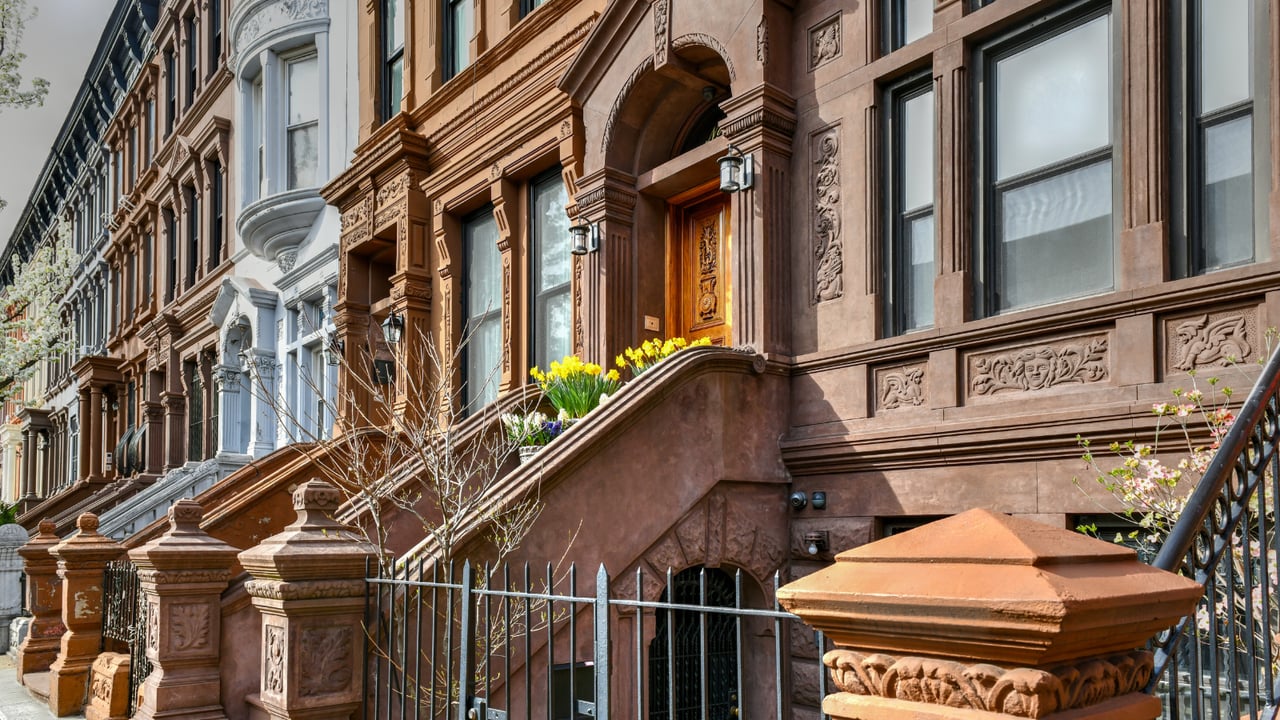
BoCoCa is the real estate shorthand for three side-by-side brownstone neighborhoods in northwestern Brooklyn: Boerum Hill, Cobble Hill, and Carroll Gardens. It isn't an official neighborhood. It's an umbrella name for the run of brownstone blocks sitting just south and southwest of Downtown Brooklyn, stitched together by the F and G trains, the Smith and Court Street corridors, and a shared stretch of protected historic architecture. The name first showed up in print around 2002, the same wave that gave us DUMBO, and it stuck because the three places really do feel like one continuous walk.
Is it a good place to buy? For the right buyer, yes. You get 19th-century character, blocks you can actually live your life on foot, a 20-minute ride to Manhattan, and the kind of housing stock that holds value through cycles. The catch is supply. Inventory here is tight, the good brownstones go fast, and you'll usually be competing. So the real question isn't whether BoCoCa is worth it. It's which of the three fits how you actually live.
That's what this guide is for. We'll walk through what makes each neighborhood different, what the market feels like on the ground, and a simple way to decide. When you're ready to see blocks in person or hear about homes before they hit the open market, reach out to the Rahmé Team at Compass.
In this guide
- The triangle: what ties BoCoCa together
- Quick comparison: the three at a glance
- Which BoCoCa neighborhood is right for you?
- Boerum Hill
- Cobble Hill
- Carroll Gardens
- The Rahmé Team BoCoCa market read
- Living here day to day
- How to choose
- FAQs
- Work with a local team
The triangle: what ties BoCoCa together
Picture the brownstone belt just below Downtown Brooklyn. Boerum Hill sits to the northeast, Cobble Hill tucks in to the northwest, and Carroll Gardens spreads out to the south. They meet along Court Street and Smith Street, two parallel commercial spines that carry pretty much the whole area's daily life: the coffee, the dinners, the dry cleaner you'll go to for the next ten years.
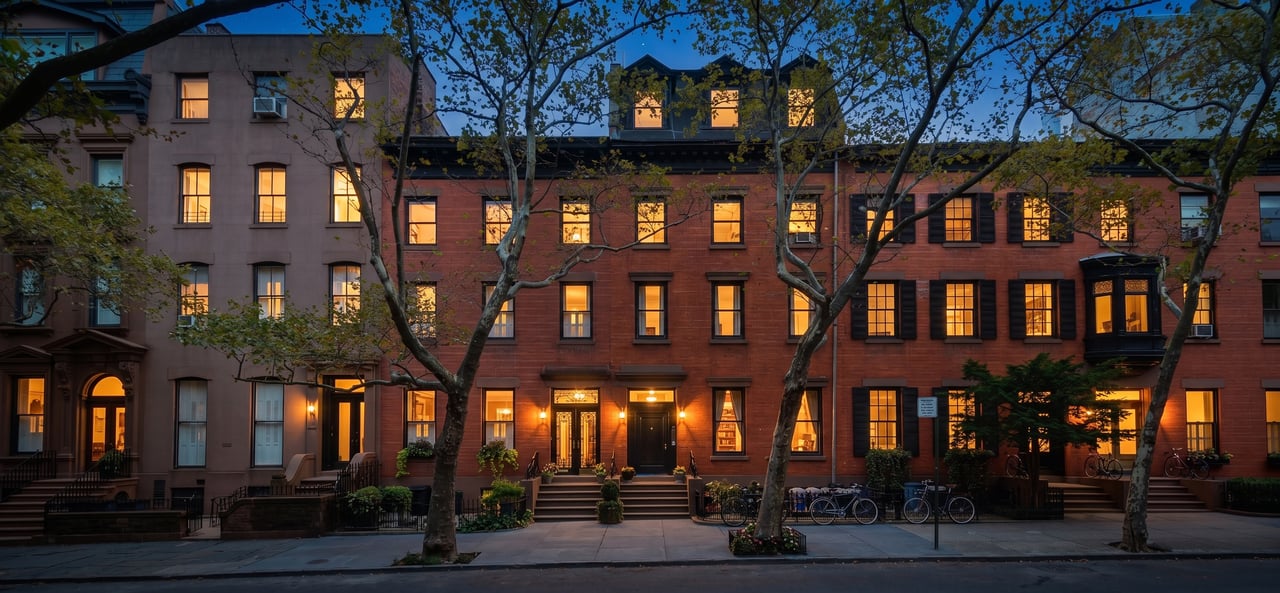
A few things hold the three together. The F and G lines run underneath all of it, with stops at Bergen Street, Carroll Street, and Smith-9th Streets (that last one is the highest subway station in the entire MTA system, so the stair climb comes with a skyline view). Most of these blocks fall inside designated historic districts, which means the streetscape you fall in love with on a first walk is, by law, going to look pretty much the same in twenty years. And the architecture rhymes across all three: rows of Italianate and Neo-Grec brownstones, mature street trees, the occasional carriage house.
What's interesting is how different the three feel despite all that shared DNA. Same trains, same era of construction, same protected status. Totally different mornings.
Quick comparison: the three at a glance
Neighborhood | The feel | Housing stock | What stands out | Transit edge | Pace |
|---|---|---|---|---|---|
Boerum Hill | The busiest of the three. Commercial energy on Smith Street, Court Street, and Atlantic Avenue. | Brick and brownstone row houses (much of it built 1840 to 1870) plus newer boutique condos. | The most dining and the strongest transit access. | Walk to the Atlantic Avenue-Barclays hub and Atlantic Terminal (LIRR), on top of the F and G. | Higher energy. |
Cobble Hill | Quiet, postcard Brooklyn. Tight stoop-to-sidewalk blocks, short ornate townhouses. | Single-family townhouses, pre-war co-ops, a handful of condos. | Quiet, walkable blocks and a calm pace. | F and G at Bergen and Carroll. | Calm. |
Carroll Gardens | The deepest community roots, with the area's signature deep front gardens. | Garden-front brownstones, newer infill townhomes, pockets of condos and converted co-ops. | Deep front gardens, more space, and the slowest pace. | F and G, a slightly longer ride to Manhattan. | Slowest, by design. |
Which BoCoCa neighborhood is right for you?
Here's the short version before the long one.
If you want the most energy, the shortest commute, and dinner reservations within a five-minute walk, look at Boerum Hill. If you want quiet, tree-shaded blocks and a calm, walkable pace, look at Cobble Hill. If you want a real front garden, a slower pace, and a block where the neighbors actually know each other, look at Carroll Gardens.
Now the detail.
Boerum Hill: the transit-adjacent one
Boerum Hill runs hottest. Its eastern edge brushes up against Atlantic Avenue and the Barclays Center transit hub, which means you've got the F and G plus a short walk to a small alphabet of other lines and the LIRR at Atlantic Terminal. For anyone commuting daily, that's the strongest transit position in BoCoCa, full stop.
The housing leans toward three-story row houses, a lot of it built between 1840 and 1870, when the area was first settled as a quiet suburb for Manhattan workers. Some of those buildings spent the early twentieth century as boarding houses before a wave of preservation and brownstone restoration swept through in the 1970s and 80s. Today you'll find classic brownstones alongside sleeker boutique condo conversions, which gives buyers more entry points here than in the other two.
The vibe is the trade-off. Smith Street, Court Street, and Atlantic Avenue all carry real commercial life, restaurants, bars, antique shops, so blocks closer to those corridors hum. If you want energy and don't mind it, that's a feature. If you want library quiet, you'll want to look a few streets in, or look south.
Best if you want the strongest commute and a dining scene at your door, and you don't mind a little noise with it.
Cobble Hill: the charm one
Cobble Hill is the postcard. Dutch farmers settled it back in the mid-1600s, and the New York City Landmarks Preservation Commission has kept its historic district remarkably intact since. The Commission once described it as an unusually fine 19th-century residential area, and walking it, you get why. Short, ornate townhouses. A few of the city's last remaining carriage houses. Cobble Hill Park, a half-block of green tucked between brownstones, with a playground that anchors the block.
The housing here skews toward coveted single-family townhouses and rare pre-war co-ops, with fewer condos in the mix than Boerum Hill. Unlike Carroll Gardens, the blocks have that tight, classic Brooklyn pattern, stoop right up to the sidewalk, no deep front yards. It reads as denser and a little more formal.
On schools: like the rest of BoCoCa, Cobble Hill sits in NYC School District 15. Zones are assigned by address, several District 15 elementary schools set aside a share of seats through a diversity-in-admissions program, and the boundary lines have been redrawn before. So if a specific school matters to you, confirm the current zone for any address you're considering. We can help you check.
Best if you want the quietest, most preserved blocks and a true village-within-a-city feel, all a short walk from the F and G.
Carroll Gardens: the community one
Carroll Gardens has the deepest sense of place, and it's not an accident of vibe. It's literally built into the streets. Back in 1846, a surveyor named Richard Butts laid out the oldest part of the neighborhood with an unusual rule: homes between Henry and Smith Streets had to sit about 33 feet back from the curb. Those mandated setbacks became the deep front gardens the neighborhood is named for, and you still see them blooming every spring from First to Fourth Place and along President and Carroll Streets. Most other Brooklyn neighborhoods don't have anything like it. Cobble Hill doesn't. Boerum Hill doesn't. Carroll Gardens breathes a little.
The name itself goes back to Charles Carroll, the only Catholic signer of the Declaration of Independence, honored here for a Maryland regiment that fought in the Battle of Brooklyn. The neighborhood grew up around the 19th-century waterfront, settled by immigrant dock workers and tradesmen, and that history still shows up on Court Street: the old bakeries, the salumerias, the red-sauce restaurants that have held the same corners for generations. Carroll Park, one of Brooklyn's oldest, sits in the middle of it with bocce courts and summer Shakespeare.
Housing is mostly those garden-front brownstones, many in Italianate and Neo-Grec styles, plus newer infill townhomes built to echo the district's proportions and scattered pockets of condos and converted co-ops. The Carroll Gardens Historic District, designated in 1973, protects more than 160 of these buildings.
Best if you want a real front garden, quiet streets, and community spaces, and you'll happily trade a few minutes of commute for them.
The Rahmé Team BoCoCa market read
The honest version of BoCoCa's market is short: not much comes up, and what does tends to move.
Quality brownstones in Boerum Hill and Cobble Hill usually trade in a fairly quick window, roughly 30 to 60 days for well-positioned inventory. Carroll Gardens runs slower and more deliberate, closer to 60 to 90 days, partly because so much of it is owner-occupied homes coming to market because life changed, not because an investor is flipping. Prices hold.
Across all three, the dynamic is the same: tight supply, strong demand, and brownstones with original detail commanding a premium over everything else. If you want a more accessible way in, smaller condos, co-ops, and apartments in converted townhouses are usually it.
A lot of BoCoCa's best inventory also never hits the open market. Years of work on these blocks means we hear about homes early, which matters more here than in almost any other Brooklyn market.
Living here day to day
The commute. The F and G are your spine, with a Manhattan ride that runs about 20 minutes from the Carroll Street area. Boerum Hill's eastern edge adds the Atlantic Avenue-Barclays hub and Atlantic Terminal, so if you're heading into the city daily or out to Long Island, that corner has the edge.
Schools. The whole area falls in NYC School District 15. The zoned elementary options include P.S. 29 in Cobble Hill, P.S. 58 and P.S. 32 in Carroll Gardens, and P.S. 261 and P.S. 38 in Boerum Hill. Boundaries here have been redrawn before, and several schools reserve a share of seats through a diversity-in-admissions program, so treat any school as address-specific and verify the current zone before you commit.
Parks and outdoor space. Cobble Hill Park for the half-block neighborhood gathering. Carroll Park for the bocce and the summer programming. And a short walk west, Brooklyn Bridge Park for the waterfront, the skyline, the playgrounds, and the lawns. For a dense set of neighborhoods, you're never far from somewhere to sit under a tree.
Daily life. This is the easy part to sell and the easy part to underestimate. A normal Saturday looks like coffee on Court Street, a walk through Carroll Park, a browse at the bookstore, groceries from the Trader Joe's in the old bank building, and dinner at one of the Smith Street rooms that's been packed for fifteen years. Most of it on foot. That walkability is the whole point.
How to choose
Start with what you can't compromise on, then match it to the neighborhood that delivers it.
If your non-negotiable is the commute and you like a little noise and life outside the door, that's Boerum Hill. If it's a calm, quiet block and a walkable pace, that's Cobble Hill. If it's space, a front garden, and a real neighborhood feel where the pace slows down, that's Carroll Gardens.
If you want... | Look at... |
|---|---|
The shortest commute and the most dining and energy | Boerum Hill |
Quiet, postcard blocks and a calm, walkable pace | Cobble Hill |
A deep front garden, slower streets, and deep community | Carroll Gardens |
More entry points, including condos | Boerum Hill or Carroll Gardens |
The most preserved, formal historic feel | Cobble Hill |
None of this is a wrong answer. The mistake we see is buyers picking the name before they've walked the blocks at the time of day they'd actually be living them. A weekday morning on a busy Boerum Hill corner and a Sunday morning on a quiet Carroll Gardens garden block are two different lives. Go feel both.
FAQs
What does BoCoCa stand for?
BoCoCa is a portmanteau of Boerum Hill, Cobble Hill, and Carroll Gardens, three adjacent brownstone neighborhoods in northwestern Brooklyn, just south and southwest of Downtown Brooklyn. It isn't an official neighborhood, just a shared name for the three together.
Is BoCoCa a good place to buy?
For buyers who want historic character, walkability, strong transit, and long-term value, yes. The main constraint is low inventory, so expect competition for the best brownstones and plan to move quickly when the right home appears.
What's day-to-day life like in BoCoCa?
Walkable, green, and low-key. Most errands happen on foot, you've got Cobble Hill Park, Carroll Park, and Brooklyn Bridge Park within reach, and the residential blocks stay quiet. Cobble Hill and Carroll Gardens are the calmest, while Boerum Hill carries more commercial energy.
What's the difference between Boerum Hill, Cobble Hill, and Carroll Gardens?
Boerum Hill is the busiest and best-connected, with the most dining and the strongest commute. Cobble Hill is the quietest and most preserved, with tight townhouse blocks. Carroll Gardens is the most community-rooted, defined by its deep front gardens and 19th-century streetscape.
How long do homes stay on the market in BoCoCa?
Quality brownstones in Boerum Hill and Cobble Hill often move in roughly 30 to 60 days. Carroll Gardens tends to run slower, closer to 60 to 90 days, since much of its inventory is long-held, owner-occupied homes. Tight supply keeps prices firm across all three.
How do schools work in BoCoCa?
All three neighborhoods sit in NYC School District 15, and elementary seats are assigned by address. Several District 15 schools set aside a share of seats through a diversity-in-admissions program, and zone lines have been redrawn before. Confirm the current zone for any specific address before you buy.
Work with a local team
BoCoCa rewards people who know it block by block, and that takes time on the ground. The Rahmé Team at Compass brings 40 years of combined experience and deep roots in Boerum Hill, Cobble Hill, and Carroll Gardens, ranks in the top 1.5% of agents nationwide by RealTrends Verified, and has closed more than $800 million in career sales. We work with buyers and sellers on historic renovations, tax abatements, co-op conversions, and off-market opportunities, the homes you won't find by scrolling.
Ready to find your piece of BoCoCa? Call the Rahmé Team at (718) 233-3365 to talk through your timeline, or ask us to set up custom alerts so you hear about the right blocks first.