Park Slope is the brownstone neighborhood running down the western side of Prospect Park in Brooklyn, from Flatbush Avenue south to about 15th Street, and from the park downhill to Fourth Avenue, covering zip codes 11215 and 11217. The name is literal. The streets tilt down from Prospect Park West toward the Gowanus, and the whole place organizes itself around that slope: the grandest houses up top by the park, the avenues stacked below like shelves, each one with its own personality.
Is it a good place to buy a home? For most buyers who can clear the price of entry, yes, and it has been for decades. You get some of the best-preserved 19th-century blocks in New York, a 526-acre Olmsted and Vaux park as your backyard, seven subway lines within reach, and public schools that families move across the city for. The catch comes in three parts. Competition, because the good homes move fast. Co-op boards, because much of the entry-level inventory runs through them. And supply, because landmark protection and zoning mean pretty much nothing new ever gets built on the brownstone blocks.
So the real question isn't whether Park Slope is worth it. It's which part of the Slope fits how you actually live, and what kind of home gets you in the door. That's what this guide covers. When you're ready to walk blocks in person or hear about homes before they hit the open market, reach out to the Rahmé Team at Compass through our contact form or at (718) 233-3365.
In this guide
- The lay of the land: what defines Park Slope
- Quick comparison: North, Center, and South Slope at a glance
- Which part of Park Slope is right for you?
- Brownstones, co-ops, and condos: the housing stock
- What drives value in Park Slope
- The avenues: Fifth, Seventh, and Prospect Park West
- North Slope
- Center Slope
- South Slope
- The Rahmé Team Park Slope market read
- Buying strategy: how to actually win here
- Living here day to day
- How to choose
- FAQs
- Work with a local team
The lay of the land: what defines Park Slope
Three things, really. The park, the protection, and the tilt.
The park first. Prospect Park runs 526 acres along the neighborhood's entire eastern edge, designed by Frederick Law Olmsted and Calvert Vaux right after they finished Central Park. It opened in 1867, and by most accounts the pair felt they'd done their better work here in Brooklyn, where nothing boxed them in. The Long Meadow alone covers about 90 acres and stretches nearly a mile, which is why a Saturday afternoon there looks like a small city of picnic blankets. At the park's grand front door sits Grand Army Plaza, with its Civil War memorial arch and one of the biggest greenmarkets in the city every Saturday morning.
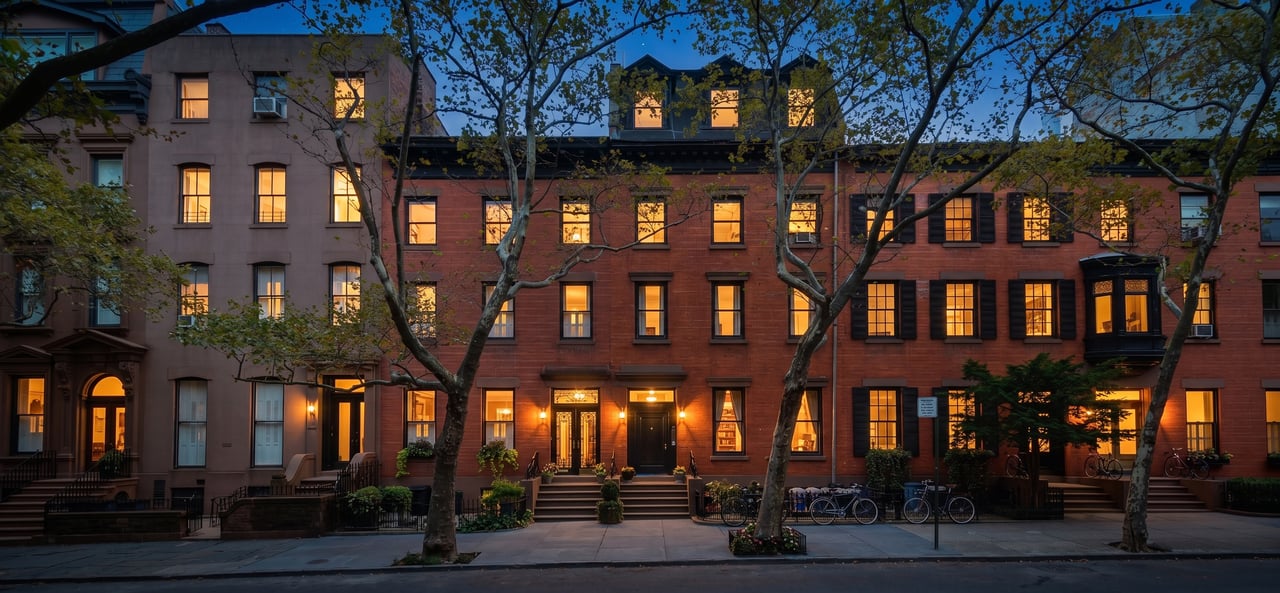
Then the protection. The Park Slope Historic District was designated in 1973, one of the city's earliest and largest, and extensions in 2012 and 2016 pushed the total past 2,500 protected buildings. The original designation report described 19th-century Brooklyn as "a city of homes and churches," and these blocks still read that way: rows of brownstones behind low iron fences, church spires breaking the roofline, the Venetian Gothic Montauk Club of 1891 holding its corner on Eighth Avenue like it owns the deed to the whole street.
And the tilt. Because the neighborhood slopes downhill from the park, elevation roughly tracks the market. Prospect Park West at the top, then Eighth, Seventh, Sixth, Fifth, and finally Fourth Avenue at the bottom, where the new elevator condos rise. Walk one avenue west and the neighborhood changes register. That's the map buyers actually shop with.
Quick comparison: North, Center, and South Slope at a glance
Folks draw the lines differently, but a workable version: North Slope runs from Flatbush Avenue down to about Union Street, Center Slope from Union to 9th Street, and South Slope from 9th down to 15th Street and the Prospect Expressway.
The feel | Housing stock | What stands out | Transit edge | Pace | |
|---|---|---|---|---|---|
North Slope | The busiest corner, pulled toward Flatbush Avenue, Barclays Center, and Grand Army Plaza. | The oldest rows, much of it 1860s and 70s Italianate and Neo-Grec, plus condos near Flatbush. | The strongest commute in the neighborhood. | 2/3 at Bergen and Grand Army Plaza, B/Q at Seventh Avenue, a walk to Atlantic Terminal (LIRR). | Higher energy. |
Center Slope | The postcard core. Deep landmark blocks, stoop life, stroller traffic on Seventh Avenue. | The grandest brownstones plus pre-war co-ops on the avenues. | The PS 321 zone and the heart of the historic district. | F and G at Seventh Avenue, R at Union Street. | Calm, with a school-run rush hour. |
South Slope | Looser and a beat slower, with a newer cafe and bar scene on lower Fifth. | Later 1880s and 90s rows, more co-ops, condos toward Fourth Avenue. | More home for the money, relatively speaking. | F/G at Fourth Avenue-9th Street and 15th Street-Prospect Park, R at Prospect Avenue. | Slowest of the three. |
Which part of Park Slope is right for you?
Here's the short version before the long one.
If your commute rules everything and you like some noise and life outside the door, look at North Slope. If you want the classic experience, landmark blocks, the top school zone, the stoops, and you're prepared to compete for it, look at Center Slope. If you want more house for the money and a younger, looser street scene, look at South Slope. And if what you actually want is an elevator, a doorman, and a washer-dryer, you're probably shopping Fourth Avenue no matter which cross streets you land on.
Now the detail.
Brownstones, co-ops, and condos: the housing stock
Three property types run this market, and most buyers end up choosing between the second and third.
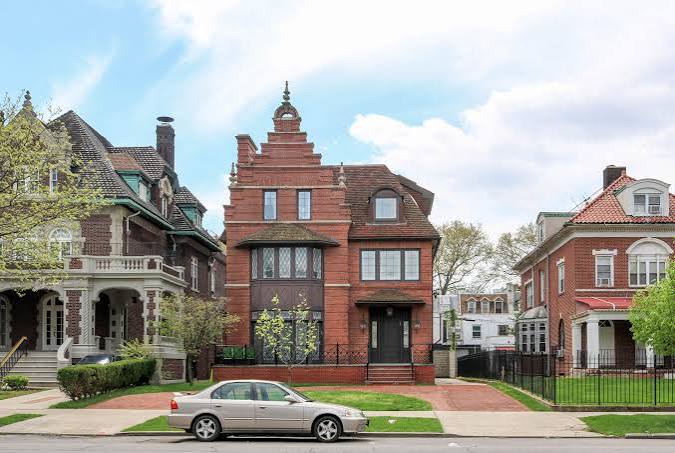
Brownstones are the postcard and the price ceiling. The rows here went up mostly between the 1870s and the 1890s, Italianate and Neo-Grec early on, then Queen Anne, Romanesque Revival, and Renaissance Revival as the building wave rolled south. Original detail, the carved mantels, parlor pocket doors, and intact stoops, commands a real premium over renovated-flat interiors. Owning one means owning a 140-year-old building outright: the roof, the boiler, the facade, all of it yours.
Co-ops are the backbone of the for-sale inventory and, for most people, the way in. You'll find them in pre-war apartment buildings along Eighth Avenue and Prospect Park West and in converted townhouses on the side streets. The trade-off is the board: a financial package, an interview, and house rules on subletting and renovations that vary building to building.
Condos are the flexible newcomers, concentrated along Fourth Avenue since a 2003 rezoning let developers build tall there. They generally trade higher than comparable co-ops but skip the board gauntlet and sublet limits.
One habit worth stealing from experienced buyers: compare monthlies, not just asking prices. Co-op maintenance already folds in property taxes and building upkeep. Condo common charges come with a separate tax bill on top. And a whole brownstone means you're the super now.
What drives value in Park Slope
Four forces, and they stack.
Park proximity comes first. The blocks closest to Prospect Park have always carried a premium over the blocks farther down the slope, and Prospect Park West addresses sit at the top of the whole market.
School zones come second, and here they're unusually loud. Homes zoned for PS 321, the elementary school on Seventh Avenue widely considered one of the city's best, have long traded at a premium over near-identical homes a few blocks outside the line. When the Department of Education shrank the zone in 2012 to relieve overcrowding, The Wall Street Journal put a measurable per-square-foot number on what being inside it was worth. The zone lines have moved before and can move again, which is exactly why buyers obsess over them.
Preservation and zoning come third, and this one's underrated. The historic district freezes the streetscape, and the city's 2003 rezoning deliberately capped the brownstone midblocks at rowhouse scale while pushing new density to Fourth Avenue. Translation: supply on the classic blocks is fixed, permanently, by law. Demand isn't.
Transit rounds it out. Seven lines serve the neighborhood, and the express 2 and 3 at the north end are the difference between a good commute and a great one.
The avenues: Fifth, Seventh, and Prospect Park West
Fifth Avenue is the fun one. Independent shops, most of the neighborhood's bar scene, and the restaurant rooms that fill up on a Thursday night. It runs younger and stays out later, especially on the lower stretch through the South Slope, where new places keep opening in old storefronts.
Seventh Avenue is the errand spine, and honestly the truest cross-section of the neighborhood. Pediatricians, hardware, bakeries, the bookstore, the bank. At 8 a.m. on a school day the sidewalk outside PS 321 turns into a stroller traffic jam, and every October the Halloween parade takes the whole avenue over. If you want to know what living here actually feels like, stand on Seventh for twenty minutes on a Saturday.
Prospect Park West is the trophy shelf. Mansions and grand co-op buildings facing straight into the park, with the Long Meadow as a front lawn. It's the shortest street of the three in spirit, and the most expensive real estate in the neighborhood pretty much without exception.
North Slope: the connected one
North Slope wins on transit, full stop. From these blocks you can walk to the 2 and 3 at Bergen Street or Grand Army Plaza, the B and Q at Seventh Avenue on the Flatbush side, and the whole knot of lines plus the LIRR at Atlantic Terminal. For a daily Manhattan commuter, nothing else in the Slope comes close.
It's also the oldest part of the neighborhood. Development here started in the 1860s and 70s, so the rows lean Italianate and Neo-Grec, a little more austere and a little earlier than the showier blocks to the south. The 2016 historic district extension folded in more of these northern blocks after years of pushing by the Park Slope Civic Council.
The trade-off is energy. Flatbush Avenue and the Barclays Center sit right at the corner, which means arena nights, more foot traffic, and more hum than the mid-Slope blocks ever get. Some buyers love having the borough's front door at their front door. Others walk two blocks in and exhale.
Best if you want the strongest commute in the neighborhood and don't mind city volume at the edges.
Center Slope: the postcard one
Center Slope is what people picture when they say Park Slope. The blocks between Union and 9th Streets, especially up toward the park, hold the neighborhood's grandest houses: Montgomery Place's architect-designed row, the mansions off Eighth Avenue, the Montauk Club presiding over its corner. This is the heart of the 1973 historic district, and the streetscape is protected down to the cornices.
It's also the heart of the PS 321 zone, which is why competition here runs hottest. Family buyers hunting a four-story house inside the zone are the single most crowded lane in the whole market, and well-priced homes in it tend to draw multiple offers fast.
One thing plenty of buyers miss: not every Center Slope block is landmarked. The original district was drawn in an L shape that skipped stretches between Sixth and Seventh Avenues, and the Civic Council is still campaigning to add them. Two houses a block apart can sit under completely different renovation rules. Worth checking before you fall in love.
Best if you want the classic Park Slope experience, the top school zone, and you're ready to compete for it.
South Slope: the looser one
South Slope runs from 9th Street down to 15th and the Prospect Expressway, and it moves at its own speed. The housing came later, 1880s and 90s mostly, in narrower rows, with more co-ops in the mix and condo buildings filling in toward Fourth and lower Fifth Avenues. The 2012 historic district extension brought a chunk of these southern blocks under protection, including relics like the old Ansonia Clock Company works.
The street life skews younger. Lower Fifth Avenue has quietly become one of the better eating-and-drinking stretches in brownstone Brooklyn, the kind of strip where a new bakery and a new wine bar open in the same season. Greenwood Heights and the ridge of Green-Wood Cemetery sit just past the southern edge.
Schools anchor plenty of decisions here too: PS 107 on Eighth Avenue and PS 10 pull strong demand into their zones, and both have had their lines redrawn before.
What you give up is a few minutes of commute. The F and G at Fourth Avenue-9th Street and 15th Street-Prospect Park cover it, but the express trains stay up north.
Best if you want more home for the money, a newer scene, and a slower pace, and you'll trade a slightly longer ride for all three.
The Rahmé Team Park Slope market read
The honest version is short: this is a supply-starved market where the demand never really leaves.
Landmarking and contextual zoning mean the brownstone blocks can't add inventory, so what trades is what existing owners decide to sell, and long-held family houses come up when life changes, not on any schedule. Turnkey houses inside the PS 321 zone move fastest and draw the deepest competition. Park blocks carry a premium over the lower avenues. Co-ops remain the most accessible way in, and Fourth Avenue condos are the release valve for buyers who want new construction without leaving the neighborhood.
A meaningful share of the best homes here also trade quietly. Years of work on these blocks means we hear about houses before they list, which matters more in a market this tight than in almost any other Brooklyn neighborhood.
Buying strategy: how to actually win here
Four moves separate the buyers who land homes here from the ones who spend a year losing bidding wars.
Move fast and shop before the market does. Set up alerts, see homes the first weekend, and work with someone who hears about off-market and pre-market houses. In a fixed-supply neighborhood, speed is a form of leverage.
Prep the board package before you bid. If you're buying a co-op, have your financials organized, your debt picture clean, and your post-closing liquidity story ready in advance. Boards differ building to building, and a prepared package can win a tie against a slightly higher offer.
Do landmark due diligence. First check whether the address actually sits inside the historic district, because plenty of Park Slope blocks don't. If it does, know the process: interior work and non-visible changes usually clear through staff-level Landmarks approvals like the Certificate of No Effect, often within a couple of weeks once complete, while visible exterior changes, facade work, additions, anything the street sees, need a fuller review that can run months. Ordinary maintenance needs no permit at all. Renovating a landmarked brownstone is entirely doable. Thousands of owners do it. It just rewards people who plan the approvals into the timeline instead of discovering them mid-project.
Walk the block at the hour you'd live it, then verify the school zone for that exact address with the NYC Department of Education rather than a listing's claim. Zones changed in 2013 and can change again.
Living here day to day
The commute. Most Manhattan trips run roughly 20 to 35 minutes depending on where in the Slope you start and where you're headed. The 2 and 3 express from Grand Army Plaza or Bergen Street are the fast lane downtown. The F, G, R, B, and Q cover everything else, and Atlantic Terminal adds the LIRR for anyone splitting time on Long Island.
Schools. All of Park Slope sits in NYC School District 15. Elementary seats are zoned by address, with PS 321, PS 107, PS 10, PS 39, and PS 282 anchoring different corners of the neighborhood. Middle school works differently: District 15 runs choice-based admissions rather than strict zones, part of a district integration effort, so the middle-school question hangs on your block far less than the elementary one does. Whatever a listing says, confirm the current zone for the specific address before you commit. We can help you check.
The park. It's not an amenity here so much as a room of the house. Morning loop runners on the drives, the Saturday greenmarket at Grand Army Plaza, summer concerts at the bandshell, sledding on the first real snow. The Long Meadow absorbs half the neighborhood on a warm weekend and somehow never feels full.
And the institutions. The Park Slope Food Coop on Union Street, going since 1973 with roughly 17,000 member-owners, still asks every member to work a shift of 2 hours and 45 minutes every six weeks in exchange for cheaper groceries. People joke about it constantly and quit it rarely. That kind of long-running, slightly stubborn community fabric is pretty much the neighborhood in miniature.
How to choose
Start with the thing you can't compromise on, then match it to the pocket that delivers it.
If you want... | Look at... |
|---|---|
The shortest commute and the most city energy | North Slope |
Landmark blocks and the PS 321 zone | Center Slope |
More home for the money and a newer scene | South Slope |
New construction, elevators, and amenities | Fourth Avenue condos |
The lowest cost of entry | Co-ops throughout, especially south of 9th Street |
None of these is a wrong answer. The mistake we see is buyers pricing the name instead of the block. A Tuesday morning near Grand Army Plaza and a Sunday morning on 14th Street are two different lives at two different prices, and a home zoned one block outside PS 321 is a different purchase than one zoned inside it. Walk the blocks at the times you'd actually live them, and check the current listings against what you felt on the ground.
FAQs
Is Park Slope a good place to buy a home?
For buyers who want historic architecture, strong public schools, direct park access, and long-term value, yes. The trade-offs are steep competition, limited new construction on the brownstone blocks, and co-op board approval on much of the entry-level inventory. Plan to move quickly when the right home appears.
What's the difference between North Slope, Center Slope, and South Slope?
North Slope has the strongest transit, sitting closest to the Barclays Center lines and Atlantic Terminal. Center Slope is the classic core, home to the deepest landmark blocks and the PS 321 zone. South Slope runs looser and slower, with later housing stock, more co-ops, and a newer restaurant scene along lower Fifth Avenue.
Should I buy a brownstone, a co-op, or a condo in Park Slope?
It depends on budget and flexibility. Brownstones deliver the full historic experience at the highest cost and the most upkeep. Co-ops make up the bulk of the for-sale inventory and cost less to get into, but boards review your finances and set house rules. Condos, concentrated along Fourth Avenue, generally trade higher than comparable co-ops but come with fewer restrictions.
How do school zones work in Park Slope?
The neighborhood sits in NYC School District 15, and elementary seats are assigned by address to zoned schools such as PS 321, PS 107, PS 10, and PS 39. Zone lines have been redrawn before, most notably in 2013, so confirm the current zone for any specific address before you buy. District 15 middle schools use choice-based admissions rather than strict zones.
Can you renovate a landmarked Park Slope brownstone?
Yes. Interior work and non-visible changes usually clear through staff-level Landmarks approvals within weeks, while visible exterior changes such as facade work or additions need a fuller review that can take months. Also worth knowing: not every Park Slope block is landmarked, so check whether a specific address falls inside the historic district before planning a project.
How long is the commute from Park Slope to Manhattan?
Roughly 20 to 35 minutes for most Manhattan destinations, depending on where in the Slope you start. The 2 and 3 express trains at Grand Army Plaza and Bergen Street are the fastest route downtown, while the F, G, R, B, and Q cover the rest of the neighborhood. North Slope has the edge for daily commuters.
How does Park Slope compare to Carroll Gardens?
They share brownstone bones, but Park Slope is bigger, sits directly on Prospect Park, and runs on school-zone demand, while Carroll Gardens is smaller, slower, and known for its deep front gardens. Park Slope has more housing options, including Fourth Avenue condos and a larger co-op supply. Carroll Gardens trades some transit convenience for quieter streets.
Is Park Slope family-friendly?
About as family-oriented as New York City gets. Weekends mean strollers on Seventh Avenue, birthday parties on the Long Meadow, and playgrounds all along Prospect Park, and the school zones are a primary reason families buy here. That said, plenty of buyers without kids choose it for the architecture and the park.
Weighing this against the neighborhoods one ridge west? Our BoCoCa guide to Boerum Hill, Cobble Hill, and Carroll Gardens walks the same decision for those three.
Work with a local team
Park Slope rewards people who know it block by block, zone line by zone line, and that takes time on the ground. The Rahmé Team at Compass brings 40 years of combined experience across brownstone Brooklyn, ranks in the top 1.5% of agents nationwide by RealTrends Verified, and has closed more than $800 million in career sales. We work with buyers and sellers on landmarked renovations, co-op board strategy, school-zone questions, and off-market opportunities, the homes you won't find by scrolling.
Ready to find your block? Start with our Park Slope neighborhood page, then call the Rahmé Team at (718) 233-3365 or use our contact form, and we'll build a Park Slope search around your block preferences, not just your price point.