In this guide
- The lay of the land: what defines Bedford-Stuyvesant
- Quick comparison: the four pockets at a glance
- Which pocket is right for you?
- Brownstones, flats, and apartment palaces: the housing ladder
- What drives value in Bedford-Stuyvesant
- How to choose
- FAQs
- Work with a local team
The lay of the land: what defines Bedford-Stuyvesant
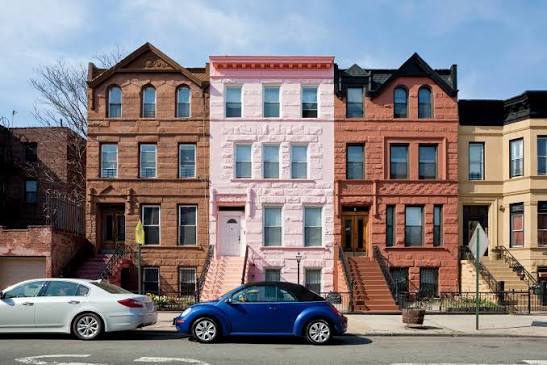
Is Bedford-Stuyvesant a good place to buy a home? For buyers who want brownstone Brooklyn at real depth, yes, and the depth is the whole story. Bed-Stuy holds block after block of late-1800s limestone and brownstone rows, more than 1,250 of those buildings now protected inside the Stuyvesant Heights historic districts alone, and the neighborhood's signature configuration, the two-to-four-family rowhouse, lets owners live in one unit while rent covers part of the mortgage. Add the A express under Fulton Street and a civic backbone few neighborhoods anywhere can match, and the case makes itself. The work is picking the right block, because condition, protection, and price all swing street by street.
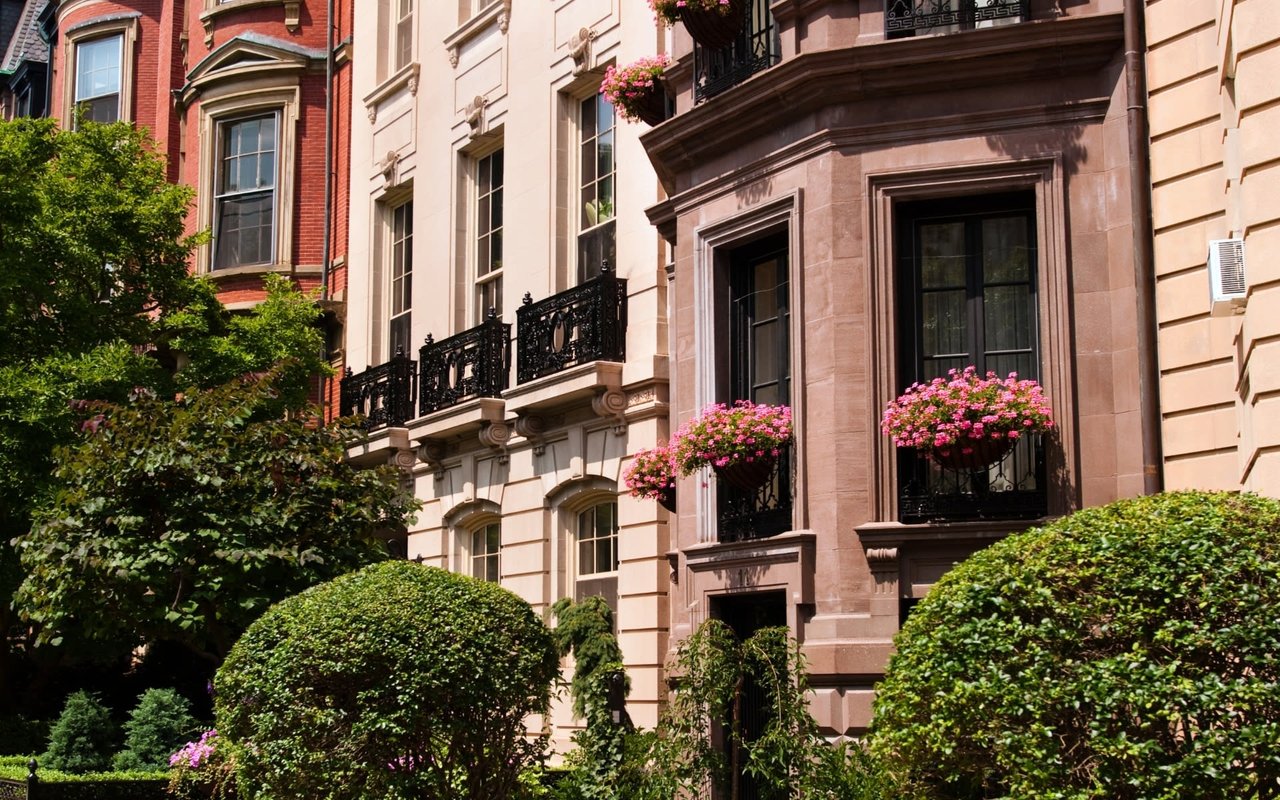
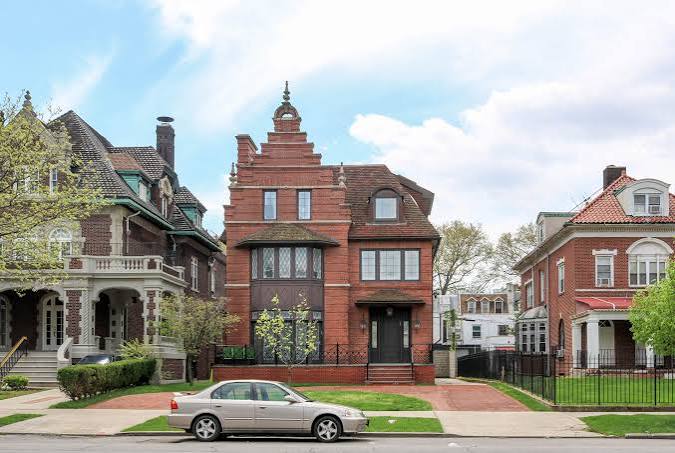
The map is bigger than people expect. Bed-Stuy runs from Flushing Avenue down to Atlantic, and from Classon Avenue east past Malcolm X Boulevard, with Fulton Street as the commercial spine and Broadway's elevated tracks marking the northeast edge. The name stitches together two older places: Bedford, the colonial-era crossroads on the western side, and Stuyvesant Heights, the name that took hold in the early 1900s for the blocks around Stuyvesant Avenue. Most of what buyers come for went up in one long building boom, roughly the 1880s through the 1910s, speculative rows in Queen Anne, Neo-Grec, Romanesque Revival, and Renaissance Revival, with a scattering of mid-1800s wood-frame houses still standing from before the boom.
The city recognized it early. The Stuyvesant Heights Historic District, an L-shaped run of thirteen blocks and more than 430 buildings north of Fulton, was designated in September 1971, decades before most of brownstone Brooklyn's districts existed. In April 2013 the LPC drew a far bigger ring around it, the Bedford-Stuyvesant/Expanded Stuyvesant Heights Historic District, roughly 825 buildings between Tompkins Avenue and Malcolm X Boulevard, which more than doubled the protected area in a single vote. A third district followed on the Bedford side in 2015. Very little of this streetscape can ever be torn down now, which is precisely the point.
And the civic layer runs just as deep. The Bedford Stuyvesant Restoration Corporation, founded in 1967 and generally credited as the nation's first community development corporation, built Restoration Plaza on Fulton Street in the mid-1970s, a roughly 300,000-square-foot campus that still houses the Billie Holiday Theatre and a working mix of local businesses and nonprofits. On Lafayette Avenue, one of the city's only living landmarks, a magnolia planted in 1885 and designated in 1970, stands in front of number 679 with the Magnolia Tree Earth Center, founded in 1972, beside it. Block associations and community gardens are a genuine fixture here, not a brochure line. Buildings tell this neighborhood's story, and they've been telling it for a long time.
Quick comparison: the four pockets at a glance
Bed-Stuy is really four markets wearing one name, and stock, condition, and pace shift as you cross between them. Here's the buyer's map, then each pocket up close further down.
The feel | Housing stock | The pace | Transit | Best if | |
|---|---|---|---|---|---|
Stuyvesant Heights core | The postcard blocks: carved limestone rows, deep stoops, mature trees | Landmark rowhouses, many two-to-four-family, some restored top to bottom | Quiet residential streets, Lewis Avenue's strip nearby | The A and C on Fulton a few blocks south | You want the finest streetscapes and full landmark protection |
Bedford Corners west | Rows plus the big apartment palaces on Nostrand | 2015-district rowhouses, pre-war flats, landmark apartment buildings | Busier avenues, calmer side streets | The G on the western side, Fulton trains below | You want history at a slightly gentler entry point, near Clinton Hill |
The Von King blocks, central north | Park-anchored brownstone streets, the magnolia corner on Lafayette | Rows and flats inside and outside district lines, wider condition spread | Neighborly, with Tompkins Avenue's strip running through | The G nearby, a longer walk to Fulton | You want the park, the gardens, and room to add value |
East to the Broadway edge | Deeper-value rows, infill construction, the el along Broadway | Unrenovated and mid-condition rowhouses, newer condos at the edges | Working avenues, quieter interiors, train noise near the el | The J and Z on Broadway, the A and C along Fulton | You're chasing space per dollar or a project with upside |
Which pocket is right for you?
End-user brownstone buyers who want the classic experience should start in the Stuyvesant Heights core and its 2013 ring: parlor floors with eleven-foot ceilings, original woodwork that survived because nobody had the money to rip it out in the decades when that was the fashion, and streetscapes the LPC has frozen in place. These are the blocks that sell the neighborhood, and they price accordingly.
The live-in-one-unit, rent-the-rest crowd has more room to work than almost anywhere in the borough, because the two-to-four-family row is Bed-Stuy's native format. An owner's duplex over a garden rental is the standard play; three- and four-family buildings tilt toward owner-operators and investors who can underwrite properly. Buyers priced out of a whole house should look at the pre-war flats and the co-op and condo layer, including apartments inside genuinely landmarked buildings, which is not a sentence you get to write about most neighborhoods.
Who tends to look elsewhere? Buyers who need a polished retail strip every three blocks, since Bed-Stuy's commerce concentrates on a handful of corridors with quiet in between. Buyers allergic to renovation risk, because much of the stock still needs systems work, and the bargains need more. And anyone who wants glass-tower amenities; for that, look north across Broadway or west toward the waterfront.
Brownstones, flats, and apartment palaces: the housing ladder
The rows come first, and they come in volume. Brownstone and limestone houses from the boom decades line MacDonough, Decatur, Bainbridge, Hancock, and their neighbors, in Queen Anne, Neo-Grec, Romanesque Revival, and Renaissance Revival dress, with bay fronts, carved friezes, and stoops built for sitting. The earliest survivors are wood-frame houses from the mid-1800s, and at the southern edge, off Atlantic between Kingston and Albany Avenues, the Alice and Agate Courts micro-district preserves 36 Queen Anne rowhouses on two dead-end courts from 1888 and 1889. Single-family mansions exist here, but the workhorse is the two-to-four-family row, and that configuration is the neighborhood's quiet economic engine.
Then the apartment palaces, Bed-Stuy's particular flex. In 1889 and 1890, architect Montrose Morris, who had designed his own Hancock Street house partly as a walk-in advertisement, built the Alhambra Apartments for developer Louis Seitz at Nostrand and Macon: six towers, arcades, and terra cotta across a full blockfront, an early New York attempt to make apartment living respectable for people who could afford houses. It worked well enough that Seitz commissioned the Renaissance Apartments at Nostrand and Hancock in 1892, a corner building got up like a Loire Valley chateau in buff brick. Both are individual city landmarks, and both still hold apartments, which means you can occasionally buy or rent inside the buildings that taught Brooklyn to accept apartments at all.
The flats and small pre-war buildings fill the middle: walk-ups and modest elevator buildings scattered through the districts and along the avenues, some converted to co-ops and condos. They're the gentlest entry point, and inside district lines they come with protected surroundings at apartment pricing.
New construction finishes the ladder, thickening toward Broadway, the northern blocks, and the district gaps, where infill condos trade fresh systems against the old fabric. Whatever the rung, the same rule holds: run the full monthly cost, not the asking price. A landmark row keeps its own repair calendar, a four-family keeps its own ledger, and a condo's charges deserve the same slow read as its finishes.
What drives value in Bedford-Stuyvesant
Protected supply at serious scale. The 1971 designation made Stuyvesant Heights one of the city's early historic districts, the 2013 expansion more than doubled it in a single vote, and the 2015 Bedford district extended protection west. That's over 1,250 buildings in the Stuyvesant Heights districts alone that can never be demolished or defaced, locked in place while large parts of the neighborhood still trade below their finished value. Scarcity here isn't projected. It's designated.
The income engine. Because so much of the stock is legally two-to-four-family, Bed-Stuy ownership comes with a rental offset built into the architecture, which widens the pool of people who can afford to buy and hold. That structural demand, owner-occupants and investors bidding on the same buildings for different reasons, is a durable floor under the market that single-family neighborhoods don't have.
The civic spine. The nation's first community development corporation was founded here in 1967, and its Restoration Plaza campus still anchors Fulton Street with the Billie Holiday Theatre inside. Add the landmark magnolia and its Earth Center on Lafayette, the block associations, the community gardens, and one of the strongest preservation cultures in Brooklyn, and you get a neighborhood with institutional depth that predates any market cycle and will outlast the next one.
And the trains, plural. The A runs express under Fulton Street with the C making the locals, the G crosses the western blocks on its way between Clinton Hill and Williamsburg, the J and Z ride the Broadway el along the northeast edge, and the LIRR stops near Nostrand and Atlantic on the southern border. Four distinct services, four different directions. Deep Brooklyn rarely comes this connected.
Fulton, Nostrand, Tompkins: the corridors
Fulton Street is the spine: the express trains underneath, Restoration Plaza in the middle, and a long, working retail run that handles the errands the side streets can't. It's the neighborhood's front door and its bus depot, its bank branch and its theater district, all on one street. Blocks just off Fulton get the convenience without most of the noise.
Nostrand Avenue is the north-south counterpart, and it carries the architecture too: the Alhambra's towers at Macon, the Renaissance's turrets at Hancock, and the towered 1880s Girls High School building between them, a stretch that reads like an open-air museum of what ambitious Brooklyn looked like in 1890. Marcy and Malcolm X Boulevard handle the other big crossings.
Tompkins and Lewis Avenues are the local strips, and the neighborhood's clearest change story, told in storefronts: cafes, restaurants, and shops filling in along both over the past couple of decades, busiest on weekend mornings. Lewis serves the landmark core, Tompkins serves the park side, and neither has surrendered its hardware stores yet, which locals count as the right balance.
Broadway is the honest edge. The J and Z run the elevated tracks, the light comes through the trestle in stripes, and the blocks underneath trade at a discount that reflects the rumble. One practical note that applies everywhere: most Bed-Stuy rows have no curb cut, so street parking is part of daily life, and it varies block by block; our Brooklyn parking guide covers how to read that before you buy.
The four pockets, up close
Stuyvesant Heights core: the thirteen landmark blocks of 1971 plus their 2013 ring, centered on Stuyvesant Avenue and the streets around MacDonough and Decatur. This is where the restoration culture runs deepest, where the Brownstoners of Bedford-Stuyvesant house tour tradition lives, and where prices lead the neighborhood. Buy here for the streetscape and hold for the long term.
Bedford Corners west: the blocks toward Classon and the 2015 Bedford district, with Nostrand's apartment palaces on one side and Clinton Hill just across the border. The G train makes this side work for crosstown commuters, and the mix of rows, flats, and landmark apartment buildings gives buyers more formats to choose from than the core.
The Von King blocks: the central-north streets around Herbert Von King Park, Bed-Stuy's main shared green, with the magnolia corner on Lafayette and the Tompkins strip running through. District lines weave here, so protected and unprotected blocks sit side by side, and the condition spread is wider, which is exactly what value-add buyers want to hear.
East to the Broadway edge: the run from Malcolm X Boulevard out to the el, where unrenovated rows, mid-condition houses, and infill construction share the map, and space per dollar peaks. Across Broadway, Bushwick runs its own market with its own logic; buyers shopping the eastern blocks usually end up comparing the two, and should.
The Rahmé Team Bedford-Stuyvesant market read
Read this market by configuration and condition, not by the neighborhood average, because the average blends four very different products. Fully restored landmark rows in the core trade in one register, and thinly. Two-to-four-family buildings price off their income and their paperwork as much as their facades. Unrenovated houses price off what they'll cost to fix, which the listing photos never quite admit. And the flats, co-ops, and condos move at apartment speed, mostly independent of the house market above them. A blended median tells you almost nothing about the building you're actually bidding on.
The honest caveats belong in the underwriting. Renovation here runs from cosmetic refresh through full systems replacement to gut jobs, and the difference is measured in multiples, not percentages; landmark review adds approval time on protected blocks; and buildings with tenants in place carry legal obligations that must be understood before contract, not after. None of this is a reason to avoid Bed-Stuy. It's the reason prepared buyers do better here than lucky ones.
Current numbers move too fast to live in an evergreen guide. For this quarter's data on any configuration, ask us for the current Bedford-Stuyvesant figures and we'll pull them from live inventory and our closed-sale records.
Buying strategy: how to actually win here
Shop blocks, not the neighborhood. Bed-Stuy is big enough that two listings can share a price and nothing else, so pick your pocket, then your streets, then walk them at a weekday morning, a weekend afternoon, and after dark before you bid. Check the district maps early: the same house inside and outside a landmark line is two different purchases, and the Bedford Stuyvesant Preservation Coalition's district pages make the boundaries easy to see.
On protected blocks, budget for landmark diligence. Exterior work runs through the LPC, straightforward interior projects can qualify for a Certificate of No Effect, and a renovated listing should come with its permit trail. The 2013 and 2015 districts are young enough that some owners are still learning these rules; the permits, or their absence, will tell you who did.
For any two-to-four-family, the paperwork is the purchase. Confirm the legal unit count against the certificate of occupancy, understand the regulation status and lease terms of any tenants in place, and underwrite the operating costs of a century-old building honestly: roof, boiler, plumbing, wiring, cellar. Walk the cellar before you fall for the parlor floor. Bring an attorney who reads these buildings for a living, and on schools, keep it mechanical: zoning runs address by address here, so check any school question against the DOE's current maps for the exact address, not the neighborhood name.
When you're ready to shape the search, tell us what you're solving for, end-user house, owner-occupied two-family, pure investment, or apartment, and we'll build the block list with you, including off-market houses that never reach the portals.
Living here day to day
Mornings run on stoops and platforms. Coffee on the steps if the weather allows, then the drop down to Fulton for the A, or the walk to the G on the western side. The commuters clear out, the block quiets, and the long streets go back to the trees.
Weekends split between the strips and the green. Lewis and Tompkins fill up for brunch, Herbert Von King Park runs the pickup games and the summer evening crowds, and the community gardens hit their stride from May on. Between the park, the gardens, and some of the borough's best street trees, Bed-Stuy earns more spots on the borough's greenest lists than its reputation suggests. Spring announces itself on Lafayette Avenue, where the landmark magnolia blooms white and lemon-scented over the sidewalk, a tree the city protected in 1970 and the neighborhood has minded ever since.
Block life is real here. Associations that actually meet, house tours in the fall, summer block parties with the street closed and the grills out. Winter pulls everything indoors, radiators knocking in the pre-wars, the Billie Holiday Theatre's season running at Restoration Plaza, and the stoops waiting under snow until the magnolia says otherwise.
How to choose
If this is the priority | Start here |
|---|---|
The finest streetscapes and full landmark protection | The Stuyvesant Heights core and its 2013 ring |
Live in one unit, let rent carry the rest | Two-to-four-family rows across all four pockets |
Apartment living inside landmark architecture | The flats and the Nostrand Avenue apartment palaces |
A project with room to add value | The Von King blocks and east toward Broadway |
Crosstown G-train life near Clinton Hill | Bedford Corners and the western blocks |
Maximum space per dollar | East of Malcolm X Boulevard toward the el |
FAQs
Is Bedford-Stuyvesant a good place to buy a home?
For buyers who want brownstone Brooklyn at real depth, yes. Bed-Stuy holds more than 1,250 protected buildings in the Stuyvesant Heights historic districts alone, the two-to-four-family rowhouse format lets owners offset the mortgage with rent, and the A express under Fulton Street keeps commutes workable. The tradeoffs are block-by-block condition swings and renovation needs across much of the stock, so the right block matters more than the neighborhood average.
What is the Stuyvesant Heights Historic District?
It's the landmark heart of Bed-Stuy: an L-shaped district of thirteen blocks and more than 430 buildings north of Fulton Street, designated in September 1971, making it one of the city's earlier historic districts. In April 2013, the LPC designated the surrounding Bedford-Stuyvesant/Expanded Stuyvesant Heights Historic District, roughly 825 additional buildings, and a third district followed on the Bedford side in 2015. Inside these lines, exterior changes require Landmarks approval and the streetscapes are permanently protected.
What are the Alhambra and Renaissance Apartments?
They're Bed-Stuy's landmark apartment palaces, both by Brooklyn architect Montrose Morris for developer Louis Seitz. The Alhambra, built 1889 to 1890 at Nostrand Avenue and Macon Street, runs a full blockfront of towers, arcades, and terra cotta; the Renaissance, built in 1892 at Nostrand and Hancock, wears corner turrets like a French chateau. Both are individual New York City landmarks, built to convince rowhouse Brooklyn that apartment living could be respectable, and both still contain apartments today.
Should I buy a single-family brownstone, a two-to-four-family, or a condo in Bed-Stuy?
Match the format to the life. A single-family delivers the most private space and the simplest ownership, at the highest carrying cost. A two-to-four-family, the neighborhood's native format, offsets the mortgage with rent but makes you a landlord, with the diligence that entails. Flats, co-ops, and condos are the gentlest entry, including apartments inside landmark buildings. Most buyers here end up deciding between the whole-house experience and the income-backed one.
What should I know about buying a Bed-Stuy house with tenants in place?
Treat the paperwork as part of the property. Confirm the legal unit count against the certificate of occupancy, get every lease and its terms in writing, and understand each unit's regulation status before contract, since regulated tenancies carry legal protections that transfer with the sale. Factor realistic operating costs for a century-old building, and work with an attorney experienced in Brooklyn multi-family closings. Priced correctly, tenants in place can be an asset; assumed casually, they're the classic mistake.
How is the commute from Bedford-Stuyvesant to Manhattan?
Better than the distance suggests. The A runs express under Fulton Street with the C making local stops, which puts Lower Manhattan roughly 20 to 30 minutes from the Fulton corridor depending on your stop, with Midtown somewhat beyond that. The J and Z serve the Broadway edge, the G crosses the western blocks connecting toward Clinton Hill, Williamsburg, and their transfer points, and the LIRR stops near Nostrand and Atlantic on the southern border.
What do landmark rules mean for renovations in Bed-Stuy?
Inside the districts, exterior changes, facades, windows, stoops, cornices, run through the Landmarks Preservation Commission, while straightforward interior work can often qualify for a Certificate of No Effect handled at staff level. Approvals add time, so plan them into the project schedule alongside construction. The practical upside is permanence: the rules protect the streetscape you're buying into, and a renovated house's permit history tells you quickly how carefully the work was done.
How does Bedford-Stuyvesant compare to Crown Heights and Clinton Hill?
All three share rowhouse bones, then split on format and anchors. Crown Heights counters with Eastern Parkway, the museum-and-garden corner, and a wider ladder of co-ops and condos. Clinton Hill is smaller and quieter, with its mansion layer and campus green, at generally higher pricing. Bed-Stuy's edge is depth: the largest protected rowhouse inventory of the three, the strongest two-to-four-family engine, and the widest spread of entry points from project houses to finished landmarks.
Weighing brownstone Brooklyn more broadly? Our BoCoCa guide and Park Slope guide walk those markets the same way, block by block, and both make useful contrasts: each trades at a higher register, and neither can match the configuration depth here.
Work with a local team
Bed-Stuy rewards buyers who can read a certificate of occupancy as fluently as a cornice, and in a neighborhood where the best houses trade on relationships as often as listings, that fluency is the whole job. The Rahmé Team at Compass brings 40 years of combined experience across Brooklyn, ranks in the top 1.5% of agents nationwide by RealTrends Verified, and has closed more than $800 million in career sales. We work with buyers and sellers on landmark-district due diligence, two-to-four-family underwriting, tenant-in-place purchases, and off-market opportunities, the houses you won't find by scrolling.
Ready to see Bedford-Stuyvesant properly? Start with our Bedford-Stuyvesant neighborhood page or browse current listings, then call the Rahmé Team at (718) 233-3365 or request a Bed-Stuy search through our contact form, built around your configuration and your blocks, not just your price point.