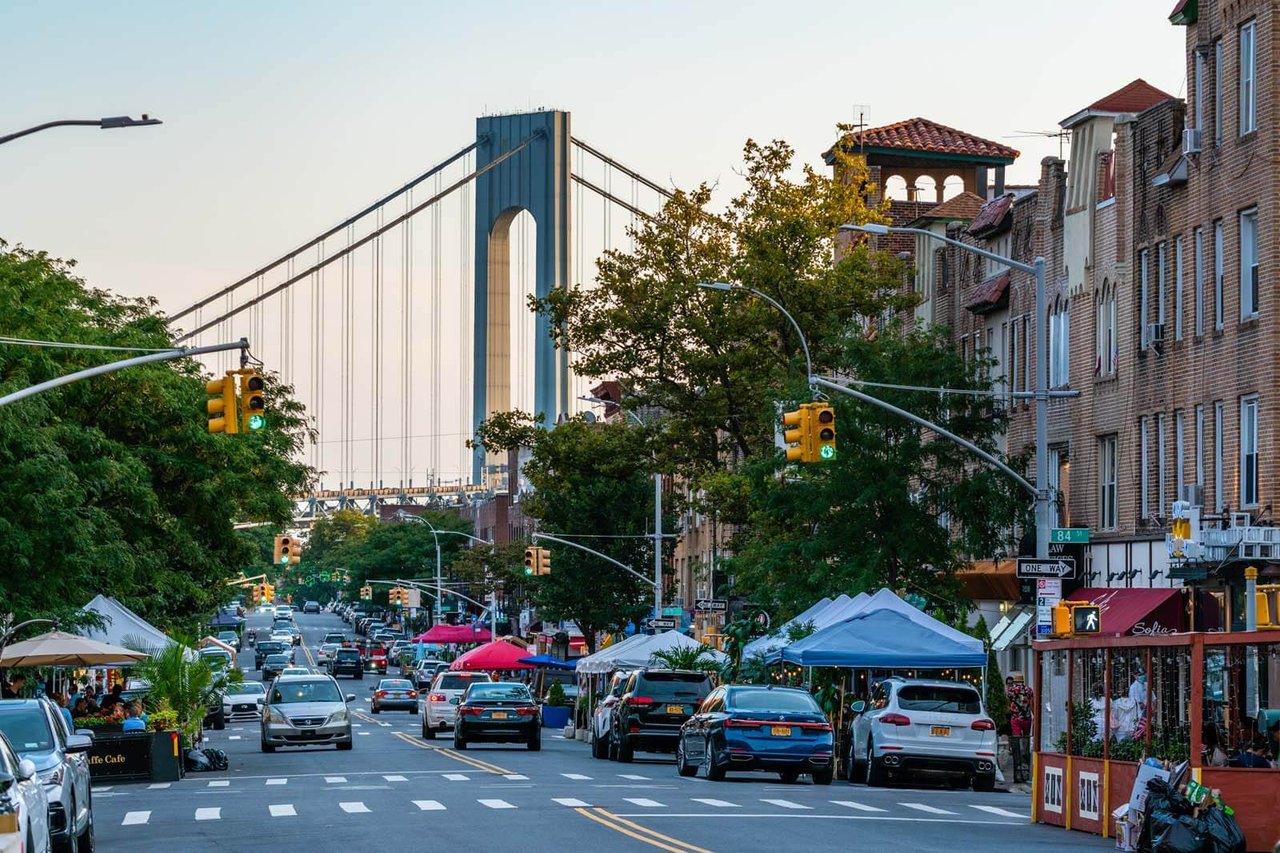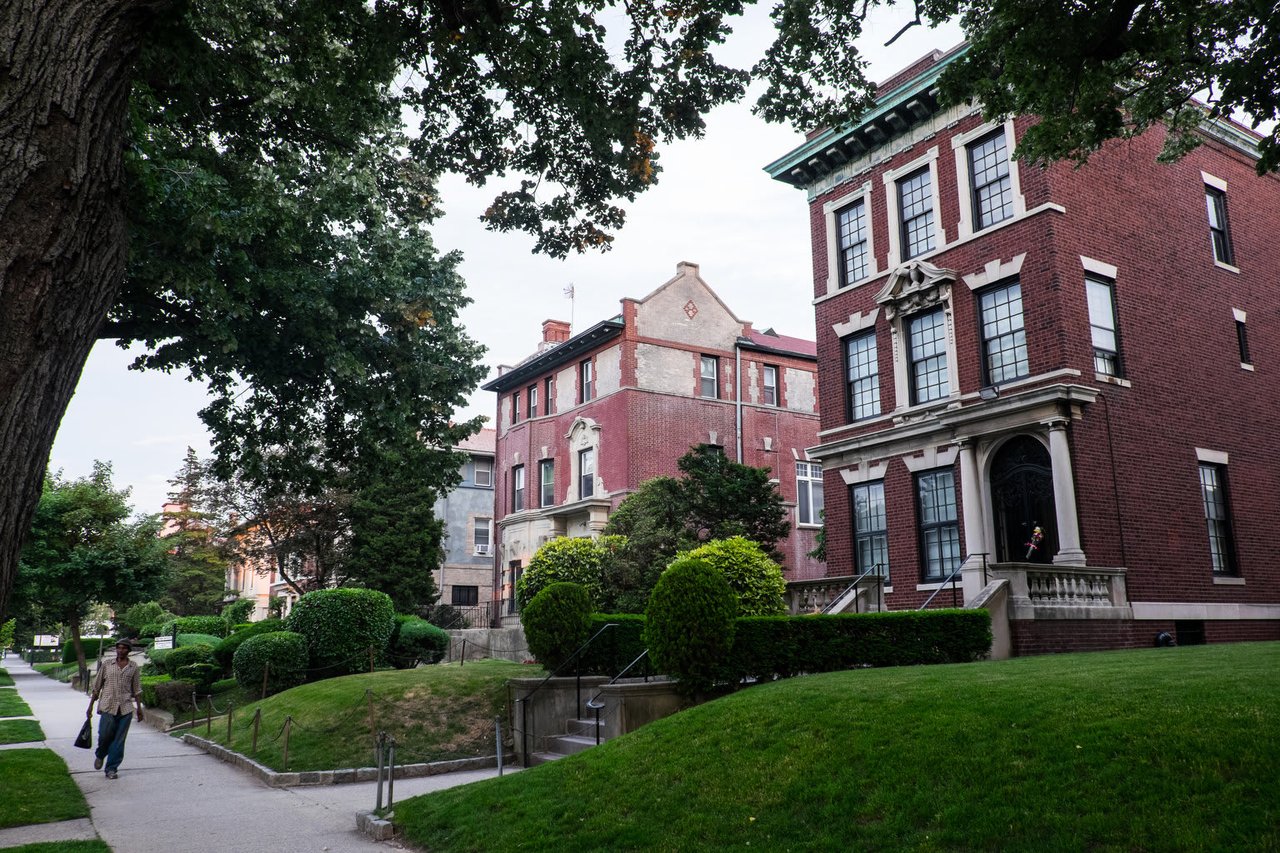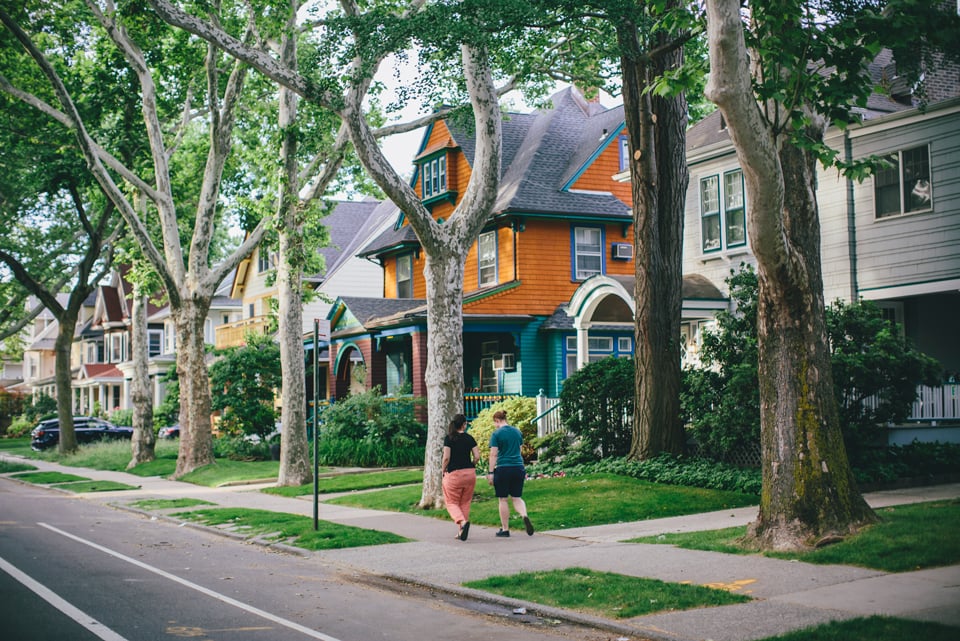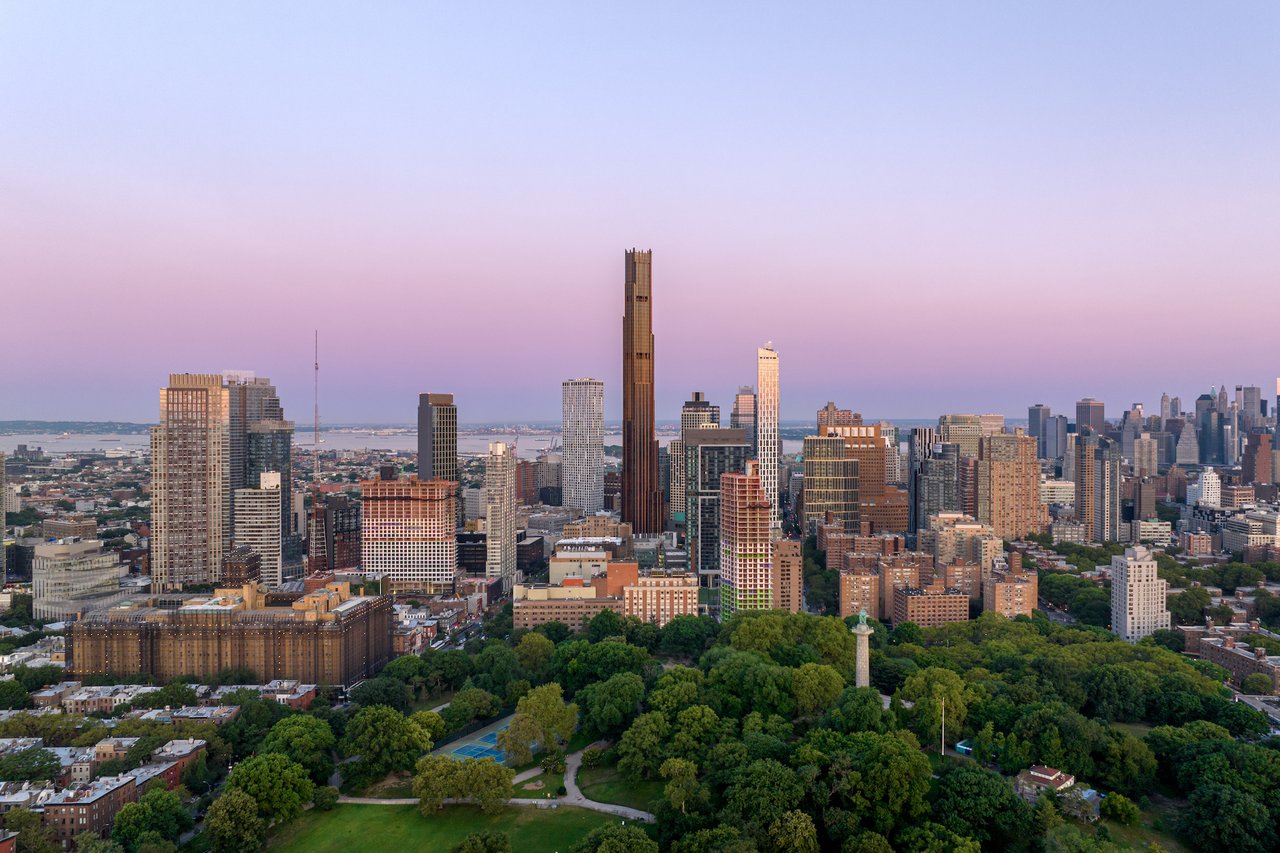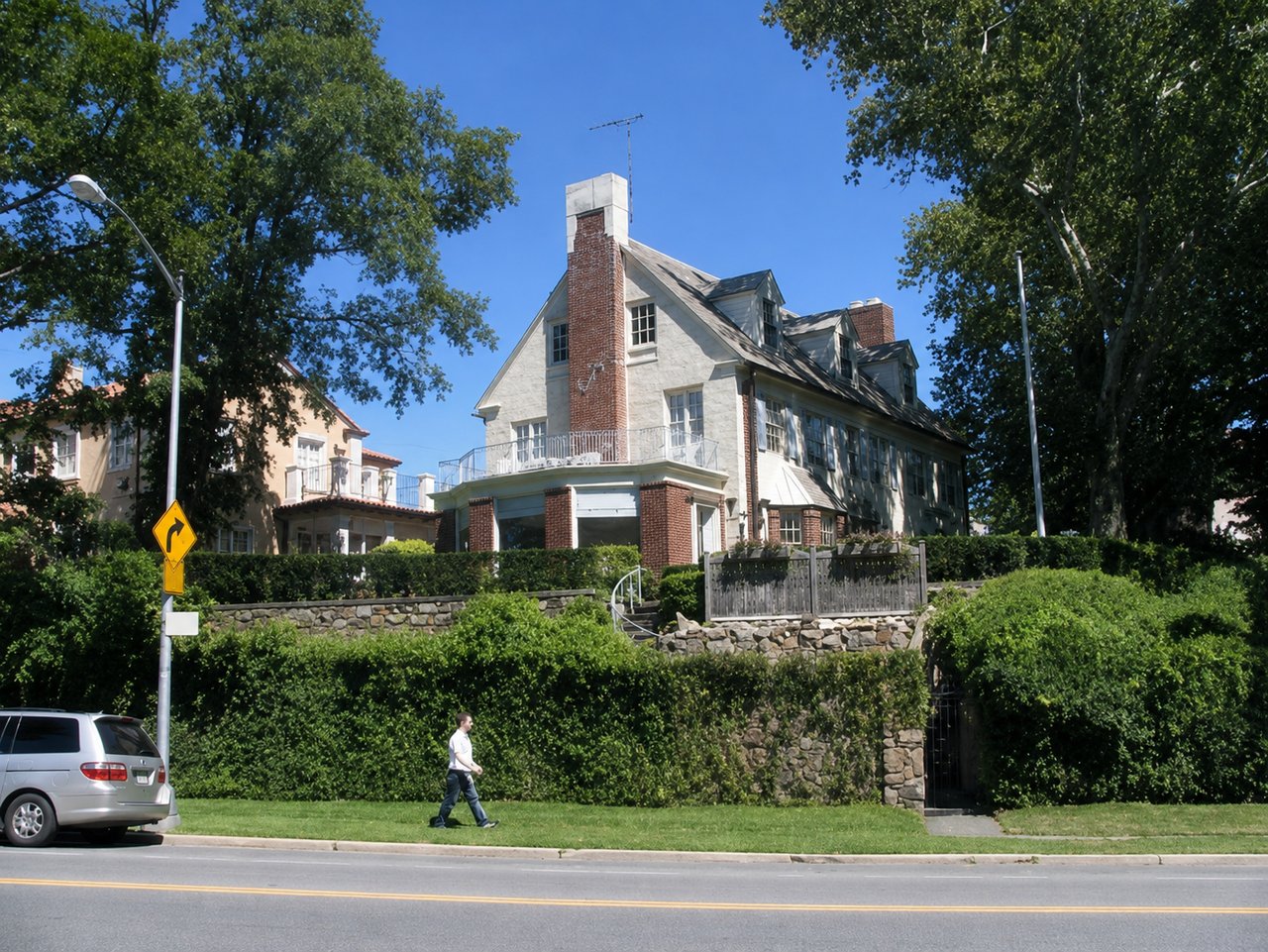
Is Bay Ridge a good place to buy? If you've run the numbers on the brownstone belt and kept landing about a hundred square feet short of what you actually need, yes, and the reason is geography. Bay Ridge sits on an actual ridge, a glacial moraine that runs under Ridge Boulevard, and the neighborhood that grew along it got the one thing the rest of Brooklyn ran out of a century ago: room. Driveways. Side yards. Freestanding houses with grass on four sides of them.
The trade is the commute, and nobody here pretends otherwise. The R is a local train the whole way, which means the ride into Manhattan is measured in podcast episodes rather than minutes. What you buy with that ride is square footage, a garage, a stretch of harbor at the end of your street, and a housing ladder that starts with pre-war co-ops and climbs to detached houses without skipping any rungs in between.
This guide walks the neighborhood the way we'd walk it with you: how the ridge shaped what got built where, the four pockets and what each one actually costs you in time, what to check before you bid on a hundred-year-old house near the water, and how to buy well whether you're after the standalone with the driveway or the corner co-op facing the Narrows.
In this guide
- The lay of the land: what defines Bay Ridge
- Quick comparison: the four pockets at a glance
- Which pocket is right for you?
- Detached houses, limestone rows, and pre-war co-ops: the housing ladder
- What drives value in Bay Ridge
- Third, Fifth, and the waterfront
- The commute, honestly
- The four pockets, up close
- The Rahmé Team Bay Ridge market read
- Buying strategy: how to actually win here
- Living here day to day
- How to choose
- FAQs
- Work with a local team

Fouad Rahmé
Founder, the Rahmé Team at Compass
The Rahmé Team advises buyers, sellers, investors, and developers across Brooklyn, with 40 years of combined experience, more than 1,000 clients and transactions, and over $800 million in career sales, $167 million of it since 2020. RealTrends Verified ranks the team in the top 1.5% of real estate professionals nationwide.
Contact the team or call (718) 233-3365.
The lay of the land: what defines Bay Ridge
Start with the hill. A retreating glacier left a terminal moraine across this corner of Brooklyn, and Ridge Boulevard runs the spine of it, which is why the streets west of it fall toward the water and the views keep going for a mile. The area was called Yellow Hook until 1853, after the clay in the soil, and the name got retired during a run of yellow fever outbreaks in favor of something that described the geography instead. Bay, and ridge. Nobody has ever needed the etymology explained twice.
What that hill produced is a development pattern you don't see anywhere else in the borough. Late nineteenth-century Bay Ridge was a shoreline resort community with summer villas on the bluff, and when the Fourth Avenue subway arrived in 1916 the row-house builders came with it, filling the flat blocks east of the ridge while the waterfront kept its big-lot habits. The result is a neighborhood where a freestanding house with a driveway can sit eight blocks from an elevator co-op, and both are correctly described as Bay Ridge.
The boundaries run the waterfront and the Belt Parkway on the west, Sunset Park to the north around 65th Street, Dyker Heights to the east past Seventh Avenue, and Fort Hamilton and the Verrazzano-Narrows Bridge at the southern end. Landmarking here is light: the Bay Ridge Parkway-Doctors' Row Historic District, designated in 2019 and covering 54 limestone row houses between Fourth and Fifth Avenues, is the only historic district in the neighborhood, alongside a handful of individual landmarks. For most buyers that means renovation answers to the Department of Buildings and not to a preservation commission, which is a meaningfully different rulebook from the brownstone belt.
Quick comparison: the four pockets at a glance
The ridge splits this neighborhood more sharply than any avenue does. Here's the shape of it.
The feel | Housing stock | The pace | Transit | Best if | |
|---|---|---|---|---|---|
Shore Road and the ridge | The bluff blocks, harbor at the end of every street | Detached and semi-detached houses, big pre-war co-ops facing the water | The quietest register, park path along the whole edge | Longest walk to the R, best access to the express bus and ferry | You want a driveway, a yard, or a water view and will trade platform time for it |
The row-house blocks | Between Ridge Boulevard and Fifth, the neighborhood's middle | Limestone and brick rows, one- to three-family, front gardens | Steady residential streets, retail two blocks away | Short walk to 77th or 86th Street on the R | You want a house with rental income or the option of it |
The Fourth and Fifth Avenue corridors | The apartment spine, everything at street level | Pre-war elevator co-ops, newer condos, apartments over storefronts | The neighborhood's daily errands and its busiest corners | On top of all four R stations | You want the shortest commute here and the entry price |
Fort Hamilton and the southern end | Below 86th toward the bridge, cul-de-sacs and quiet | Semi-detached houses, neo-Tudor and neo-Colonial enclaves, smaller co-ops | The slowest corner of a slow neighborhood | 95th Street terminal, and the bridge for anyone driving out | You drive more than you ride and want the widest lots for the money |
Which pocket is right for you?
One question sorts most of this: how many days a week does the commute actually happen? If it's five, the corridors near the R stations do the most work for you, and the co-ops along Fourth and Fifth put a platform within a few minutes of your door at the neighborhood's entry price. That math has gotten a lot of people into Bay Ridge who thought they'd priced themselves out of Brooklyn entirely.
If it's two or three, the ridge opens up. Shore Road and the streets falling toward it hold the detached houses, the driveways, and the water views, and a fifteen-minute walk to the train stops mattering when you're only making it twice a week. Somewhere in between sit the row-house blocks, which is where most buyers actually land: a house with a legal second unit, a garden, and a manageable walk to 77th or 86th Street.
Detached houses, limestone rows, and pre-war co-ops: the housing ladder
The detached and semi-detached houses are the signature, and they're the reason people move here from neighborhoods with better trains. Driveways. Garages. Side yards wide enough to walk down. They cluster west of Ridge Boulevard and along Colonial Road, Narrows Avenue, and the streets running toward Shore Road, with a second concentration in the southern blocks near Fort Hamilton, where a few cul-de-sac enclaves hold neo-Tudor and neo-Colonial houses that look transplanted from Westchester. The Gingerbread House at Narrows Avenue and 83rd Street, a landmarked 1916 Arts and Crafts fantasy in uncut stone, is the postcard version, but the everyday version is a 1920s brick colonial with a driveway and a Japanese maple out front.
The row-house blocks are the neighborhood's working middle. Limestone and brick rows from the subway-boom years, many with front gardens, most legally one- or two-family and a good number of them three. Bay Ridge Parkway between Fourth and Fifth is the showpiece block, 54 Renaissance Revival limestones designated as the Doctors' Row Historic District in 2019, so named because the original owners ran their medical practices out of the basements. Those 54 houses answer to the Landmarks Preservation Commission on facade work. Everything else in the neighborhood doesn't, which is worth knowing before you price a window replacement.
The pre-war co-ops carry the entry lane and they're better than their reputation. The buildings along Shore Road look straight into the harbor, and the ones on Fourth and Fifth put you on top of the train, and inside both you'll find the proportions that stopped getting built after the war: real foyers, sunken living rooms, plaster and hardwood, closets that hold things. Boards run the full spectrum from formal to neighborly. Expect a package, financial statements, and an interview, and expect the buildings that ask the most to also be the ones whose finances read the cleanest. Newer condos fill in along Fourth Avenue and the commercial corners, rounding out a ladder that runs from studio to standalone without skipping a rung.
What drives value in Bay Ridge
Land does the fundamental pricing, and this is one of the few Brooklyn neighborhoods where that sentence means what it says. Lot width, a legal driveway, a curb cut, a garage, and whether the house touches its neighbors on zero, one, or two sides. Those variables move price more than finishes do, because they can't be renovated into existence. A semi-detached house with parking and a detached house without it are closer in value than the labels suggest, and buyers who learn that early stop wasting weekends.
Elevation and outlook do the rest of the heavy lifting. The ridge means a house four blocks from the water can still see it, view corridors price in bands from Shore Road inward, and the co-ops facing the harbor capitalize the outlook straight into their per-foot math. What the neighborhood does not capitalize, at least not the way the brownstone belt does, is walking distance to a subway, because the subway here is a local. Time to Manhattan is roughly the same from a lot of addresses, so the premium attaches to the lot and the view instead.
Paperwork splits the rest. A three-family house with a clean Certificate of Occupancy trades in a different market from an identical house with a garden apartment nobody ever legalized, a co-op's value tracks its building's finances as much as its footage, and the low-lying blocks near the Belt Parkway carry flood-insurance math that the blocks up the hill simply don't. Read first, tour second. It saves a lot of Saturdays.
Third, Fifth, and the waterfront
Third Avenue is where the neighborhood eats. It runs the length of Bay Ridge with the restaurants, the old bars, the new ones, and the storefronts that have been under the same awning for thirty years, and on a Friday night it's the busiest sidewalk south of Park Slope. Fifth Avenue handles the everyday shopping, 86th Street brings in the bigger retail, and the three corridors together mean almost nobody here leaves the neighborhood for groceries, hardware, or dinner.
The waterfront is the amenity that resets the comparison. Shore Road Park runs 58 acres along the bluff with the greenway and bike path below it, Owl's Head Park anchors the north end with its sledding hill and harbor views, John Paul Jones Park sits right under the bridge, and Narrows Botanical Gardens, started by volunteers in 1995 and still run by them, holds a lily pond, a Zen garden, and a native plant sanctuary between Bay Ridge Avenue and 72nd Street. The 69th Street Pier, officially the American Veterans Memorial Pier, puts you out over the water with Manhattan on one side and the Verrazzano on the other. People fish there at six in the morning year-round. On green space per resident, this corner of the borough competes with anywhere in Brooklyn.
The southern end adds the institutional layer. Fort Hamilton is the city's only active military installation, and it anchors the corner of the neighborhood by the bridge the way a campus anchors a college town, with a steady daytime rhythm and a constant demand floor for the surrounding blocks' apartments and rentals.
The commute, honestly
Four R stations serve the neighborhood: Bay Ridge Avenue, 77th Street, 86th Street, and the 95th Street terminal. The R runs at all times and it's local the entire way, through Fourth Avenue, the Montague Street tunnel, and up Broadway in Manhattan. There is no express. What there is, and it matters more than people expect, is a terminal at 95th Street, which means a lot of Bay Ridge riders get on an empty train and sit down. Accessibility varies by station, with 86th and 95th ADA-accessible and 77th not, so check the specific station if that's part of your decision.
The X27 and X37 express buses run Shore Road and Third Avenue to Midtown at an express fare, and the timetable puts the trip at roughly an hour, with the appeal being a seat and a window rather than speed. NYC Ferry's St. George route serves the Bay Ridge landing at the 69th Street Pier, connecting to Atlantic Avenue in Brooklyn Bridge Park, Wall Street, and Staten Island. Ferry service to this landing has been reconfigured more than once, so check the current route map before you weight it heavily in a decision.
Drivers get the best deal in Brooklyn. The Belt Parkway and the Gowanus are right there, the Verrazzano puts Staten Island and New Jersey within reach without crossing Manhattan, and a lot of houses here come with off-street parking, which in this city is close to a superpower.
The four pockets, up close
Shore Road and the ridge is the neighborhood's front row. Big houses on big lots, pre-war co-op buildings looking straight at the Narrows, and a park path that runs the whole western edge with the bridge lit up at the end of it. Houses here trade rarely and deliberately, often to buyers who watched the blocks for a few years first, and the co-ops in these buildings are some of the best pre-war space per dollar anywhere on the Brooklyn waterfront.
The row-house blocks between Ridge Boulevard and Fifth are where the neighborhood does most of its business. Limestone and brick, front gardens, a legal second unit in a lot of them, and a walk to the train that's actually short. This is the pocket where an owner's duplex over a garden rental actually pencils, and it's where most Bay Ridge house hunts end up whether or not they started here.
The Fourth and Fifth Avenue corridors are the practical pocket and the widest price spread. Pre-war elevator co-ops, newer condo buildings, apartments over the retail, and all four subway stations. If you're entering the neighborhood without a house budget, this is the first door worth knocking on, and buyers priced out of the corridors two neighborhoods north tend to discover it last and wish they'd started here.
Fort Hamilton and the southern end, below 86th Street toward the bridge, is the slowest corner. Semi-detached houses on wider lots, the cul-de-sac enclaves off Harbor Lane with their neo-Tudor and neo-Colonial fronts, Dyker Beach golf course just east, and the 95th Street terminal for anyone who wants that empty seat. It trades convenience for space more aggressively than the rest of the neighborhood, and for the right buyer that's the entire point.
The Rahmé Team Bay Ridge market read
Here's the pattern we watch: this market splits by building type, not by block, and blending it produces a number that's true of nothing. Detached houses trade thin and reset expectations one sale at a time. Two- and three-family rows trade on their rent rolls as much as their kitchens. Co-ops move often enough to read clearly and reward anyone willing to do board homework. A single Bay Ridge average smooths all three into mush, which is why we'd rather hand you the current picture cut by type than publish one that ages.
For the current numbers here, our Bay Ridge market report runs the closed-sales record for this neighborhood and refreshes with each edition, and the borough-wide Brooklyn market report puts it in context. For the category you're actually shopping, call us and we'll pull what closed, because a Shore Road detached house and an 86th Street co-op are different markets sharing one zip code.
Buying strategy: how to actually win here
Confirm the legal use before the romance. Pull the Certificate of Occupancy and compare it to what you're being shown, because a house marketed as a three-family that's legally a two changes your income math, your financing, and your resale pool all at once. Garden apartments and finished cellars are the usual place this shows up. We check it on day one, since everything downstream depends on the answer.
Then run the flood question properly. Elevation varies a lot across a few blocks here, so the low-lying strip near the Belt Parkway and the streets that fall toward it need a look at the current flood maps and a real insurance quote before you're in contract, not after. Worth knowing too: Ida in 2021 put stormwater into basements on blocks that Sandy's 2012 surge never touched, so ask about drainage history and cellar water separately from the coastal map. Sellers who've fixed it usually have the paperwork.
Then the era's physical diligence. These houses are ninety to a hundred and ten years old, so read the roof, the masonry and lintels, the drainage, the age of every system, and the condition of anything shared on a semi-detached party wall. On the co-op side the building is the purchase: financials, maintenance trajectory, reserve health, and sublet rules first, floor plans second. And respect how the best houses actually trade, which is quietly, through relationships and the occasional owner who mentioned three years ago that someday they'd call. That's the search we run. Start it through our contact form or calibrate against the current listings, and tell us whether parking is negotiable.
Living here day to day
Mornings belong to the water and the platform. The greenway below Shore Road fills with runners and cyclists before seven, the express bus loads on Third Avenue, and the R at 95th Street pulls out empty enough to open a laptop. Days run on the three corridors, Third for dinner, Fifth for errands, 86th Street for anything bigger, and almost none of it requires leaving the neighborhood.
Weekends belong to the parks. Shore Road Park's fields and courts stay booked, the sledding hill at Owl's Head turns out the whole neighborhood after a snow, Narrows Botanical Gardens runs plant sales and volunteer days through the growing season, and in December the holiday lights start creeping over from Dyker Heights, which is either charming or a traffic problem depending on which block you're on. Sunsets over the Narrows in October are the thing people actually mean when they say they moved here for the view.
The fine print is short. The commute is a local train and no amount of neighborhood affection changes that. The commercial corridors carry real traffic and real noise. The low blocks near the water carry flood-insurance costs the hill doesn't. School zoning runs by address within District 20 and varies more than you'd expect, so treat the Department of Education's school search as the only answer that counts for any specific home. Nothing on that list is hidden, and all of it is walkable in one honest afternoon that should end at the pier.
How to choose
Match the block to the priority and the search simplifies fast.
If this is the priority | Start here |
|---|---|
A freestanding house with a driveway | West of Ridge Boulevard, and the southern cul-de-sac blocks |
Rental income under your own roof | The two- and three-family rows between Ridge Boulevard and Fifth |
Pre-war space at the entry price | The elevator co-ops on Fourth, Fifth, and Shore Road |
A water view | Shore Road, and the upper floors of the streets falling toward it |
The shortest platform walk | The Fourth Avenue corridor near 77th or 86th Street |
Driving out of the city regularly | The southern end near the bridge and the Belt |
FAQs
Is Bay Ridge a good place to buy?
If square footage and off-street parking matter more to you than shaving twenty minutes off a commute, it's one of the strongest answers in Brooklyn. The neighborhood holds detached and semi-detached houses with driveways and yards, limestone row houses with legal rental units, and pre-war elevator co-ops facing the harbor, so the same waterfront serves several different budgets. The trade-off is honest: the R is a local train the whole way, and no amount of neighborhood affection changes that.
What kinds of homes are in Bay Ridge?
More kinds than most Brooklyn neighborhoods. West of Ridge Boulevard you'll find freestanding and semi-detached houses on wide lots, many with driveways and garages, a pattern that survived because this was a shoreline resort area before the subway arrived in 1916. East of the ridge, row-house builders filled the flat blocks with limestone and brick houses, plenty of them legally two- or three-family. Along Fourth and Fifth Avenues and Shore Road sit pre-war elevator co-ops, with newer condos filling in on the corridors.
What is the commute from Bay Ridge to Manhattan like?
The R serves four stations here, Bay Ridge Avenue, 77th, 86th, and the 95th Street terminal, and it runs local the entire way through Fourth Avenue and up Broadway. There's no express alternative. The upside of a terminal is a seat: plenty of riders board an empty train at 95th Street. The X27 and X37 express buses run to Midtown at an express fare in roughly an hour, and NYC Ferry's St. George route stops at the 69th Street Pier with connections to Brooklyn Bridge Park, Wall Street, and Staten Island. Drivers get the Belt Parkway, the Gowanus, and the Verrazzano within minutes.
Are Bay Ridge co-ops strict?
They vary building by building, and the variation is wide. Some boards run formal processes with substantial financial requirements and low permitted financing, others are considerably more relaxed, and the only reliable way to know is to ask before you fall for a floor plan. Expect a board package, financial statements, reference letters, and an interview as the baseline. The buildings that ask the most tend to be the ones whose finances read the cleanest, which is the trade working as designed.
Is Bay Ridge less expensive than Park Slope?
Generally you get more space per dollar here, and the reason is the commute rather than the housing. Park Slope sits on express service and the deepest retail spines in Brooklyn; Bay Ridge sits at the end of a local line with a harbor at the edge of it. What that buys is lot width, driveways, and house types that barely exist in the brownstone belt. Rather than quote a spread that ages out, we'll pull what actually closed in the category you're shopping and compare it to the same category up north.
Do I need flood insurance in Bay Ridge?
It depends on the block, sometimes dramatically. The neighborhood sits on a glacial ridge, so a lot of it is well above the water, while the low strip near the Belt Parkway and the streets falling toward it can carry real flood-zone exposure. Check the current flood maps for the specific address and get an actual insurance quote before you're in contract. Ask separately about stormwater and cellar drainage history, since Ida in 2021 flooded basements on blocks that Sandy's coastal surge in 2012 had left alone.
How do school zones work in Bay Ridge?
The neighborhood sits in District 20, and zoning runs by address and varies block to block, so verify any specific home through the Department of Education's school search before you write an offer and treat a listing's zone claim as a starting point to check. Between zoned options, charters, and citywide programs, the real map is more detailed than any guide should pretend to summarize, which is exactly why the DOE lookup, not a paragraph, should carry that decision.
Is Bay Ridge landmarked?
Barely, and that's useful to know. The Bay Ridge Parkway-Doctors' Row Historic District, designated in 2019 and covering 54 limestone row houses between Fourth and Fifth Avenues, is the neighborhood's only historic district. A few individual landmarks exist too, including the 1916 Gingerbread House at Narrows Avenue and 83rd Street and the 1847 Bennet-Farrell-Feldman House on 95th Street. Everywhere else, exterior work answers to the Department of Buildings rather than the Landmarks Preservation Commission, which gives owners here more renovation latitude than most of brownstone Brooklyn.
Weighing the rest of the borough too? Our Park Slope guide walks the park's western slope the same way, the Prospect Lefferts Gardens guide covers the park's quieter eastern edge, and the neighborhood pages for Park Slope and Sunset Park, Bay Ridge's northern neighbor, hold the current inventory picture.
Work with a local team
Bay Ridge rewards buyers who read lot lines and Certificates of Occupancy as carefully as floor plans, and in a market where a curb cut can be worth more than a renovated kitchen, that reading is most of the job. The Rahmé Team at Compass brings 40 years of combined experience across Brooklyn, ranks in the top 1.5% of real estate professionals nationwide by RealTrends Verified, and has closed more than $800 million in career sales. We work with buyers and sellers on house and multi-family analysis, pre-war co-op board strategy, flood and insurance diligence, and the patient off-market conversations that the detached-house market actually runs on.
Ready to see the borough's southwest corner properly? Start with our Bay Ridge and Fort Hamilton neighborhood page, then call the Rahmé Team at (718) 233-3365 or request a neighborhood inventory list through our contact form, built around the lot, the commute, and your actual budget.