Is Prospect Lefferts Gardens a good place to buy? If you've priced the west side of Prospect Park and wondered what the quieter east side knows, this is the answer, and it comes with the most unusual supply story in Brooklyn. At the neighborhood's heart sit eight blocks where the deeds themselves, written in 1893, require every house to remain a single-family home, and around them run pre-war co-ops facing the park and landmarked limestone rows with room for the rest of us.
The pitch and the price are the same thing here: protection you can read on a title report. Lefferts Manor's covenant is older than zoning, independent of landmarking, still enforced, and still standing, which makes the Manor's roughly 600 houses a fixed supply in the most literal sense. Everything around that core trades more freely, which is precisely what keeps the neighborhood's ladder honest: the same park walk serves a Manor limestone, a parkside co-op, and an income row without pretending they're one market.
This guide walks the neighborhood the way we'd walk it with you: the covenant and what it actually restricts, the four pockets and how their rules differ, what drives value on the park's quieter side, and how to buy well whichever side of the deed line you land on.
In this guide
- The lay of the land: what defines Prospect Lefferts Gardens
- Quick comparison: the four pockets at a glance
- Which pocket is right for you?
- Manor houses, park-front co-ops, and limestone rows: the housing ladder
- What drives value in Prospect Lefferts Gardens
- Flatbush, Nostrand, and the park edge
- The four pockets, up close
- The Rahmé Team Prospect Lefferts Gardens market read
- Buying strategy: how to actually win here
- Living here day to day
- How to choose
- FAQs
- Work with a local team

Fouad Rahmé
Founder, the Rahmé Team at Compass
The Rahmé Team advises buyers, sellers, investors, and developers across Brooklyn, with 40 years of combined experience, more than 1,000 clients and transactions, and over $800 million in career sales, $167 million of it since 2020. RealTrends Verified ranks the team in the top 1.5% of real estate professionals nationwide.
Contact the team or call (718) 233-3365.
The lay of the land: what defines Prospect Lefferts Gardens
Start with a farmer's will and a lawyer's pen. The Lefferts family farmed this ground for generations from a homestead on Flatbush Avenue, and in 1893 James Lefferts divided 600 lots of it for development with conditions written into every deed: single-family dwellings only, industrial and similar uses barred, setbacks and materials specified. He wasn't drawing a suggestion; the deeds barred stables, forges, and pig-pens by name alongside the single-family rule, the fine grain of a man designing a neighborhood down to its nuisances. The covenants run with the land to this day across the rectangle bounded by Lincoln Road, Flatbush Avenue, Fenimore Street, and Rogers Avenue, the eight blocks the world has called Lefferts Manor ever since.
The enforcement is as real as the paper. The Lefferts Manor Association formed in 1919 to defend the covenant when the family stepped back, the same year the family's 1780s homestead was moved into Prospect Park, where it still stands as a house museum, and the association has gone on enforcing it since, in court when it has had to. The city added its own layer in 1979 with the Prospect Lefferts Gardens Historic District, which covers the Manor and reaches beyond it, and the National Register followed in 1992, expanding the listing in 2017. Alice Walker wrote from 55 Midwood Street in the 1970s, which tells you the blocks have been worth protecting for a while.
The geography sorts simply: Prospect Park's eastern edge runs the western border, the Flatbush and Nostrand spines carry the retail, the Q side and the 2-and-5 side split the commute, and the neighborhood stretches roughly from the Empire Boulevard corner of the park down toward Clarkson and the medical campus. It's the quieter side of the park by design, and the design is the product.
Quick comparison: the four pockets at a glance
The deed line makes this neighborhood's pockets more different than they look. Here's the shape of it.
The feel | Housing stock | The pace | Transit | Best if | |
|---|---|---|---|---|---|
Lefferts Manor | Eight covenant-protected blocks of single-family houses | Roughly 600 homes, limestone rows and freestanding houses, neo-Renaissance to neo-Federal | The quietest register, porch-and-garden rhythm | Q at all times, plus the weekday B express at Prospect Park, 2 and 5 to the east | You want a single-family house protected by deed, not just custom |
The park-front corridors | Ocean and Parkside Avenues, pre-war buildings facing the green | Elevator co-ops with sunken living rooms and real foyers | Park mornings, quiet evenings | On top of the Prospect Park and Parkside Avenue stations, Q service at both | You want park-front pre-war space at the neighborhood's entry price |
The landmarked rows beyond the Manor | Sterling, Lefferts, and the blocks toward Nostrand | Limestone and brick rows, many legally multi-family | Steady residential blocks off the spines | Between the Q side and the 2 and 5 side | You want income potential or renovation room inside the historic district |
The spines and the southern edge | Flatbush and Nostrand's retail, the blocks toward Winthrop and Clarkson | Mixed rows, newer condos, apartments over storefronts | The neighborhood's daily errands and its livelier corners | Sterling Street and Winthrop Street on the 2 and 5 | You want the corridors at your corner and a wider price spread |
Which pocket is right for you?
Start with one question: do you want the covenant working for you or not applying to you? If the answer is for you, you're shopping the Manor's roughly 600 houses, accepting that no rental unit will ever help carry the mortgage, and buying the only deed-guaranteed single-family blocks in the borough. That's a specific purchase, and its buyers usually know it before they call.
If the answer is not applying to you, the rest of the neighborhood opens generously. The park-front co-ops put pre-war space and the green at the same corner, the landmarked rows beyond the Manor let income math into the picture, and the spines and southern edge widen the price spread further. You'll find the park walk is nearly identical from all four; what changes is the rulebook you own under.
Manor houses, park-front co-ops, and limestone rows: the housing ladder
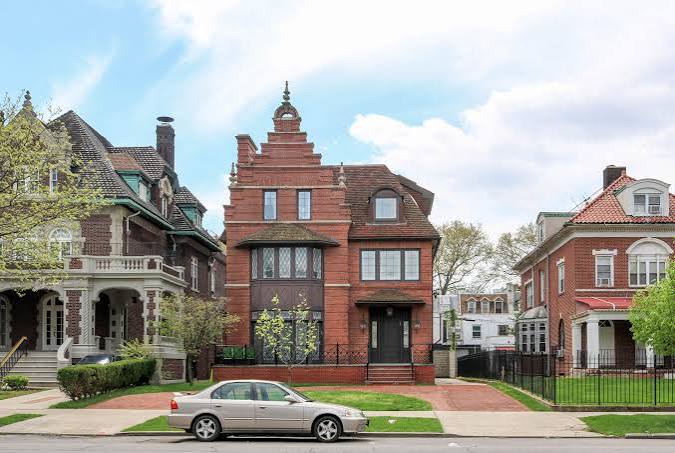
The Manor houses are the signature: roughly 600 limestone rows and freestanding homes in neo-Renaissance, Romanesque Revival, and neo-Federal dress, many with front gardens, some with driveways and garages the covenant era built in. Because they never converted to rooming houses or apartments, original detail survived here at a rate the rest of brownstone Brooklyn envies, which is both the pleasure of the purchase and, where a century of deferred maintenance hides behind the woodwork, its budget.
The park-front corridors carry the entry lane with unusual dignity. Ocean and Parkside Avenues line up pre-war elevator buildings whose apartments were drawn generously, sunken living rooms, real foyers, casement light off the park, and the co-op boards inside them run the full spectrum from formal to neighborly. Expect the standard package, financial statements, reference letters, an interview, and expect the buildings that ask the most to also be the ones whose finances read the cleanest, which is the trade working exactly as designed. It's some of the best pre-war space per dollar anywhere on the park's perimeter, and the diligence is co-op diligence: financials, maintenance trajectory, sublet rules.
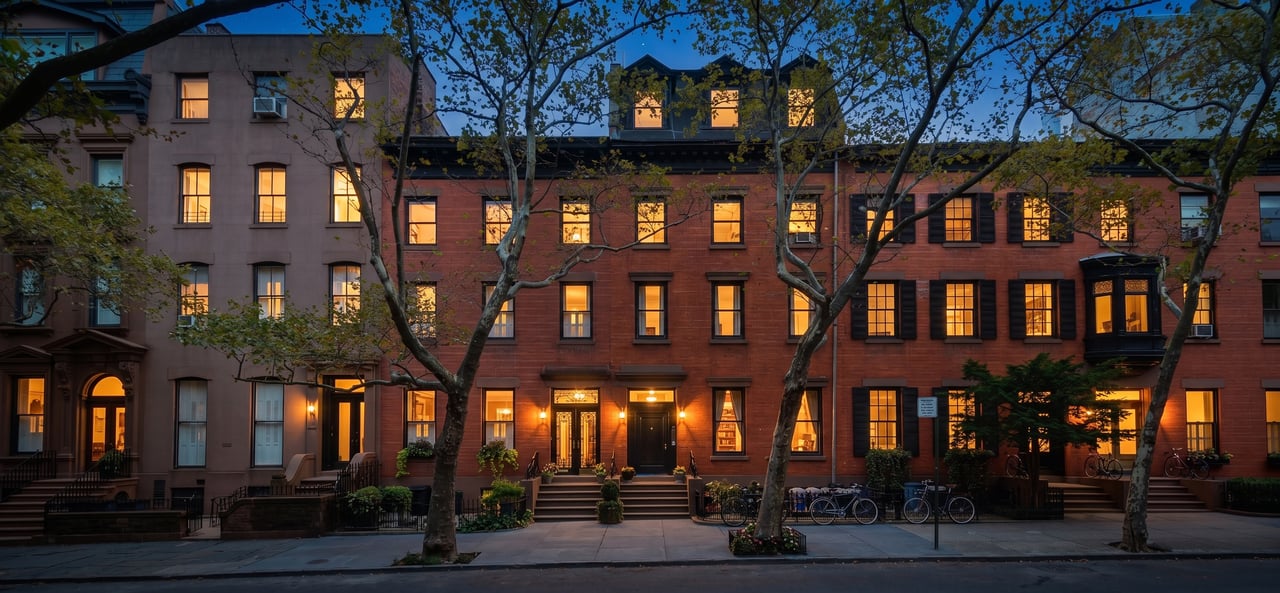
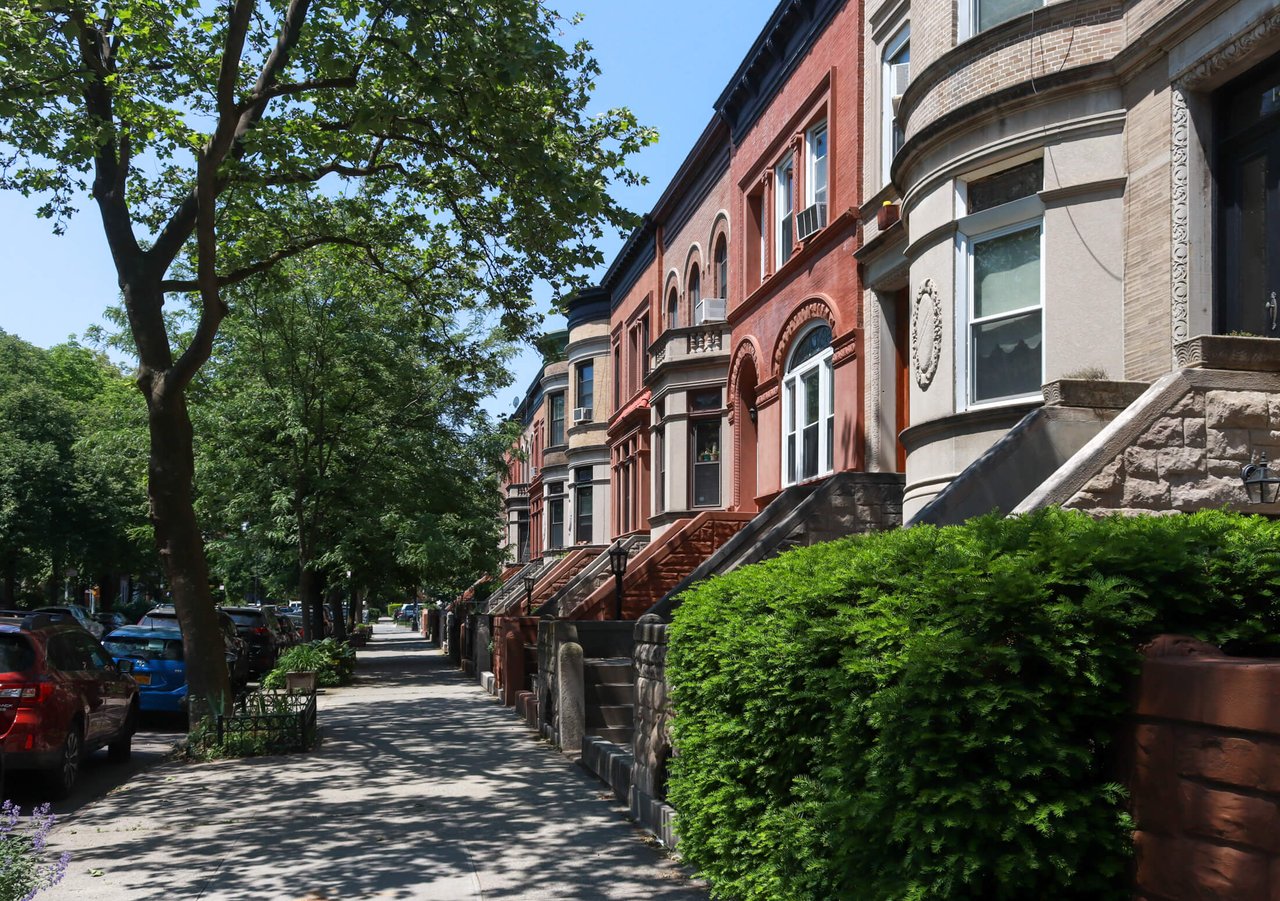
Beyond the Manor line, the landmarked rows on Sterling, Lefferts, and the blocks toward Nostrand keep the same limestone language with a different legal life: many are two- and three-family by right, which brings the income buyer and the house-hacking owner into the neighborhood without touching the covenant blocks. Newer condos cluster toward the spines and the southern edge, rounding out a ladder that runs from studio to standalone.
What drives value in Prospect Lefferts Gardens
The deed line does the fundamental pricing. Six hundred-odd houses that can never be anything but single-family homes is a supply statement no zoning change can amend, and the Manor trades on it: scarcity here isn't a market condition, it's a title condition. When a Manor house sells, it sells to a buyer who wanted exactly that guarantee, and the premium reflects the guarantee as much as the granite.
The park does the rest of the heavy lifting. Frontage and proximity price in bands from Ocean Avenue inward, the co-op corridors capitalize the view and the crossing into their maintenance-adjusted math, and the whole neighborhood borrows value from the simple fact that its daily green space is one of the country's great parks rather than a pocket playground. Add the two-line commute choice and you have the structural case that survives any single year's market.
Condition and paperwork split the rest. A Manor house with systems done trades in a different market from one wearing 1965 mechanicals, a landmarked row's renovation answers to the commission while a covenant-only house answers to the deed, and a co-op's value tracks its building's finances as much as its footage. This is a neighborhood where the documents move prices as much as the photographs, which rewards buyers who read first and tour second.
Flatbush, Nostrand, and the park edge
Flatbush Avenue is the western spine and the neighborhood's front door, groceries, coffee, hardware, and the walk-to-everything retail that keeps errands local, running right past the park's Willink entrance. Nostrand and Rogers carry the eastern daily life with their own corner anchors, and the blocks between stay residential in a way that makes the spines feel like a choice rather than a condition.
The park edge is the amenity that resets the whole comparison. The Parade Ground's ballfields sit at the neighborhood's southwest shoulder, the lake and the park's quieter southeastern paths are the local share of the green, and the Lefferts Homestead anchors the family farm's story a short walk inside the park itself. Green space is the one category where this neighborhood competes with anywhere in the borough and wins on crowd size alone.
The southern edge adds the neighborhood's institutional layer: the medical campus around Clarkson gives the 2-and-5 side a steady daytime rhythm and a constant demand floor for the surrounding blocks' apartments. It's the least postcard part of the neighborhood and one of the more practical reasons its rental and co-op markets stay liquid.
The four pockets, up close
Lefferts Manor is the covenant made visible: eight blocks where the 1893 deeds still govern, limestone rows and freestanding houses with their gardens intact, porch conversations as the evening soundtrack. Houses here trade rarely and deliberately, often to buyers who watched the blocks for years, and the association's century of enforcement is part of what they're buying. When one lists publicly, the open house draws the whole waiting list at once, which is its own argument for being known to the neighborhood before that morning.
The park-front corridors are the neighborhood's pre-war face. Ocean Avenue's buildings look straight into the trees, Parkside's run the southern edge by the Parade Ground, and the apartments inside carry proportions the newer boroughs stopped building. For buyers entering the neighborhood, this is usually the first door worth knocking on.
The landmarked rows beyond the Manor, Sterling Street, Lefferts Avenue, and their neighbors toward Nostrand, hold the same architecture with looser rules, which makes them the neighborhood's workhorse blocks: owner duplexes over garden rentals, three-families that pencil, restorations that answer to the commission but not the covenant. Value hunters who skip past the Manor's headline usually end up here, correctly.
The spines and the southern edge are the practical pocket: apartments over retail on Flatbush and Nostrand, newer condos filling corners, the 2 and 5 at Sterling and Winthrop, and the medical campus anchoring the far end. It's the widest price spread in the neighborhood and the fastest-moving inventory, and its buyers trade postcard blocks for convenience without leaving the park behind. First-time buyers priced out of the corridors one neighborhood west tend to discover this pocket last and wish they'd started here.
The Rahmé Team Prospect Lefferts Gardens market read
The deed line splits this market into slow and steady. Manor houses trade thin, reset expectations sale by sale, and reward patience measured in years; the co-op and row markets around them trade often enough to read clearly. A single Prospect Lefferts Gardens number blends all of that into something true of nothing, which is why we'd rather hand you the current picture, cut by pocket, than publish one that ages.
For the borough-wide picture, our Brooklyn market report runs the numbers from the closed-sales record itself and refreshes with each edition. For this neighborhood specifically, call us and we'll pull what actually closed on the relevant side of the deed line, because a Manor limestone and an Ocean Avenue two-bedroom are different markets sharing one park.
Buying strategy: how to actually win here
Confirm the rulebook before the romance. A title search settles whether a house sits inside the covenant blocks, and the historic district map settles whether the commission reviews your facade plans; the two overlap but aren't identical, and buyers who assume one implies the other budget wrong in both directions. We check both on day one, because everything downstream, financing, renovation, income math, depends on the answer.
Then run the era's diligence with the covenant's history in mind. Manor houses kept their details because they stayed single-family, so inspections here read original woodwork, masonry, rooflines, and cellars against a century of single-family wear rather than conversion scars, and the restoration-versus-replacement ledger deserves real numbers before you bid. On the co-op side, the building is the purchase: financials, maintenance trajectory, and sublet rules first, floor plans second. One quiet advantage of the Manor worth naming: single-family houses finance as exactly that, no rental underwriting, no unit-count questions, which keeps the lending conversation simpler than it runs for the income rows outside the line.
And respect how the Manor actually trades. The best houses often move through relationships, a note to a block association, an owner who mentioned five years ago that someday they'd call, and patience plus preparation beats speed every time. That's the work we do on these blocks. Start it through our contact form or calibrate against the current listings, and tell us which side of the deed line you're shopping.
Living here day to day
Mornings belong to the park and the platforms. The park loop is a local habit before the commute, the Q runs the park-edge stations at Prospect Park and Parkside Avenue, the weekday B express adds a stop at Prospect Park but not at Parkside, the Franklin Avenue Shuttle terminates at Prospect Park and connects toward Crown Heights, and the 2 and 5 carry the eastern blocks from Sterling and Winthrop. Most households end up with a preferred line and a backup they're quietly grateful for. School zoning runs by address and varies here, so treat the Department of Education's school search as the only answer that counts for any specific home.
Days run on the spines and the seasons. Errands stay on Flatbush and Nostrand, summer moves the neighborhood into the park, the Parade Ground fills on weekends with leagues that book the fields months ahead, and the Manor's gardens run their own quiet competition from spring through fall. It's a neighborhood that rewards routine, the same corners, the same park entrances, the same porch conversations, which is precisely what its buyers came for and what the covenant, in its stubborn nineteenth-century way, was written to preserve.
The fine print is short. The spines carry real traffic and the elevated energy of working retail corridors, the southern edge runs on the medical campus's clock, and the covenant that protects the Manor also means its houses ask one household to carry them entirely. None of it is hidden, and all of it is walkable in an afternoon that should finish inside the park.
How to choose
Start from the priority and the blocks sort themselves.
If this is the priority | Start here |
|---|---|
A deed-protected single-family house | Lefferts Manor, and confirm the covenant on title |
Park-front space at the entry price | The Ocean and Parkside pre-war co-ops |
Rental income inside a historic district | The landmarked rows beyond the Manor |
The friendliest overall entry | Co-ops off the corridors and condos toward the southern edge |
The quietest possible block | The Manor's interior streets |
Weekday express service | Within walking distance of Prospect Park station, where the B stops |
FAQs
Is Prospect Lefferts Gardens a good place to buy?
If you want the park at your corner and a housing ladder that still has real rungs, it's one of the strongest answers in central Brooklyn. The neighborhood pairs an eight-block covenant district of single-family houses with pre-war elevator co-ops along the park and landmarked limestone rows beyond them, so the same walk to Prospect Park serves several different budgets. The trade-offs are honest: fewer retail spines than the park's western side, and a market where the block you pick changes the rules you buy under.
What is the Lefferts Manor covenant?
In 1893, James Lefferts subdivided 600 lots of his family's farm and wrote restrictions into the deeds: every building a single-family dwelling, with industrial and other uses barred outright. Those covenants still run with the land across the eight blocks between Lincoln Road, Flatbush Avenue, Fenimore Street, and Rogers Avenue, the Lefferts Manor Association has enforced them since 1919, and the covenant has been tested in court and upheld. It's a supply constraint older than zoning and independent of landmarking, and it's the reason the Manor never converted to rooming houses or apartments.
What's the difference between buying inside and outside the Manor?
The deed. Inside the eight blocks, the covenant holds every house to single-family use, so you're buying scarcity and stewardship with no rental-unit math available. Outside the Manor, the surrounding blocks include landmarked rows where two- and three-family configurations are legal, plus the pre-war co-ops and newer condos, so income strategies and lower entry prices open up. Same neighborhood, very different purchases, and a title search settles which side of the line a house sits on before any listing does.
Are the pre-war co-ops along the park a good way in?
They're the neighborhood's entry lane and often its best-kept layouts: elevator buildings along Ocean and Parkside with sunken living rooms, real dining foyers, and pre-war proportions facing the park. The homework is co-op homework, board packages, maintenance levels, sublet rules, and the building's financials, and it varies building to building. Price per square foot tends to sit well below the house market, which is exactly why we walk buyers through the boards' expectations before they fall for a floor plan.
What should I inspect in a historic Prospect Lefferts Gardens house?
Start with the paperwork: confirm whether the house sits inside the covenant blocks, inside the historic district, both, or neither, because that decides your renovation rules before any contractor does. Then run the era's physical diligence, masonry and lintels, rooflines and drainage, cellar moisture history, original woodwork worth preserving versus repairs worth pricing, and the age of every system. Houses here often kept their details precisely because they stayed single-family, which is wonderful and is also a restoration budget.
How do school zones work in Prospect Lefferts Gardens?
Zoning runs by address and varies across the neighborhood, so verify any specific home through the Department of Education's school search before you write an offer, and treat a listing's zone claim as a starting point to check. Between zoned options, charters, and nearby programs, the real map here is more detailed than any guide should pretend to summarize, which is exactly why the DOE lookup, not a paragraph, should carry that decision.
What is the commute like from Prospect Lefferts Gardens?
Two systems, two sides, and one detail worth getting right. The Q serves the park edge at all times at both Prospect Park and Parkside Avenue. The weekday B is the Brighton express and stops at Prospect Park only, not at Parkside, so if express service matters to your commute the difference between those two stations is real money. The Franklin Avenue Shuttle also terminates at Prospect Park, connecting toward Crown Heights. On the eastern side, the 2 and 5 run at Sterling Street and Winthrop Street. Most addresses get a real choice, and the park-edge stations put Manhattan-bound trains a short walk from the co-op corridors.
Prospect Lefferts Gardens, Park Slope, or Prospect Heights: how do I choose?
All three touch the park; the question is which side of it your budget and your patience prefer. Park Slope is the deepest market and the priciest, with the widest retail spines. Prospect Heights is the compact northern corner with museums at the door. Prospect Lefferts Gardens is the quieter eastern edge, where the covenant blocks protect a single-family world the other two can't offer and the pre-war co-ops keep the entry price honest. Walk the park loop between them and the choice usually makes itself.
Weighing the park's other sides too? Our Park Slope guide walks the western slope the same way, and the pages for Park Slope and Prospect Heights hold the current inventory picture around the park.
Work with a local team
Prospect Lefferts Gardens rewards buyers who read deeds as carefully as floor plans, and in a market where the best houses trade on relationships and title conditions, that reading is the whole job. The Rahmé Team at Compass brings 40 years of combined experience across Brooklyn, ranks in the top 1.5% of real estate professionals nationwide by RealTrends Verified, and has closed more than $800 million in career sales. We work with buyers and sellers on covenant and landmark diligence, pre-war co-op strategy, multi-family analysis, and the patient off-market conversations the Manor actually runs on.
Ready to see the park's quieter side properly? Start with our Lefferts Gardens neighborhood page, then call the Rahmé Team at (718) 233-3365 or request a neighborhood inventory list through our contact form, built around the deed line, the park, and your actual budget.