What is the Fort Greene neighborhood known for? Three things, mostly: a roughly 30-acre Olmsted and Vaux park on a Revolutionary War hilltop, the Brooklyn Academy of Music and the cultural district that grew up around it, and block after block of the finest 19th-century rowhouses in the city, protected inside a historic district since 1978. The neighborhood sits just east of Downtown Brooklyn, mostly in zip codes 11205 and 11217, and its southern corner touches one of the deepest transit setups in the borough.
That mix is the pitch and the price. The rowhouse stock was built out between roughly 1855 and 1875 and then frozen by landmark protection, so what trades is what long-tenured owners decide to release, and the prime blocks draw fast competition. The apartment layer runs thinner here than in co-op-heavy Brooklyn Heights, which keeps choices interesting. And the cultural district brings an evening economy most brownstone neighborhoods simply don't have, along with the crowds that come with it.
This guide walks the neighborhood block by block: the housing stock, what drives value, how the four pockets differ, and how to buy well here. When you're ready for a tailored Fort Greene search, including homes not yet public, reach out to the Rahmé Team at Compass through our contact form or at (718) 233-3365.
In this guide
- The lay of the land: what defines Fort Greene
- Quick comparison: the four pockets at a glance
- Which pocket is right for you?
- Rowhouses, co-ops, and condos: the housing stock
- What drives value in Fort Greene
- DeKalb Avenue and the corridors
- The four pockets, up close
- The Rahmé Team Fort Greene market read
- Buying strategy: how to actually win here
- Living here day to day
- How to choose
- FAQs
- Work with a local team

Fouad Rahmé
Founder, the Rahmé Team at Compass
The Rahmé Team advises buyers, sellers, investors, and developers across Brooklyn, with 40 years of combined experience, more than 1,000 clients and transactions, and over $800 million in career sales, $167 million of it since 2020. RealTrends Verified ranks the team in the top 1.5% of real estate professionals nationwide.
Contact the team or call (718) 233-3365.
The lay of the land: what defines Fort Greene
Three things: the hill, the rows, and the stages.
The hill first, because everything else grew around it. In 1776 the Continental Army built Fort Putnam on the high ground here, later renamed for General Nathanael Greene, and after the guns went quiet the hilltop became the place locals walked for air. Walt Whitman banged the drum for a real park from his editor's desk at the Brooklyn Daily Eagle, the City of Brooklyn opened Washington Park, its first, in the late 1840s, and in 1867 Frederick Law Olmsted and Calvert Vaux, fresh off Central and Prospect Parks, gave the hill its rolling design. The Prison Ship Martyrs' Monument came in 1908: a 149-foot granite Doric column by Stanford White, the tallest of its kind in the world when it was dedicated, standing over a crypt holding the remains of more than 11,500 Revolutionary War prisoners who died aboard British ships in nearby Wallabout Bay. Not many neighborhoods keep their whole origin story on one hilltop.
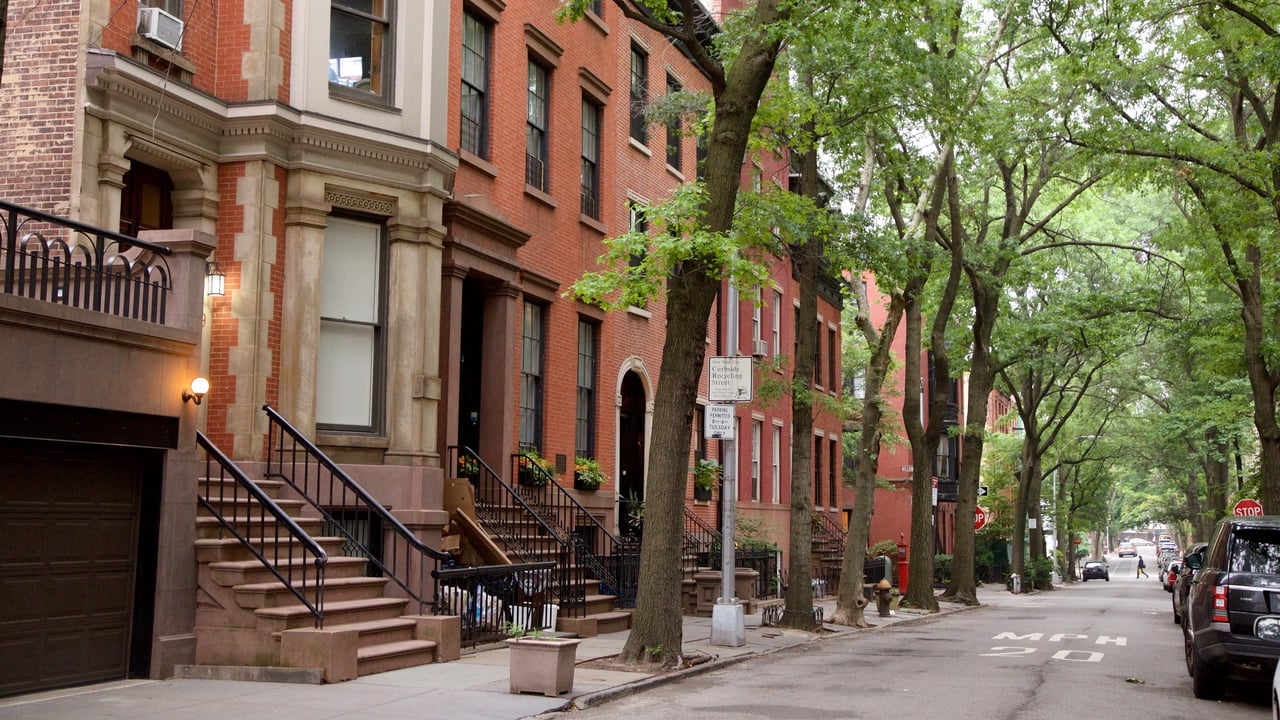
Then the rows. The blocks around the park filled in fast between roughly 1855 and 1875, speculative rowhouses in late Greek Revival, Italianate, Second Empire, and Neo-Grec styles, most of them faced in the sandstone everyone calls brownstone. A neighborhood committee started pushing for protection in 1973, and on September 26, 1978 the Landmarks Preservation Commission designated the Fort Greene Historic District, drawing Fort Greene Park itself inside the boundary even though the neighborhood's own proposal hadn't asked for it. The National Register followed in 1983 and expanded its listing in 1984, counting 1,158 contributing buildings.
Here's the part buyers miss, and it matters more than the dates. The commission also left out a good number of the blocks the neighborhood had proposed, splitting the area between this district and what later became the BAM district to the south. So Fort Greene is not uniformly landmarked. Two houses a few blocks apart can answer to completely different rulebooks, and which side of that line a listing sits on changes the renovation math before a contractor is ever called.
And the stages. The Brooklyn Academy of Music, which describes itself as the oldest performing arts center in America, gave its first performance in 1861, lost its original Brooklyn Heights home to fire in 1903, and rebuilt at 30 Lafayette Avenue in 1908, where the Peter Jay Sharp Building still anchors the neighborhood's southern edge inside the historic district. The BAM Harvey Theater sits on Fulton Street, BAM Fisher on Ashland Place, and the 2000s and 2010s built a full cultural district around them: Theatre for a New Audience's Polonsky Shakespeare Center, BRIC House, Mark Morris Dance Group's home studios, and the Irondale Center inside the Lafayette Avenue Presbyterian Church. An institution that has held its ground since 1861 is about as durable an anchor as a neighborhood gets.
Quick comparison: the four pockets at a glance
The neighborhood is compact, but the blocks sort themselves cleanly.
The feel | Housing stock | What stands out | Transit edge | Pace | |
|---|---|---|---|---|---|
The park edge | The grand frontage: Washington Park and the blocks facing the lawn and the monument. | The largest Italianate rows in the neighborhood, some long since divided. | The park as a front yard, greenmarket Saturdays included. | G at Fulton Street and DeKalb's B/Q/R, each a short walk. | Market-day lively, otherwise calm. |
The interior core | The canopy blocks: South Portland, South Oxford, South Elliott, Cumberland, Carlton, Adelphi. | Classic 1855-75 rows, configured single-family through four-family. | The postcard streets, South Portland's canopy above all. | C at Lafayette Avenue, G at Fulton Street. | Quietest. |
The cultural district edge | The stages and towers: Lafayette, Fulton, Ashland, and Hanson toward Flatbush. | One Hanson's clock-tower condos, prewar apartments, newer towers. | A show within a five-minute walk, most nights of the year. | Atlantic Terminal: nine subway lines plus the LIRR. | Busiest, especially show and arena nights. |
The north side | The everyday blocks: Willoughby to Myrtle Avenue, toward the Navy Yard. | Rows plus newer boutique condos, much of it outside the district lines. | The value edge, with the park's ballfields on the north slope. | Longer walks to the trains; Myrtle's buses fill the gap. | Low-key. |
Which pocket is right for you?
Four quick answers, then the detail further down.
If the park is the point, you're shopping the blocks that face it. If you want the classic canopy brownstone street, look at the interior core between DeKalb and Lafayette. If you want an elevator, the transit complex, and a show within a five-minute walk, look at the cultural district edge. And if value per square foot and quiet matter more than platform proximity, look north toward Myrtle, where more of the stock sits outside the district lines and renovation runs freer.
Rowhouses, co-ops, and condos: the housing stock
Three layers, and the first one built the neighborhood's reputation.
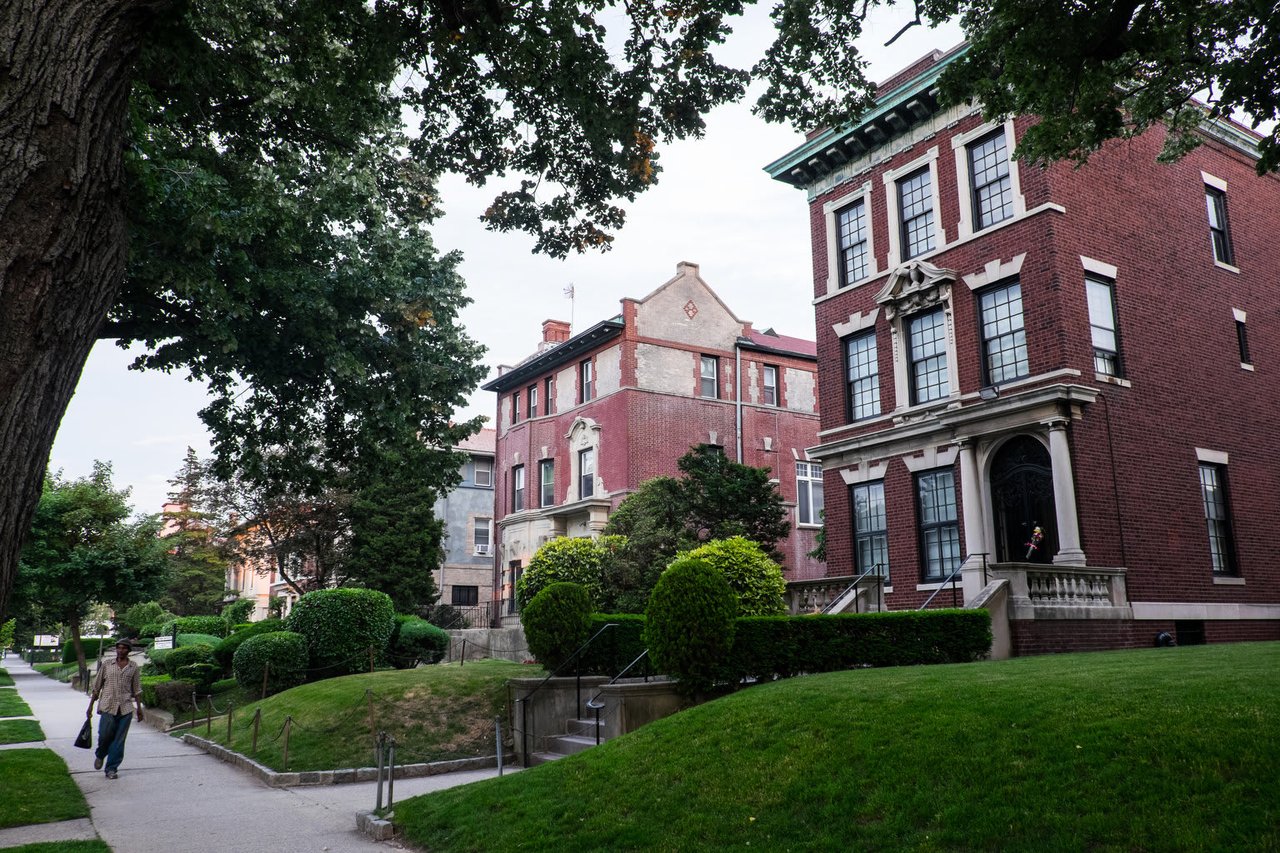
The landmark rowhouses carry this market. These are the 1855-75 rows, parlor floors with high ceilings and original detail where it survived, garden levels below, and configurations running from restored single-family homes to legal two-, three-, and four-family buildings. That last part matters more here than in most brownstone neighborhoods: a large share of Fort Greene's rows are configured with rental units, which changes the financing, the search, and the daily math of ownership. Inside the district lines, every one of them answers to the Landmarks Preservation Commission on exterior work.
The apartment layer runs thinner but has real character. Prewar co-ops and small condo conversions sit scattered through the district, and the marquee building stands at its southern gate: the 1929 Williamsburgh Savings Bank tower at One Hanson Place, Brooklyn's tallest building for some eight decades, its four-faced clock visible from half the borough, now condominiums stacked above the landmarked banking hall. Newer boutique elevator buildings cluster on the edges where the district's rules give way, and the towers nearest the cultural district lean rental, so condo hunters should expect a tighter field than in DUMBO or Downtown Brooklyn.
And the income angle rounds it out. Because so much of the stock is 2-4 family, Fort Greene draws buyers running the live-in-one, rent-the-rest play, which small multifamily buildings support with residential financing. Whether a listing is delivered vacant or tenant-occupied changes its price and its buyer pool, so read that line of the setup sheet first. Whatever the layer, compare the monthly cost, not just the asking price: a rental unit offsets a mortgage, a co-op's maintenance folds in taxes, and a 150-year-old house keeps its own repair schedule.
What drives value in Fort Greene
Four forces, and the first has been running since 1978.
Fixed supply comes first. The historic district froze hundreds of rowhouses in place, the last of them finished before 1900, and nobody is adding inventory to the canopy blocks. What trades is what owners release, and plenty of them have held for decades.
The park comes second. Roughly 30 protected acres with an Olmsted and Vaux pedigree sit at the neighborhood's center, and the blocks around it hold their appeal the way park-front blocks always have. Green space that has anchored a neighborhood since the 1840s isn't going anywhere.
Transit depth comes third. Nine subway lines meet the Long Island Rail Road at the Atlantic Terminal complex on the neighborhood's southern corner, the 2, 3, 4, 5, B, D, N, Q, and R among them, with the C at Lafayette Avenue, the G at Fulton Street, and DeKalb Avenue's B, Q, and R ringing the rest. Few brownstone neighborhoods anywhere sit on this much track.
And the institutions round it out. BAM has anchored this corner of Brooklyn since its 1908 rebuilding on Lafayette Avenue, and the cultural district that grew around it filled the southern blocks with theaters, studios, and screens. Institutions with that kind of tenure hold an evening economy in place through cycles, and the market reads that durability correctly.
DeKalb Avenue and the corridors
DeKalb Avenue is the neighborhood's main street, the run along the park's southern edge and east through the rows where the coffee lines form in the morning and the restaurant tables spill out on summer evenings. It's where Fort Greene does its daily business, busiest on greenmarket Saturdays when the park's southeast corner fills with stalls.
Lafayette Avenue and Fulton Street carry the cultural weight. Lafayette runs past the Peter Jay Sharp Building and the Irondale Center's church home; Fulton, a block south, carries the BAM Harvey Theater, the shops, and the heavier foot traffic. Myrtle Avenue handles the everyday on the north side, groceries and errands without the show crowds. And the park paths work as the fourth corridor: the loop, the monument steps, and the lawn that functions as the neighborhood's shared front porch.
The four pockets, up close
The park edge. Washington Park, the street of grand Italianate houses facing the lawn's eastern side, plus the DeKalb and Willoughby frontage, holds the neighborhood's most imposing rows and its best morning view: the monument column above the trees. One honest note: Saturdays bring the greenmarket and its crowds to the southeast corner, and the monument steps draw workout groups from first light. Most residents consider both a feature. Best if the park as a front yard is the point.
The interior core. The ladder of blocks between DeKalb and Lafayette, South Portland, South Oxford, South Elliott, Cumberland, Carlton, and Adelphi, is the postcard: brownstone rows under mature trees, stoops in shade by mid-afternoon. South Portland between DeKalb and Lafayette gets called one of the most beautiful blocks in Brooklyn, and standing under its canopy in July, it's hard to argue. Best if the classic brownstone street is the point and you want the quietest version of it.
The cultural district edge. The southern blocks along Lafayette, Fulton, Ashland, and Hanson put the stages, the towers, and the Atlantic Terminal complex at your door, with Barclays Center across the Flatbush corner. One honest note: show nights and arena nights bring crowds and traffic to this end, and street parking gets squeezed; our Brooklyn parking guide covers what's real and what's rare. Best if you want an elevator, the fastest commute in brownstone Brooklyn, and a show within a five-minute walk.
The north side. From Willoughby up to Myrtle Avenue the blocks turn workaday: rows mixed with newer boutique buildings, the park's ballfields and playgrounds on the north slope, the Navy Yard's job base a short ride beyond. More of this pocket falls outside the district lines than any other, which means more renovation freedom and fewer approvals, and the walk to the big transit complex is real, which is exactly why the numbers here tend to run friendlier. Best if value per square foot and low-key blocks matter more than platform proximity.
The Rahmé Team Fort Greene market read
The honest version: this is a thin-turnover rowhouse market with a condo layer that can't keep up with demand.
The prime-block rowhouses trade rarely, often after decades of single ownership, and well-priced turnkey homes on the canopy streets draw immediate competition. Configuration drives everything in that segment: delivered-vacant homes reach the widest pool, tenant-occupied buildings trade on their setup sheets, and buyers who understand both move faster than buyers who don't. The apartment side runs the opposite problem, more demand than supply, with One Hanson and the boutique buildings on the edges carrying most of the action.
Worth knowing before you start: a real share of what sells here never gets listed. Tenure on these blocks is measured in decades, which means the decision to sell usually forms slowly, and the agents who hear about it early are the ones who have been talking to the block for years.
Buying strategy: how to actually win here
Four moves matter most.
Decide the configuration before you tour. A single-family restoration, an owner's duplex over rentals, and a pure income building are three different purchases with three different financing paths and three different daily lives. Knowing which one you're running lets you read a setup sheet in thirty seconds and move while others deliberate.
Then find the district line, because it isn't where most people assume. Not all of Fort Greene was landmarked in 1978, and a house inside the boundary and a house a few blocks outside it are two different renovation projects: one runs facade work, windows, and stoops through the Landmarks Preservation Commission, with straightforward interior projects usually clearing at staff level through a Certificate of No Effect, while the other answers only to the building code. Neither is better. They're just priced differently, and buyers who confirm the status on day one budget correctly in both directions.
Inspect like it's 1870, because structurally it is. Roofs, cornices, brownstone facades, party walls, and original mechanicals all keep their own schedules in buildings this age, and an engineer's report tuned to old rowhouses beats a standard inspection here. The goal isn't a perfect house; it's knowing which five-figure items are coming and pricing them in.
And check the record yourself on anything that decides money. Landmark status and district boundaries live on the LPC's maps, certificates of occupancy and permit history live in the city's building databases, and school assignment runs by address through the Department of Education. Listings summarize. Records decide.
Living here day to day
The commute. The Atlantic Terminal complex at the southern corner carries nine subway lines plus the Long Island Rail Road, the C runs at Lafayette Avenue, the G at Fulton Street, and DeKalb Avenue's B, Q, and R sit at the northwest edge. Most Lower Manhattan trips run roughly 15 to 25 minutes door to door depending on your block, Midtown roughly 20 to 30, and the LIRR puts the airport connection and Long Island a transfer away.
The park. Fort Greene Park runs its whole day in shifts: dogs and runners on the early loop, the monument steps as an open-air gym, lunch crowds on the lawn, and the Saturday greenmarket filling the southeast corner at Washington Park and DeKalb. It's a big part of why this neighborhood shows up whenever anyone lists Brooklyn's greenest pockets, and locals treat the hilltop view of the skyline as their own.
The evenings. This is the part of brownstone Brooklyn where the night has structure: a show at the Sharp Building or the Harvey, dinner on DeKalb before or after, the walk home under the canopy. On nights when the arena lights up too, the Flatbush end hums and the interior blocks stay as quiet as ever, which is pretty much the neighborhood in one sentence.
Schools. The neighborhood falls in NYC School District 13, with elementary seats assigned by address rather than by neighborhood. Because zone lines can shift from one block to the next, the only answer that counts for a specific home is the DOE's current lookup for that exact address, and we're happy to run it with you.
How to choose
Start with the thing you can't compromise on, then match it to the pocket that delivers it.
If you want... | Look at... |
|---|---|
The park as a front yard and the monument out the window | The park edge along Washington Park, DeKalb, and Willoughby |
The classic canopy brownstone block | The interior core, South Portland and its neighbors |
An elevator, the fastest commute, and the stages next door | The cultural district edge near Atlantic Terminal |
Renovation freedom without commission review | The blocks outside the district lines, concentrated on the north side |
A home that helps pay for itself | The 2-4 family rows throughout, delivered-vacant questions and all |
None of these is a wrong answer, and the whole neighborhood crosses in a stroll. The mistake we see most often is buyers pricing the facade instead of the configuration: two identical-looking rows on the same block can be completely different purchases once you compare legal use, tenancy, district status, and what the Landmarks file says about that beautiful cornice. Walk your short list on a Tuesday morning and again on a show-night Saturday, since this neighborhood tells two different stories depending on when you stand in it, then hold what you felt against the current listings.
FAQs
What is the Fort Greene neighborhood known for?
Three things above all: Fort Greene Park, the roughly 30-acre Olmsted and Vaux park crowned by the 149-foot Prison Ship Martyrs' Monument; the Brooklyn Academy of Music and the cultural district around it, anchored at 30 Lafayette Avenue since 1908; and the historic-district rowhouse blocks built between roughly 1855 and 1875, protected since 1978 and counted among the finest 19th-century streetscapes in New York.
Is Fort Greene a good place to buy a home?
For buyers who want landmark rowhouse architecture, a major park at the center of daily life, and some of the deepest transit access in Brooklyn, yes. The constraints are supply and configuration: rowhouse turnover runs thin, the condo layer is smaller than in neighboring markets, and many houses come with rental units that change the financing and the math. Plan on patience for the prime blocks and fast decisions when they turn over.
Is all of Fort Greene landmarked?
No, and this is the detail that surprises buyers most. A neighborhood committee proposed a district in 1973, and when the Landmarks Preservation Commission designated the Fort Greene Historic District on September 26, 1978, it added Fort Greene Park to the boundary but also left out a number of the blocks the neighborhood had asked for, splitting the area between this district and what later became the BAM district. The result is that two houses a few blocks apart can sit under entirely different renovation rules. Confirm a specific address against the LPC's maps before you price any exterior work.
Should I buy a rowhouse or a condo in Fort Greene?
It depends on how much building you want to run. The rowhouses deliver the full historic experience, often with rental income attached, at the cost of stewardship: old systems, landmark rules where they apply, and tenant questions. The condo and co-op layer is thinner here, ranging from prewar buildings and the One Hanson Place clock-tower conversion to boutique new construction on the district's edges, and it trades on simplicity. Compare the full monthly picture for each before deciding.
What does the Fort Greene Historic District mean for renovations?
Inside the district, designated September 26, 1978 with Fort Greene Park drawn into the boundary, every exterior change answers to the Landmarks Preservation Commission. Interior work and non-visible changes usually clear through staff-level approvals within weeks once complete, while visible facade work, window replacements, and stoop rebuilds take fuller review that can run months. The National Register listed the district in 1983 and expanded it in 1984, counting 1,158 contributing buildings. Owners have renovated well under these rules for decades; budget the approval timeline alongside the construction one.
How is the commute from Fort Greene to Manhattan?
Among the best in brownstone Brooklyn. Nine subway lines meet the Long Island Rail Road at the Atlantic Terminal complex on the neighborhood's southern corner, the C runs at Lafayette Avenue, the G at Fulton Street, and the B, Q, and R stop at DeKalb Avenue. Most Lower Manhattan trips run roughly 15 to 25 minutes door to door, and Midtown roughly 20 to 30, depending on your block.
What is Fort Greene Park like?
A roughly 30-acre hilltop park designed by Frederick Law Olmsted and Calvert Vaux in 1867 on the site of a Revolutionary War fort, centered on the 149-foot Prison Ship Martyrs' Monument that Stanford White designed over the crypt of more than 11,500 war dead. Day to day it runs in shifts: morning dogs and runners, workout groups on the monument steps, the Saturday greenmarket at the southeast corner, and skyline views from the top of the hill.
What is the BAM Cultural District?
The cluster of performing arts institutions on Fort Greene's southern edge, anchored by the Brooklyn Academy of Music, which describes itself as the oldest performing arts center in America, in its 1908 Peter Jay Sharp Building on Lafayette Avenue. The BAM Harvey Theater on Fulton Street, BAM Fisher on Ashland Place, Theatre for a New Audience, BRIC House, and Mark Morris Dance Group's studios fill the surrounding blocks, putting live performance within a short walk of most of the neighborhood.
How does Fort Greene compare to Clinton Hill and Prospect Heights?
They share brownstone bones and border each other, then split on anchors. Fort Greene has the park at its center, the cultural district and the Atlantic Terminal complex at its edge, and rows heavy with 2-4 family configurations. Clinton Hill runs quieter, organized around Pratt Institute and its mansion-lined avenues. Prospect Heights is the smallest of the three, tucked between the museum corridor and the arena with a heavier new-condo blend. The commute edge goes to Fort Greene; the trade-offs from there are personal.
Weighing brownstone Brooklyn more broadly? Our BoCoCa guide and Park Slope guide walk those markets the same way, block by block, and our Prospect Heights neighborhood page covers the museum-district side of the decision.
Work with a local team
Fort Greene rewards buyers who read configurations as closely as cornices, and in a market where the best houses trade on relationships as often as listings, that reading decides the outcome. The Rahmé Team at Compass brings 40 years of combined experience across Brooklyn, ranks in the top 1.5% of real estate professionals nationwide by RealTrends Verified, and has closed more than $800 million in career sales. We work with buyers and sellers on rowhouse due diligence, delivered-vacant and tenant-occupied strategy, landmark and district-boundary questions, and the houses that change hands before anyone lists them.
Ready to see Fort Greene properly? Start with our Clinton Hill / Fort Greene neighborhood page, then call the Rahmé Team at (718) 233-3365 or request a tailored Fort Greene search through our contact form, built around your block preferences, not just your price point.