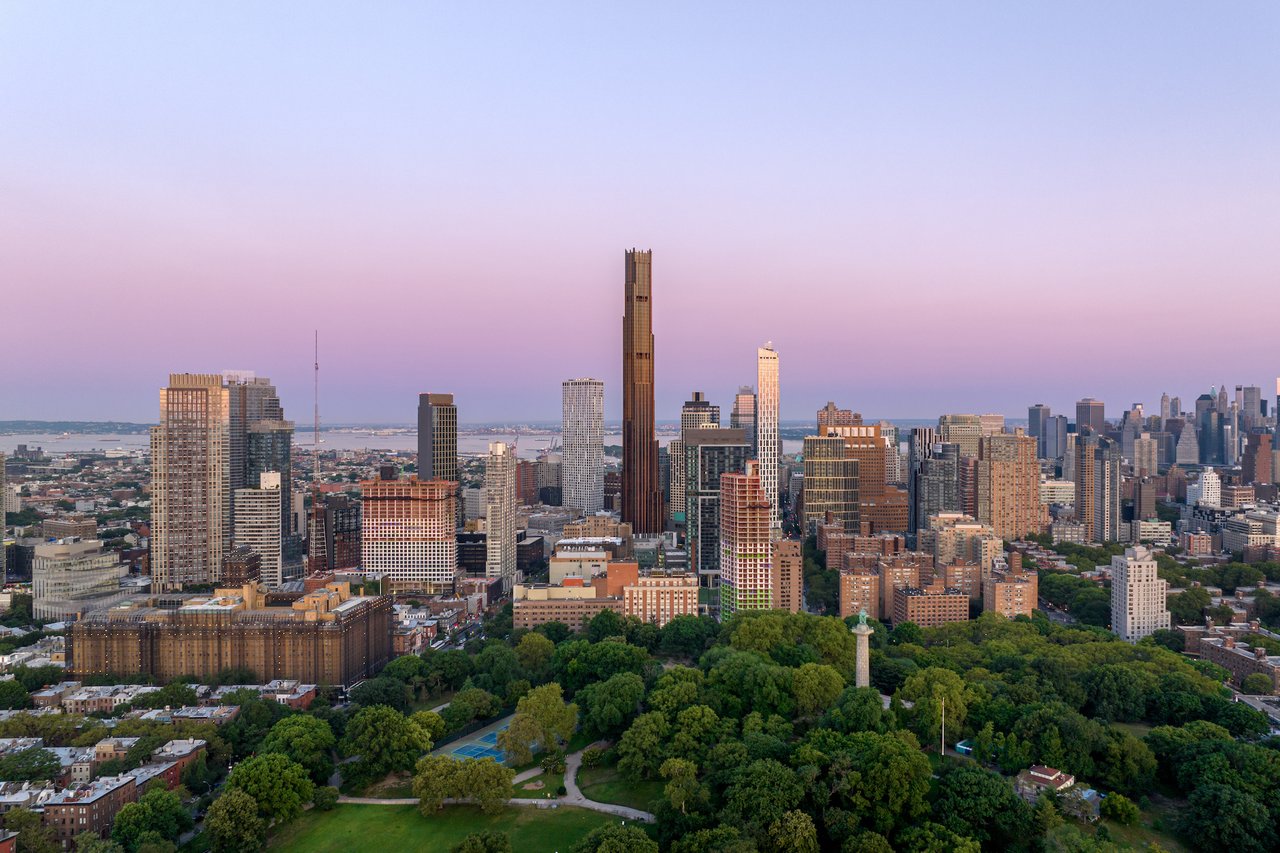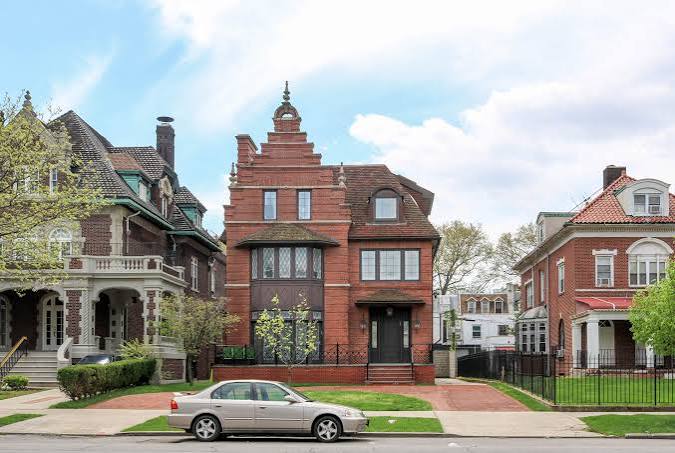
Crown Heights is not one neighborhood but several. The western blocks read as an extension of Prospect Heights; the landmarked core north of Eastern Parkway holds some of Brooklyn's finest rowhouse architecture; Weeksville carries one of the borough's most important histories; and Crown Heights South mixes prewar apartment houses with rowhouses on the edge of the Botanic Garden.
What ties them together is Eastern Parkway. Frederick Law Olmsted and Calvert Vaux laid it out between 1870 and 1874 as the world's first parkway, and it is a New York City scenic landmark. Its tree-lined malls run the length of the neighborhood and divide Crown Heights North from Crown Heights South.
The housing stock changes as you move east. Boutique condos cluster near Prospect Heights, landmarked townhouses dominate the center, brick two- and three-family houses take over toward Weeksville, and cooperative apartment buildings concentrate south of the parkway. Prices follow the same line, highest near Prospect Heights and easing to the east. The neighborhood median sale price was $1.43 million through September 2026.
i
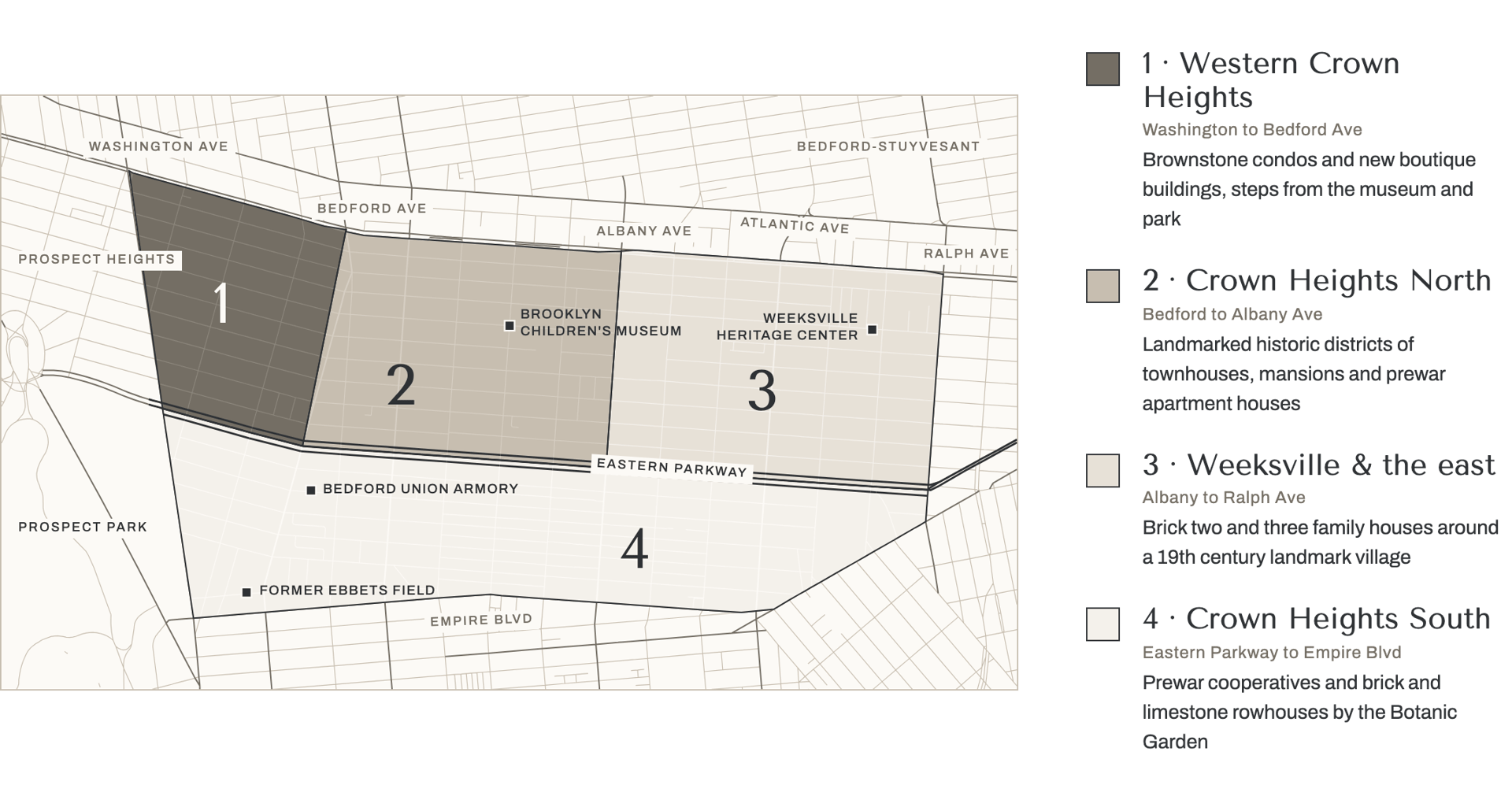
Western Crown Heights: brownstone blocks next door to Prospect Heights
Between Washington and Bedford Avenues, Crown Heights feels like a continuation of Prospect Heights. The Brooklyn Museum, the Brooklyn Botanic Garden, and Prospect Park are all a short walk away, and Eastern Parkway's tree-lined malls begin here on their way east. Franklin Avenue is the main street, a corridor of restaurants, cafes, and wine bars that draws people from across Brooklyn.
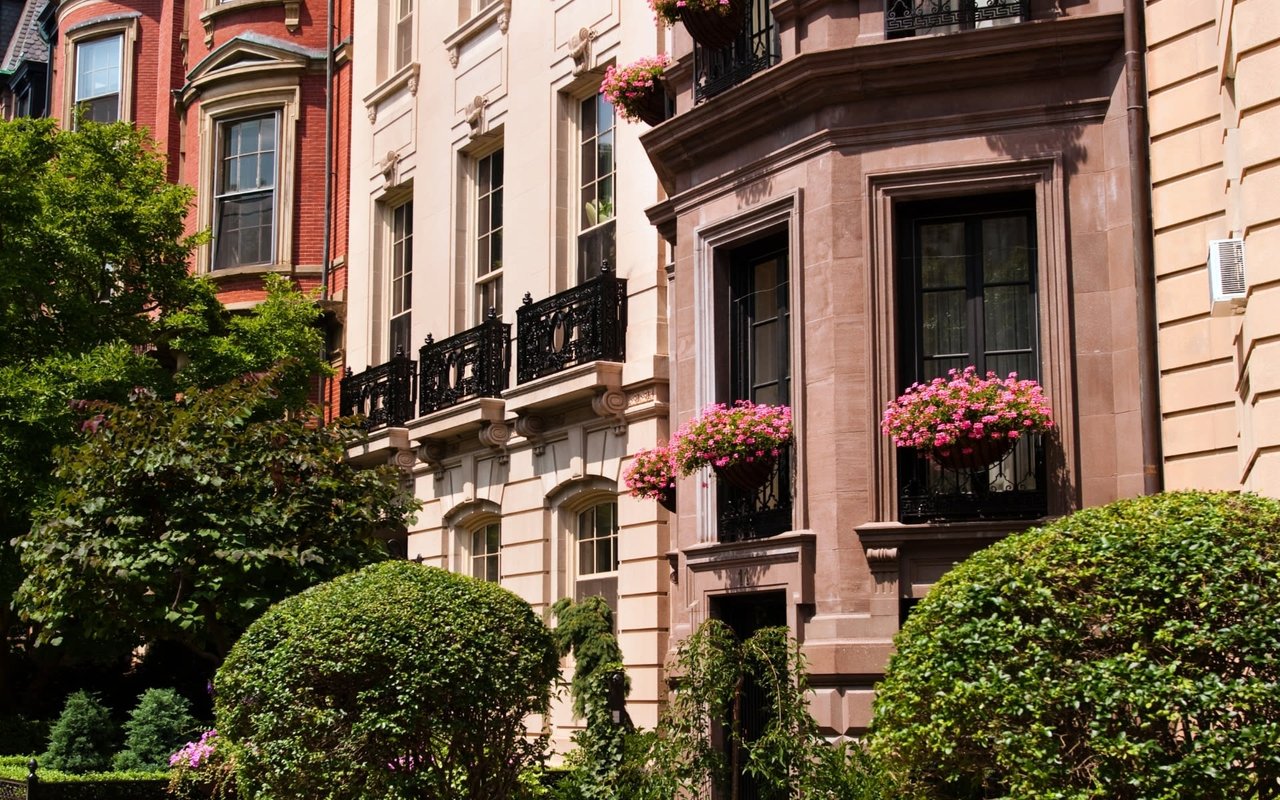
The streets are lined with 1890s to 1910s brownstones and limestones, many of them converted into condominium floor throughs. This is also where most of Crown Heights' new development lives. Small elevator condo buildings have filled in corners and vacant lots since the mid-2000s, and new buildings were still delivering in 2025 and 2026, including 701 Prospect Place and 810 Sterling Place. Cooperatives are scarce, and intact single family townhouses rarely come up.
If you are shopping here, expect condos from about $1 million for a one-bedroom to around $2 million for a three- or four-bedroom. Renovated townhouses ask $2.5 million to $3 million plus.
Getting around: the Franklin Avenue shuttle, the 2, 3, 4 and 5 at Franklin Avenue, and the A and C on Fulton Street.
Crown Heights North: the landmarked rowhouse heart
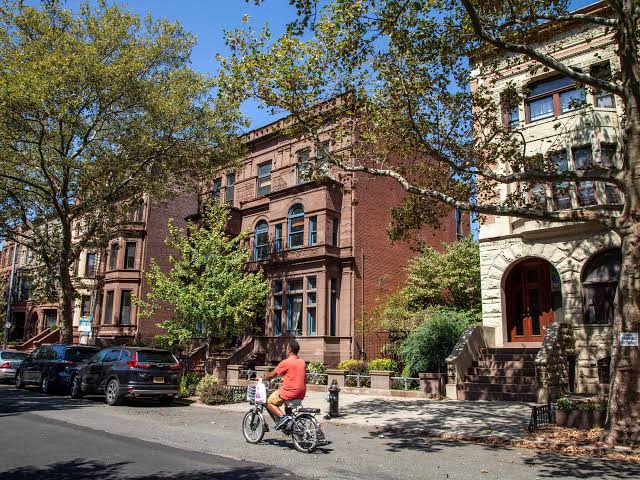
From Bedford Avenue east to about Albany Avenue, north of Eastern Parkway, you find some of the most intact turn-of-the-century streetscapes in New York. The city protected this area in three historic districts, designated in 2007, 2011, and 2015. Together they gave Crown Heights 1,752 landmarked buildings and sites.
Walk Saint Marks Avenue, Prospect Place, or Park Place and the variety is striking: Romanesque Revival and Renaissance Revival rowhouses, freestanding mansions, and Tudor Revival and Art Deco apartment houses, by architects such as Montrose Morris and Henry Ives Cobb. The area boomed after the Kings County Elevated Railway opened in 1888, and the early 1900s added four-story, two-family duplexes known as Kinko Houses. Shirley Chisholm, the first Black woman elected to Congress, lived in the district, and Richard Wright briefly resided here in the 1940s.
At the center sits Brower Park and the Brooklyn Children's Museum. Founded in 1899, it was the first children's museum in the United States, and its bright yellow building by Rafael Viñoly dates to a 2007 expansion.
The housing stock is mostly townhouses, many set up as two or three family homes, plus prewar flat buildings and elevator apartment houses along Eastern Parkway. Condos here are usually floors in converted brownstones rather than new buildings, since landmark rules limit new construction. Facade work, rear additions, and window replacements all need Landmarks Preservation Commission approval.
If you are looking for a renovated single- or two-family townhouse here, expect roughly $2.5 million to $3.3 million. The Rahmé Team sold 681 Saint Marks Avenue, a renovated two-family, for $3.25 million in August 2026. Condos in converted brownstones typically run $700,000 to $1.7 million.
Getting around: the 2, 3, 4, and 5 along Eastern Parkway and the A and C on Fulton Street.
Weeksville and eastern Crown Heights
East of Albany Avenue, toward Utica, Schenectady, and Ralph Avenues, the blocks become more residential, and the neighborhood holds its deepest history. Weeksville grew from land James Weeks bought here in 1838, eleven years after New York abolished slavery, into an independent village of about 500 residents by the 1850s.
The village was absorbed into Brooklyn's street grid, but four of its houses survived. The Hunterfly Road Houses, built between 1840 and 1880, sit at an angle to the modern grid because they once faced an old colonial road. They were rediscovered in 1968, landmarked in 1970, and today form the Weeksville Heritage Center on Bergen Street, with tours, exhibitions, and public programs. Nearby, Saint John's Park gives the area a large green space between Troy and Schenectady Avenues, and Utica Avenue is the main commercial strip.
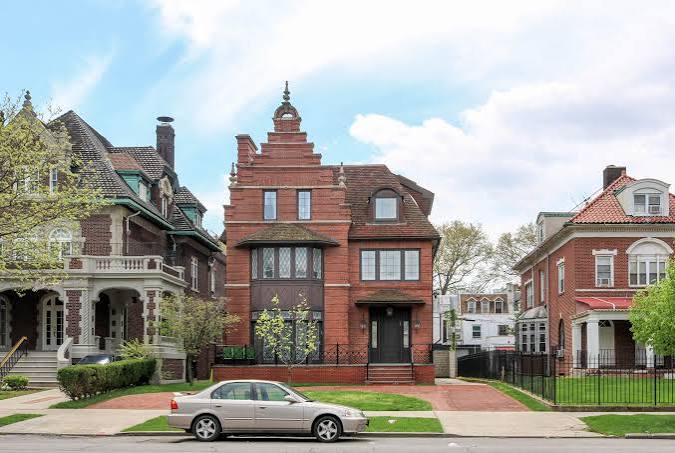
The housing stock is mostly early 20th-century brick two- and three-family houses, many attached, with backyards and finished basements. A scattering of small condo buildings went up in the 2000s, typically three to six units. Many houses are set up with an owner's duplex over a rental unit, which suits buyers who want income to help carry the mortgage.
This is where buyers get the most space for the money in Crown Heights. Two family houses here typically trade between about $900,000 and $2 million, with renovated houses near Albany Avenue at the top of that range.
Getting around: the 3 and 4 at Utica Avenue and the A and C on Fulton Street.
Crown Heights South: below Eastern Parkway toward Flatbush
South of Eastern Parkway, between the parkway and Empire Boulevard, is the part of the neighborhood that first carried the Crown Heights name, starting around 1910. Its western edge borders the Brooklyn Botanic Garden, and it opens onto Prospect Lefferts Gardens and Flatbush to the south.
This section is full of baseball and civic history. Ebbets Field, home of the Brooklyn Dodgers from 1913 to 1957, stood at Bedford Avenue and Sullivan Place, where Jackie Robinson broke the color line in 1947. The block is now the Ebbets Field Apartments. A few blocks east, the Bedford Union Armory, a full block fortress from 1908, reopened in 2021 as the Major R. Owens Health and Wellness Community Center, with an indoor pool, basketball courts, and a soccer field.
The housing stock is the most varied in Crown Heights. Prewar elevator apartment houses line Montgomery, Carroll, Crown, and President Streets and Sullivan Place, many of them cooperatives, such as The Dearborn, a 1928 building at 345 Montgomery Street. Between New York and Kingston Avenues, Carroll, President, and Union Streets hold handsome brick and limestone rowhouses, some with driveways and private garages, which is rare this close to Prospect Park. Newer condo buildings, like 111 Montgomery Street near the Botanic Garden, add another option.
If you are shopping here, a renovated cooperative one-bedroom runs around $575,000, newer condos run from about $650,000 to $1 million, and two- and three-family rowhouses range from about $2 million to over $3 million.
Getting around: the 2 and 5 along Nostrand Avenue at President Street and Sterling Street, and the Franklin Avenue shuttle at the western edge.
Crown Heights at a glance
Townhouses are | What sets it apart | Main housing stock | Typical prices |
|---|---|---|---|
Western Crown Heights | Franklin Avenue dining, walk to the Brooklyn Museum and Prospect Park | Brownstone condos, new boutique condo buildings | Condos about $1M to $2M |
Crown Heights North | Landmarked rowhouse districts, Brower Park, Brooklyn Children's Museum | Two-and-three-family townhouses, prewar apartment houses | Townhouses about $2.5M to $3.3M |
Weeksville and the east | Hunterfly Road Houses, Weeksville Heritage Center, Saint John's Park | Brick two and three are family houses, and small condo buildings | Two family houses about $900K to $2M |
Crown Heights South | Botanic Garden edge, former Ebbets Field site, Bedford Union Armory | Prewar cooperatives, brick and limestone rowhouses, newer condos | Cooperatives from about $575K; rowhouses $2M to $3M+ |
Price ranges reflect 2025 and 2026 sales and listings cited in each section.
Frequently asked questions
What are the neighborhoods within Crown Heights?
Crown Heights breaks into four main sections. They are the western blocks bordering Prospect Heights, the landmarked Crown Heights North historic core, Weeksville and the eastern blocks, and Crown Heights South below Eastern Parkway.
What is the median home price in Crown Heights in 2026?
The neighborhood median sale price was $1.43 million through September 2026, up 11.8% from a year earlier. Prices vary widely by block, from about $400 per square foot in the east to over $1,400 for condos near Prospect Heights.
Is Crown Heights cheaper than Prospect Heights?
On average, yes, but the gap narrows at the western edge. Condos between Washington and Franklin Avenues trade at prices close to Prospect Heights, while townhouses farther east cost far less per square foot.
Where is the Crown Heights North Historic District?
It covers most of Crown Heights north of Eastern Parkway, roughly from Bedford Avenue east to Albany Avenue. The city designated it in three phases in 2007, 2011, and 2015.
What is Weeksville?
Weeksville was a 19th-century village founded after James Weeks bought land here in 1838. Its Hunterfly Road Houses are city landmarks and now house the Weeksville Heritage Center.
Which subway lines serve Crown Heights?
The 2, 3, 4, and 5 run along Eastern Parkway, and the 2 and 5 continue down Nostrand Avenue. The A and C run along Fulton Street on the northern edge, and the Franklin Avenue shuttle serves the western blocks.
Do landmark rules affect renovating a Crown Heights townhouse?
Yes, for houses inside the historic districts. Exterior changes such as facade work, rear additions, and window replacements need approval from the Landmarks Preservation Commission.
Buying or selling in Crown Heights
For more on the neighborhood, read our guide to living in Crown Heights, our Crown Heights buyer's guide and our Crown Heights Q3 2026 market report.
In Crown Heights, the block matters as much as the neighborhood. A few avenues can change the price per square foot by half, and landmark status shapes what you can do with a house. The Rahmé Team works across every section of Crown Heights, from condos near Franklin Avenue to townhouses in the historic districts and multifamily homes in Weeksville. Contact us for a block level read on pricing before you buy or list.