What is it like to live in Prospect Heights, Brooklyn? Compact, walkable, and unusually close to everything. The neighborhood is a small wedge in the middle of the borough, bounded by Flatbush Avenue, Atlantic Avenue, Washington Avenue, and Eastern Parkway, most of it inside zip code 11238, and within that footprint sit the Brooklyn Museum, the Brooklyn Botanic Garden, the Central Library, Barclays Center, and the front door of Prospect Park. Pretty much every block is within about a 15-minute walk of all of it. Daily life runs on foot, mostly along Vanderbilt and Washington Avenues.
Is it a good place to buy? For buyers who want brownstone blocks, heavyweight institutions, and some of the best transit in Brooklyn in one tight package, yes. The catch is arithmetic. This is one of Brooklyn's smaller neighborhoods, roughly 850 of its buildings sit inside a landmarked historic district, and almost nothing new gets built outside the Pacific Park footprint at the northern end. Small area, fixed supply, permanent demand. The right home here takes patience and speed at the same time.
This guide walks through how the neighborhood is put together, what the housing actually is, and how to pick your corner of it. When you're ready to see blocks in person or hear about homes before they list, reach out to the Rahmé Team at Compass through our contact form or at (718) 233-3365.
In this guide
- The lay of the land: what defines Prospect Heights
- Quick comparison: the four corners at a glance
- Which corner is right for you?
- Brownstones, co-ops, and condos: the housing stock
- What drives value in Prospect Heights
- The corridors: Vanderbilt and Washington Avenues
- The four corners, up close
- The Rahmé Team Prospect Heights market read
- Buying strategy: how to actually win here
- Living here day to day
- How to choose
- FAQs
- Work with a local team
The lay of the land: what defines Prospect Heights
Three things: the corridor, the protection, and the interchange.
The corridor first. Eastern Parkway, the neighborhood's southern edge, is credited as the world's first parkway, conceived by Frederick Law Olmsted and Calvert Vaux in 1866 and built between 1870 and 1874. They coined the word for it. Along its first stretch sits a cultural campus with no equal in the borough: the Brooklyn Museum, opened in 1897 behind a McKim, Mead and White colonnade, the Brooklyn Botanic Garden of 1910 beside it, and the Central Library of 1941 facing Grand Army Plaza. Behind the library, Mount Prospect Park hides a quiet lawn on one of the highest points in Brooklyn. So the neighborhood really does sit between two parks, one of them 526 acres, the other a hilltop secret.
Then the protection. The Prospect Heights Historic District, designated in 2009, covers about 850 buildings across 21 blocks, one of the five largest historic districts in New York City. The rows date from the 1850s to the 1910s, Italianate through neo-Grec to Romanesque and Renaissance Revival, including a few wood-frame survivors on Carlton Avenue that predate almost everything around them. And here's a quirk worth walking: the original street plan followed Lenape paths and Dutch farm lines before the city redrew the grid in 1839, which is why a handful of buildings here sit at odd angles to their own streets.
And the interchange. The northwest corner, where Flatbush meets Atlantic at one of the biggest and most congested intersections in Brooklyn, holds Barclays Center and the station complex beneath it, where the borough's first subway line terminated back in 1908. Today it's the busiest subway station in Brooklyn. More on that below, because it's half the reason people buy here.
Quick comparison: the four corners at a glance
The neighborhood is small enough to cross on foot in a coffee, but it still breaks into four distinct pockets.
The feel | Housing stock | What stands out | Transit edge | Pace | |
|---|---|---|---|---|---|
The park and museum belt | Grand, leafy, and the quietest corner, anchored by Grand Army Plaza and Eastern Parkway. | Prewar limestone apartment houses and elevator co-ops, many with park views. | The museum, garden, and library as a front yard. | 2/3 at Grand Army Plaza and by the Brooklyn Museum. | Calmest. |
The Vanderbilt core | The postcard middle. Stoops, street trees, and restaurant rows at sidewalk level. | The heart of the landmarked rows, 1850s to 1910s, plus apartments over storefronts. | The neighborhood's main street at your door. | Short walk to Bergen Street or Grand Army Plaza on the 2/3. | Lively evenings, quiet mornings. |
The Washington Avenue edge | Looser and lower-key, on the museum's side of the neighborhood. | Rows mixed with newer infill, plus a rezoned stretch of Atlantic Avenue at the top. | More room to hunt, between two neighborhoods. | 2/3 by the Brooklyn Museum on the parkway. | Low-key. |
The Atlantic-Barclays end | The high-energy corner: the arena, the towers, and the borough's busiest crossroads. | New condo and rental towers in and around Pacific Park, some rows at the edges. | New construction next to nine subway lines. | 2/3/4/5/B/D/N/Q/R at Atlantic Av-Barclays Ctr, plus the LIRR at Atlantic Terminal. | Highest energy, especially on event nights. |
Which corner is right for you?
Here's the short version before the long one.
If you want a prewar elevator building with the park and the museums as your front yard, look at the blocks off Grand Army Plaza and Eastern Parkway. If you want the classic brownstone with dinner a half block away, look at the Vanderbilt core. If you want more room to hunt and you like sitting between two neighborhoods, look at the Washington Avenue edge. And if you want new construction with nine subway lines downstairs, you're shopping the Atlantic-Barclays end.
Now the detail.
Brownstones, co-ops, and condos: the housing stock
Three property types run this market, and the middle one is the neighborhood's quiet superpower.
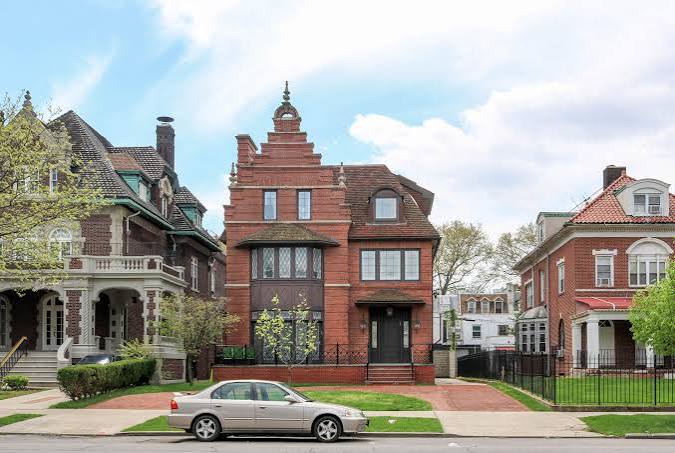
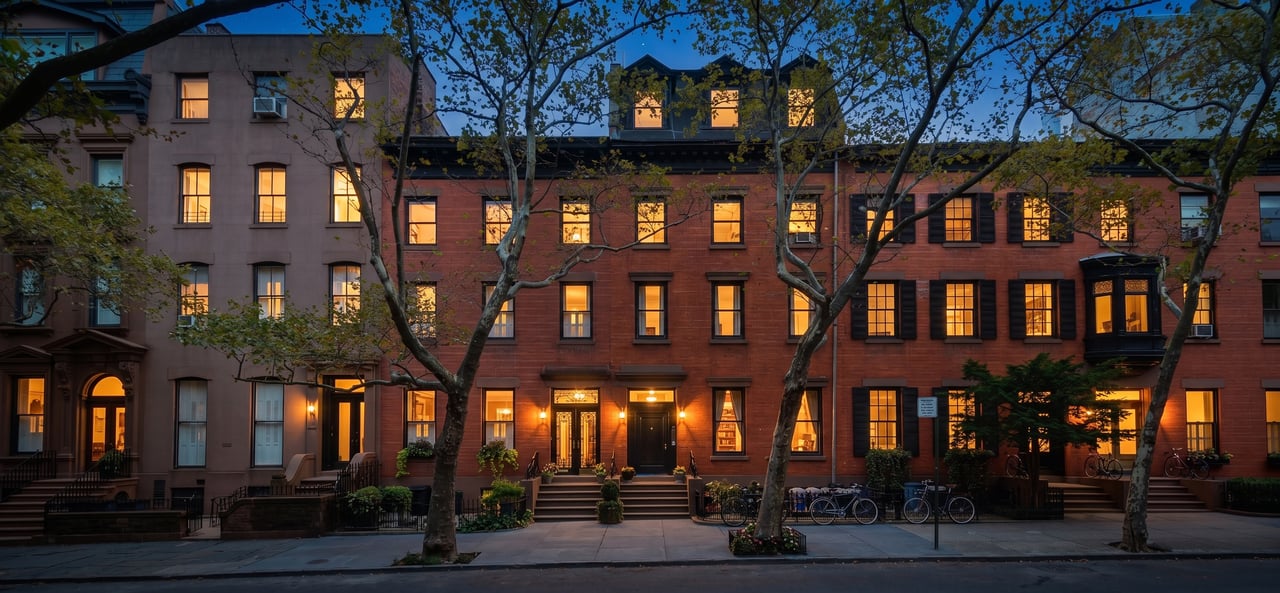
The brownstones are the postcard. Rows here went up between the 1850s and the 1910s, moving through Italianate, neo-Grec, Romanesque Revival, and Renaissance Revival as the decades rolled, and the landmarked blocks around Vanderbilt, Carlton, and Underhill hold the best of them. Owning one means owning the whole building: roof, boiler, cornice, stoop, all yours.
The prewar co-ops are the way in, and they're a genuine Prospect Heights specialty. Limestone apartment houses and elevator buildings line Eastern Parkway, Plaza Street, and St. Johns Place, built in the early twentieth century to face the parkway and the plaza, many with park views you'd otherwise pay Manhattan prices for. The trade-off is the board: a financial package, an interview, and house rules that vary building to building.
The condos are the newest layer, concentrated in the towers in and around Pacific Park at the Atlantic Avenue end, with boutique infill scattered elsewhere. They generally trade higher than comparable co-ops but skip the board process and most of the restrictions.
One habit worth keeping regardless of type: compare the monthly cost, not just the asking price. Co-op maintenance folds in taxes and building upkeep, condo common charges come with a separate tax bill, and a whole rowhouse makes you the superintendent.
What drives value in Prospect Heights
Four forces, and they compound.
Density of institutions comes first. No other Brooklyn neighborhood puts a 526-acre Olmsted and Vaux park, a major museum, a botanic garden, and a central library within a short walk of every address. That walk radius is the product, and it doesn't depreciate.
Fixed supply comes second. About 850 buildings sit inside the historic district, the neighborhood itself is small, and outside the Pacific Park footprint there's very little land to build on. What trades is what existing owners decide to sell.
The interchange comes third. Nine subway lines meet at Atlantic Avenue-Barclays Center, the busiest station in Brooklyn, with the Long Island Rail Road at Atlantic Terminal beside it. For anyone whose life involves getting places, that corner is a permanent argument for the neighborhood.
And the parkway belt rounds it out. Eastern Parkway is a designated scenic landmark, the prewar co-ops that face it and the plaza can't be replicated, and frontage on that green ribbon has held its appeal for a century.
The corridors: Vanderbilt and Washington Avenues
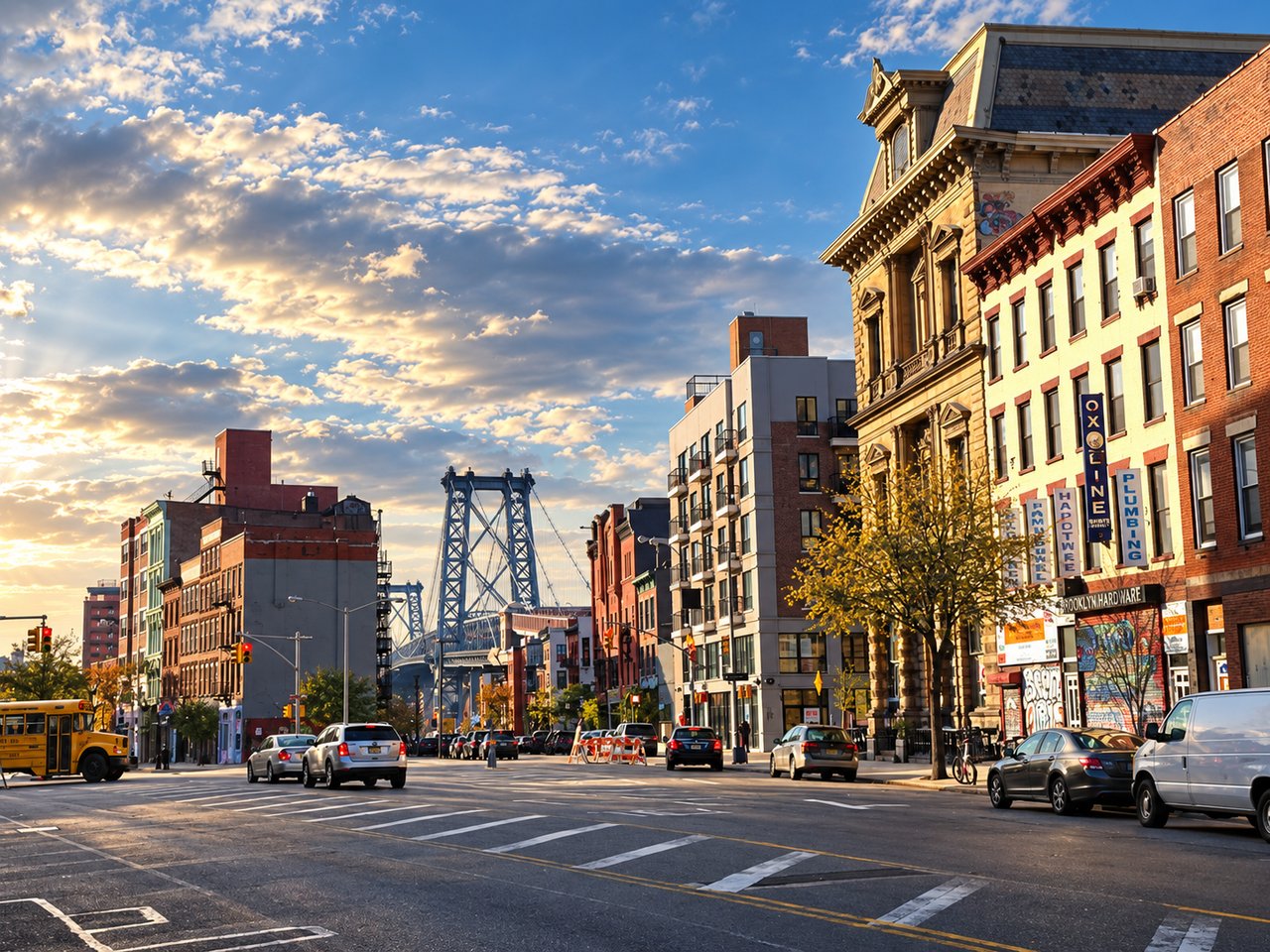
Vanderbilt Avenue is the main street and the social calendar. It carried the neighborhood's earliest apartment buildings back in the early 1870s, spent decades as a strip of hardware stores and grocers, and has since turned into one of brownstone Brooklyn's better eating and drinking rows: sidewalk cafes, long-running restaurants, small shops, and in recent summers the Open Streets program has handed whole weekend stretches of the avenue over to people on foot. Evenings hum. Mornings, it's coffee lines and dog leashes.
Washington Avenue runs quieter. It's the neighborhood's eastern edge, a looser mix of storefronts and rows on the museum's side of the map, with Crown Heights beginning across the avenue and Clinton Hill and Fort Greene a few blocks north across Atlantic. The city rezoned a stretch of the Atlantic Avenue corridor just east of Vanderbilt in 2025 to allow mixed-use housing, so expect the northern end of this edge to keep adding buildings over the next decade.
Between the two, Underhill Avenue is the quiet spine, more playground-and-stoop than storefront, and locals tend to guard its low profile.
The four corners, up close
The park and museum belt. The southern blocks off Grand Army Plaza and Eastern Parkway are the grandest, where the limestone co-op buildings face the parkway's tree-lined medians and the Saturday greenmarket sets up across the plaza. Life here revolves around the cultural campus and the park's front entrance. Best if you want prewar elevator living, park views, and the quietest streets in the neighborhood.
The Vanderbilt core. The middle blocks around Vanderbilt, Carlton, and Underhill are the heart of the 2009 historic district, including those 1850s wood-frame survivors and the odd-angled buildings left over from the old farm-line grid. This is the full brownstone experience with a restaurant row half a block away. Best if you want the classic rows and don't mind competing hardest for them.
The Washington Avenue edge. The eastern blocks trade a little polish for a little breathing room. You're closest to the museum and the garden here, the housing mix runs broader, and the rezoned Atlantic corridor will keep changing the skyline at the top of the avenue. Best if you want more options per search and like living between two neighborhoods.
The Atlantic-Barclays end. The northern corner is a different register entirely: Barclays Center, opened in 2012, the Pacific Park towers around it, and the transit complex underneath. The megaproject is roughly half built, its remaining phases have changed hands and plans more than once, and new construction there moves on its own long timeline, so buy what exists, not what's promised. Best if you want an elevator, amenities, and nine lines downstairs, and event-night crowds read as energy rather than nuisance.
The Rahmé Team Prospect Heights market read
The honest version is short: this is a small market where almost nothing is ever for sale.
The landmarked rows trade when life changes for long-time owners, not on any schedule, and well-kept houses on the core blocks draw fast, deep competition. The prewar co-ops along Eastern Parkway and Plaza Street are the most accessible way in and the most consistent source of inventory. Park-facing and parkway-facing homes carry a premium over the interior blocks. And the new towers at the Atlantic end act as the release valve for buyers who want new construction without leaving the neighborhood.
A meaningful share of the best homes here also trade quietly. In a neighborhood this compact, hearing about a house before it lists is often the whole game, and years of work on these blocks is how we hear.
Buying strategy: how to actually win here
Four moves matter most in a market this tight.
Shop before the market does. Set up alerts, see homes the first weekend, and work with someone plugged into off-market and pre-market conversations. When total inventory is this thin, speed is leverage.
Do the landmark homework. A large share of the core blocks sits inside the Prospect Heights Historic District, but not every block does, and two addresses a short walk apart can live under different renovation rules. Check the map first. If the house is landmarked, know the process: interior and non-visible work usually clears through staff-level approvals like the Certificate of No Effect, often within a couple of weeks once complete, while visible exterior changes take a fuller review that can run months. Entirely doable. Just plan it into the timeline.
Treat new development as its own diligence track. At the Pacific Park end, read the offering plan, look at the sponsor's track record, and ask the unglamorous question: what's slated for the lot next door, and on what timeline? Around a project this long-running, the answer changes, so get it current. Our new developments page is a starting point.
And verify facts at the source rather than taking any listing's word, ours included. School zones by address through the NYC Department of Education, landmark status through the LPC's maps, city data for anything else you want to know about a block. Good agents point you to the primary source; it's also how we'd want to buy.
Living here day to day
The commute. Nine lines (the 2, 3, 4, 5, B, D, N, Q, and R) meet at Atlantic Avenue-Barclays Center, and the LIRR runs from Atlantic Terminal next door. The 2 and 3 also stop at Bergen Street, Grand Army Plaza, and by the Brooklyn Museum on Eastern Parkway, so most of the neighborhood is a short walk from an express train. Most Manhattan trips run roughly 15 to 30 minutes depending on the destination.
Schools. Most of Prospect Heights sits in NYC School District 13, and elementary seats are assigned by address, with PS 9 on Underhill Avenue zoned for much of the neighborhood. Zone and district lines can shift block to block, especially toward the eastern edge, so confirm the current assignment for any exact address with the DOE before you commit. We can help you check.
The culture loop. This is the part that spoils people. The Saturday greenmarket at Grand Army Plaza, one of the biggest in the city. A museum you can visit on a whim because it's eight minutes away. The Botanic Garden in bloom, the Central Library's reading rooms, the Long Meadow when the weather cooperates, and Mount Prospect Park's hilltop lawn when you want the quiet version. None of it requires a plan. That's the luxury.
The calendar. Weekend stretches of Vanderbilt Avenue go car-free in Open Streets season. Arena nights send a tide of foot traffic up Flatbush and out again by eleven. And every Labor Day, the West Indian Day Parade takes over Eastern Parkway, one of the biggest annual events in New York; if you live on the parkway, that's your block party whether you sent invitations or not.
How to choose
Start with the thing you can't compromise on, then match it to the corner that delivers it.
If you want... | Look at... |
|---|---|
A prewar elevator co-op with park or parkway views | The Grand Army Plaza and Eastern Parkway blocks |
The classic brownstone with dinner half a block away | The Vanderbilt core |
More options per search and a lower-key street life | The Washington Avenue edge |
New construction, elevators, and amenities | The Atlantic-Barclays end and Pacific Park |
The lowest cost of entry | Prewar co-ops throughout, especially along the parkway |
None of these is a wrong answer, and the distances between them are tiny. The mistake we see is buyers judging the whole neighborhood by one corner of it. An arena Tuesday at the Atlantic end and a museum Sunday on the parkway are two different lives three-quarters of a mile apart. Walk both at the hours you'd actually live them, then check the current listings against what you felt on the ground.
FAQs
What is it like to live in Prospect Heights, Brooklyn?
Compact, walkable, and unusually close to everything. Prospect Heights puts the Brooklyn Museum, the Brooklyn Botanic Garden, the Central Library, Barclays Center, and Prospect Park around a core of 19th-century brownstone blocks, all within roughly a 15-minute walk of most addresses in 11238. Daily life runs on foot, mostly along Vanderbilt and Washington Avenues, and the neighborhood is quieter than its busy borders suggest.
Is Prospect Heights a good place to buy a home?
For buyers who want historic architecture, major cultural institutions, and some of the best transit in Brooklyn in one compact package, yes. The constraint is supply: the neighborhood is small, roughly 850 of its buildings are landmarked, and little new construction happens outside the Pacific Park footprint, so plan on patience and quick decisions in the same search.
What's the difference between the Vanderbilt Avenue blocks and the Washington Avenue blocks?
Vanderbilt Avenue is the neighborhood's main street, with restaurant and cafe rows at sidewalk level and the heart of the historic district around it. Washington Avenue is the quieter eastern edge, closer to the Brooklyn Museum, with Crown Heights beginning across the avenue and a rezoned stretch of Atlantic Avenue adding buildings at its northern end. The walk between them takes a few minutes; the difference in feel is bigger than the distance.
Should I buy a brownstone, a co-op, or a condo in Prospect Heights?
It depends on budget and flexibility. Brownstones on the landmarked blocks are the price ceiling and the most upkeep. Prewar co-ops, especially the elevator buildings near Grand Army Plaza and along Eastern Parkway, tend to be the most accessible way in, with board approval as the trade-off. Condos cluster in the newer buildings toward Atlantic Avenue and generally trade higher than comparable co-ops with fewer restrictions.
How is the commute from Prospect Heights to Manhattan?
Among the best in Brooklyn. Nine subway lines (the 2, 3, 4, 5, B, D, N, Q, and R) meet at Atlantic Avenue-Barclays Center, the borough's busiest station, with the Long Island Rail Road at Atlantic Terminal beside it, and the 2 and 3 also stop at Bergen Street, Grand Army Plaza, and by the Brooklyn Museum. Most Manhattan trips run roughly 15 to 30 minutes depending on the destination.
Is Prospect Heights walkable?
Extremely. It's one of Brooklyn's smaller neighborhoods, errands cluster on Vanderbilt and Washington Avenues, and Prospect Park, the museum corridor, and the Atlantic Terminal transit complex all sit within roughly a 15-minute walk of most blocks. Plenty of residents never keep a car here.
Prospect Heights vs Park Slope: which should I choose?
They're next-door neighbors separated by Flatbush Avenue and Grand Army Plaza, trading different strengths. Park Slope is several times larger, with far more housing inventory and Prospect Park along its full eastern edge. Prospect Heights is smaller and denser, puts the museum corridor and Brooklyn's busiest subway station at your doorstep, and tends to place you closer to an express train. Walk both before deciding; the flavor difference is bigger than the distance.
How do schools work in Prospect Heights?
Most of the neighborhood sits in NYC School District 13, and elementary seats are assigned by address, with PS 9 on Underhill Avenue zoned for much of it. Zone and district lines can differ block to block, especially toward the eastern edge, so confirm the current assignment for any specific address through the NYC Department of Education before you buy.
Deciding between this and the bigger neighborhood across the plaza? Our Park Slope buying guide walks the same decision block by block.
Work with a local team
Prospect Heights rewards people who know it corner by corner, and in a neighborhood this small, that knowledge compounds fast. The Rahmé Team at Compass brings 40 years of combined experience across brownstone Brooklyn, ranks in the top 1.5% of agents nationwide by RealTrends Verified, and has closed more than $800 million in career sales. We work with buyers and sellers on landmarked renovations, co-op board strategy, new-development diligence, and off-market opportunities, the homes you won't find by scrolling.
Ready to find your corner? Start with our Prospect Heights neighborhood page, then call the Rahmé Team at (718) 233-3365 or use our contact form to request a tailored Prospect Heights search built around your block preferences, not just your price point.