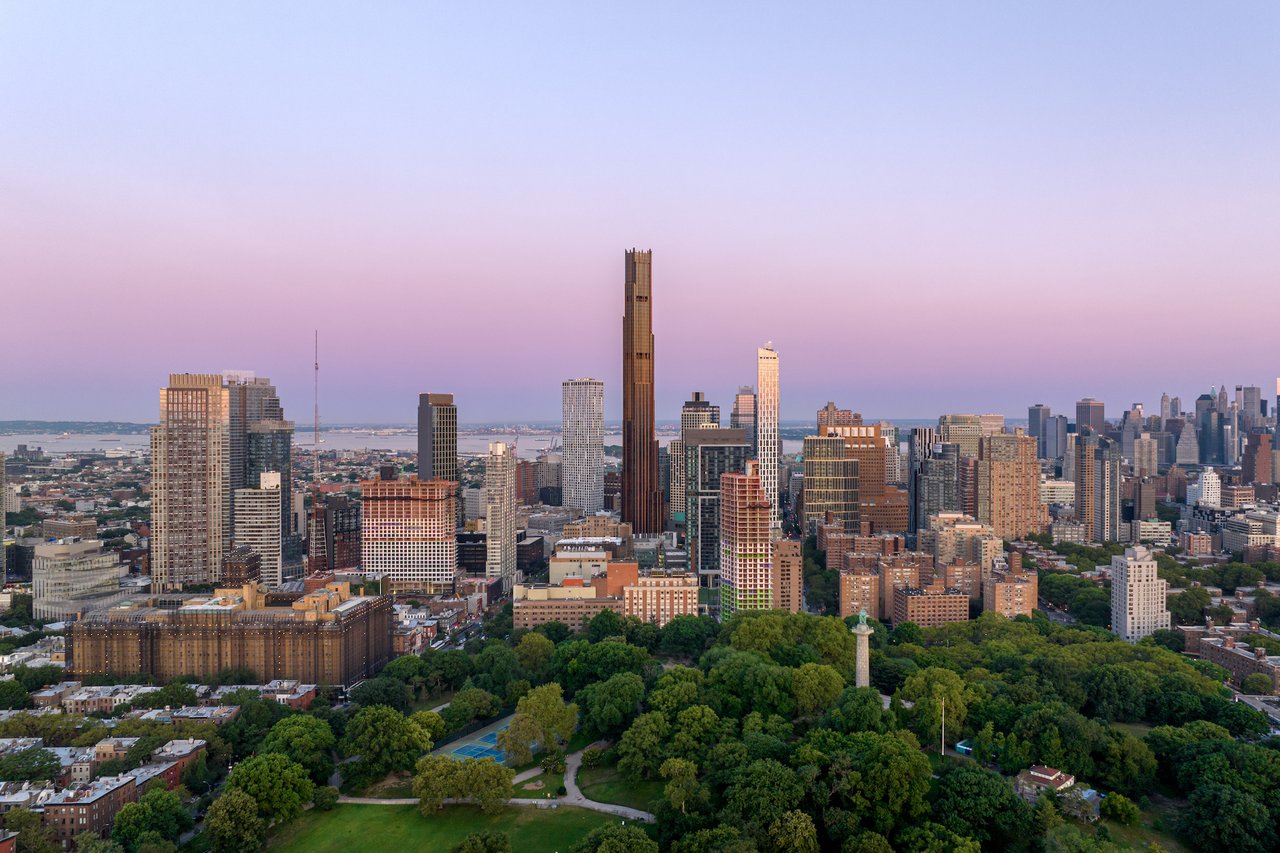
Is Downtown Brooklyn a good place to buy a condo? If you're optimizing for commute, building age, and amenities, no Brooklyn neighborhood concentrates all three like this one. This is the borough's vertical district, towers rising since a 2004 rezoning opened the door, eleven subway services converging underneath and thirteen if you count Atlantic Terminal a short walk south, and a condo stock newer than anywhere else in the borough. It's also the one neighborhood in this series where the building you pick matters more than the block.
The pitch and the price are the same thing here: leverage over your own time. One or two stops to Lower Manhattan, elevators instead of stoops, a gym downstairs instead of a membership across town. What you trade is the brownstone contract: instead of a fixed streetscape, you get a growing skyline, which means your purchase competes with buildings that don't exist yet, and the diligence that protects you is financial and legal rather than architectural.
This guide walks the district the way we'd walk it with you: the four pockets and how they differ, a housing ladder that runs from prewar conversions to a supertall, what drives value when supply can still grow, and the offering-plan homework that separates a good tower purchase from an expensive lesson.
In this guide
- The lay of the land: what defines Downtown Brooklyn
- Quick comparison: the four pockets at a glance
- Which pocket is right for you?
- Sponsor gloss, resales, and conversions: the housing ladder
- What drives value in Downtown Brooklyn
- Fulton, Flatbush, and the corridors
- The four pockets, up close
- The Rahmé Team Downtown Brooklyn market read
- Buying strategy: how to actually win here
- Living here day to day
- How to choose
- FAQs
- Work with a local team

Fouad Rahmé
Founder, the Rahmé Team at Compass
The Rahmé Team advises buyers, sellers, investors, and developers across Brooklyn, with 40 years of combined experience, more than 1,000 clients and transactions, and over $800 million in career sales, $167 million of it since 2020. RealTrends Verified ranks the team in the top 1.5% of real estate professionals nationwide.
Contact the team or call (718) 233-3365.
The lay of the land: what defines Downtown Brooklyn
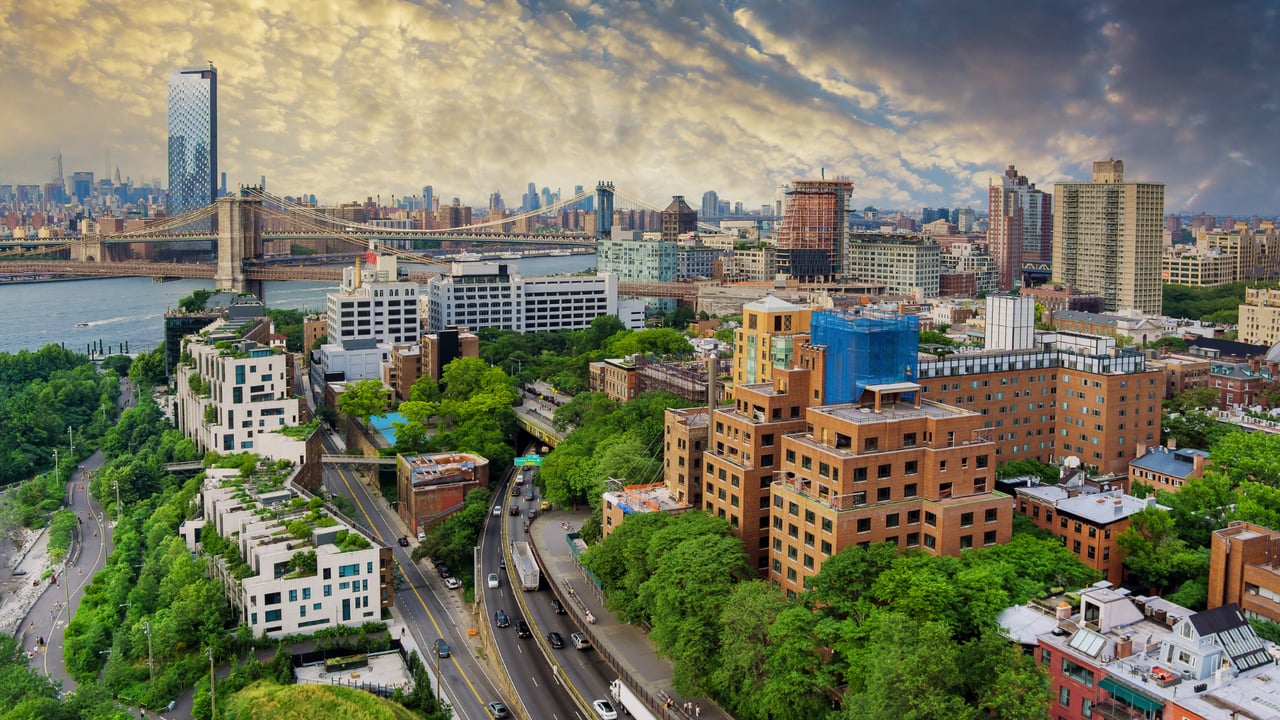
Start with the before and after. For most of its life this was Brooklyn's office-and-errands district, courts and banks and Fulton Street shopping, a place the borough visited by day and left by evening. Then the 2004 rezoning allowed residential height, and the district spent the next two decades becoming a neighborhood: towers over the retail, thousands of new homes, and a skyline that now announces Brooklyn from every bridge.
The flagship tells the whole story in one building. The Brooklyn Tower, the borough's first and only supertall at 1,066 feet, rises directly from the landmarked Dime Savings Bank of Brooklyn, a 1906 banking hall expanded in 1931 and 1932, where residents now enter through the original Ionic colonnade and the rooftop deck wraps the old dome. A bank where Brooklynites once opened accounts for a dime, landmarked in 1994, now carrying ninety-three stories of apartments: that's the district's whole argument in a single address, old civic bones holding up new vertical life, and the preservation commission signed off on exactly that pairing.
The geography is compact. Flatbush Avenue and its extension run the eastern spine, Fulton Street crosses the middle, Borough Hall anchors the civic west toward the Brooklyn Heights border, and the cultural district and Fort Greene sit just east. Under all of it runs the deepest transit network in the borough, which is not a detail here. It's the foundation the entire market is built on.
Quick comparison: the four pockets at a glance
Vertical neighborhoods still sort by geography. Here's the shape of it.
The feel | Housing stock | The pace | Transit | Best if | |
|---|---|---|---|---|---|
The Flatbush spine | The skyline row, where the borough's tallest towers meet Fulton Street retail | New condo and rental towers, capped by the supertall over the Dime Savings Bank dome | The most vertical energy in Brooklyn | DeKalb Avenue's B, Q, and R at the corner | You want the newest building and the view that comes with height |
The Willoughby-and-Bridge core | The interior grid where towers rose among the office blocks | Newer condos, office-to-residential conversions, Abolitionist Place's green at the middle | Busy by day, quieter than the spine at night | Jay Street-MetroTech's A, C, F, and R | You want new construction one block off the main energy |
The civic west | Borough Hall's courts and columns, the older office stock toward the Heights border | Prewar conversions, lofts, smaller condo buildings with character | The most reserved register downtown | The 2, 3, 4, 5, and R around Borough Hall | You want downtown's commute with prewar bones |
The Ashland and cultural edge | Flatbush's east side, where the towers meet the cultural district | Newer towers and rentals at the Fort Greene border | Performance nights and arena nights set the calendar | Atlantic Terminal's lines and the LIRR a short walk | You want the theaters, the park nearby, and glass to live in |
Which pocket is right for you?
Ask what the elevator is for, in your life. If it's pure speed, the Flatbush spine and the Willoughby core put the newest buildings on top of the fastest stations, and your decision becomes a building-by-building comparison of financials, amenities, and what can rise next door. If it's character plus commute, the civic west's prewar conversions carry downtown's transit with bones the towers can't fake.
And if the neighborhood is really a base of operations, the cultural edge earns a look: the theaters and the park within walking distance, the terminal's lines for everywhere else, and a calendar that brings the borough to you. You'll find the honest sorting question is evenings, not mornings; every pocket commutes brilliantly, and they go quiet, or don't, very differently.
Sponsor gloss, resales, and conversions: the housing ladder
The top rung is sponsor inventory: never-occupied units in the newest towers, sold off the offering plan with the finishes photographed before anyone cooked in them. Sponsor deals run by their own rules, closing costs that are often negotiable, concessions that appear and vanish with the market's mood, and a building whose track record is a projection. The gloss is real; so is the homework.
The middle of the ladder is where value tends to hide: resales in the earlier tower generations, apartments whose buildings now have a history you can actually read, common-charge trajectories, reserve funds, an owner-to-renter ratio that settled somewhere. A resale competes with the shiny new lobby down the street, and its pricing admits it, which is precisely the opportunity for a buyer who cares more about the apartment than the brochure.
The character rung is the conversion layer, prewar office and loft buildings in the civic west turned residential, with ceiling heights and window depths new construction rarely matches. And threaded through everything is a large rental population, because many of the towers are rentals or mixed. The flagship makes the point better than any statistic: the supertall over the Dime holds 550 residences, of which roughly 150 are condominiums and about 400 are rentals. In a district marketed on its skyline, the for-sale field is meaningfully smaller than the towers imply, which shapes daily life and matters to your resale story more than most buyers realize on tour day.
One structural note before you shop: not every glass building is a condo, and the label decides your rights. Condos here own real property with the loosest resale and rental rules; the occasional condop or land-lease building wears the same lobby with very different economics underneath, and a rental building never sells you anything at all. Ten minutes with the offering plan settles what the listing photos can't, which is why we read the paper before we book the tour.
What drives value in Downtown Brooklyn
Transit does the base pricing. Eleven subway services run through the district's own stations, thirteen counting Atlantic Terminal a short walk south, all within reach of most addresses, which makes the commute premium here structural rather than fashionable. It holds across every property type and market mood. When you're one or two stops from Lower Manhattan, the map itself is an amenity, and the market never forgets it.
After that, this neighborhood inverts the series' usual logic. In the brownstone districts, supply is fixed and scarcity does the pricing; here, supply can still grow, so discipline does. A building's financial health, its reserve funding, its sponsor's remaining stake, its charge trajectory, separates towers that hold value from towers that merely held a ribbon-cutting. And the view premium is really a zoning question: what you're paying for above the twentieth floor is only as durable as the development rights on the lots between you and the horizon.
Position still matters, just vertically as much as horizontally. Line premiums inside a single tower can be their own market, the same layout pricing differently by exposure and floor, arena and performance calendars reach the southern and eastern blocks, and the civic west trades newness for quiet. Reading this market means reading buildings the way the other guides read blocks.
Amenities deserve their own line item in your thinking. A pool, a co-working floor, and a sky lounge are worth real money if you'll use them and a recurring bill if you won't, and buildings with heavy amenity loads need reserves and charges that admit it. The disciplined move is to price the apartment and the amenity package separately in your head, then ask whether you'd buy each on its own. Sometimes the plainer building next door is the smarter own for exactly this reason.
Fulton, Flatbush, and the corridors
Fulton Street is the borough's historic shopping spine and still runs at full volume, with City Point and the DeKalb Market Hall giving the district its modern anchor: groceries, a food hall, movies, and daily retail stacked at the base of the towers. Living here means errands measured in elevator rides plus a block, which sounds small until it reorganizes your week.
Flatbush and its extension carry the skyline and the institutions around it. Junior's holds its corner at DeKalb like a landmark with a dessert case, the Dime's restored banking hall returns the district's grandest room to public life as retail, and the avenue runs south toward the terminal and the arena, which is where the district's energy peaks and its event-night crowds concentrate.
Green space works on the rotation system. Abolitionist Place, the 1.15-acre park on Duffield Street that opened in 2024 on the site long known as Willoughby Square, gives the core its pocket of grass, with a playground, a lawn, a dog run, and a waterplay feature. Cadman Plaza and the Heights promenade sit to the west, Fort Greene Park a short walk east, and Brooklyn Bridge Park down the hill, so residents assemble a park life from the borough's best options rather than one backyard. The student layer adds its own rhythm; NYU Tandon, Brooklyn Law School, and Long Island University all operate within the district, keeping the daytime streets busy on a campus calendar.
The four pockets, up close
The Flatbush spine is the skyline itself: the supertall over the Dime, the tower cluster around City Point, retail and transit stacked underneath. It's the most vertical address in Brooklyn, the views are the product, and the diligence question is always the same, what can rise between you and them.
The Willoughby-and-Bridge core is the district's interior, where towers rose among the office blocks and Abolitionist Place landed in the middle. It trades a little of the spine's drama for a calmer street level, and its buildings span enough generations now that resale value here is a knowable fact rather than a guess. For buyers who want the vertical life without paying the flagship premium, this pocket is usually where the honest math points first.
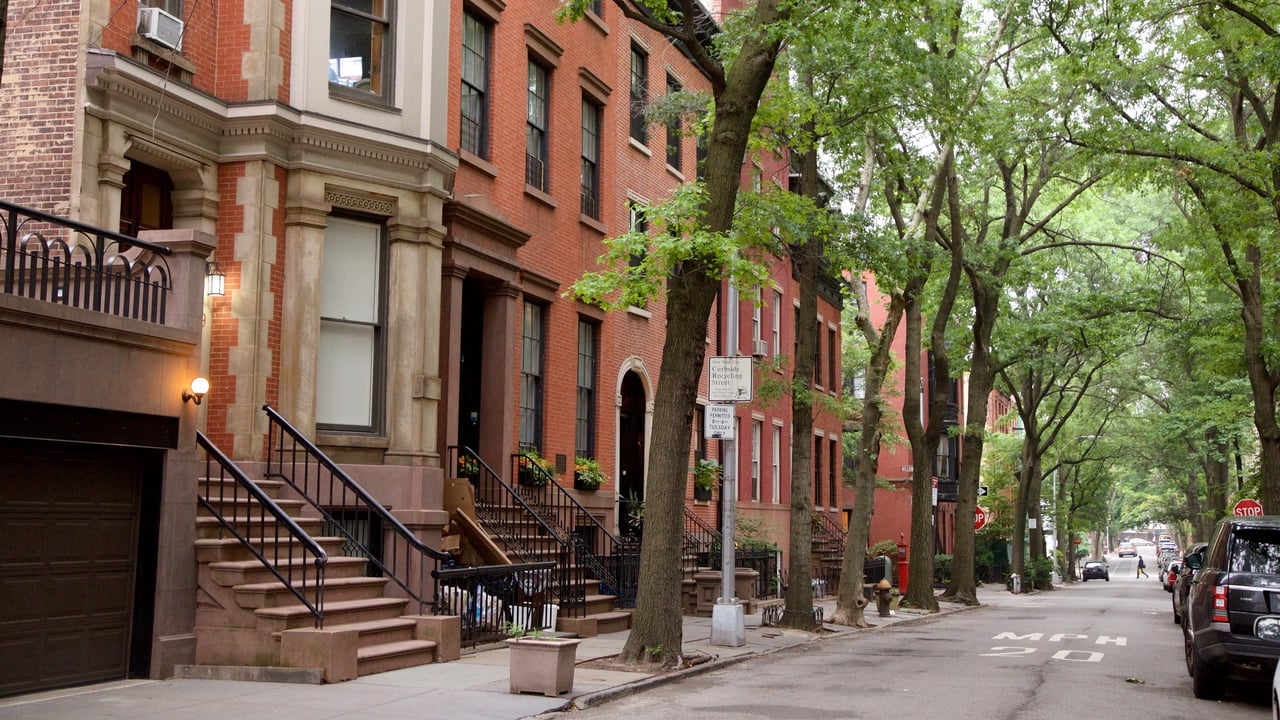
The civic west is the quietest-tempo pocket: Borough Hall's columns, the courts, and the prewar office stock that converted into lofts and apartments with downtown's commute attached. Buyers here get character the towers can't manufacture and a streetscape that changes slowly, the closest this district comes to the brownstone contract.
The Ashland and cultural edge faces east, where the towers meet the theaters and the Fort Greene border. It's the pocket for buyers who want the cultural district as a nightly option and the terminal as a daily one, with the honest note that performance and arena calendars are part of the deal, energy and crowds arriving on schedule.
The Rahmé Team Downtown Brooklyn market read
The thing to hold onto here: this market moves building by building, not block by block. Two towers a street apart can run in opposite directions based on sponsor behavior, rental mix, and charge trajectories, and a neighborhood-wide number smooths over exactly the differences that decide whether your purchase ages well. We track the buildings, because here the building is the market.
For the borough-wide picture, our Brooklyn market report runs the numbers from the closed-sales record itself and refreshes with each edition. For Downtown Brooklyn specifically, call us and we'll pull what's actually closing in the specific buildings you're weighing, sponsor and resale separated, because averaging them produces a number true of neither.
Buying strategy: how to actually win here
Underwrite the building before you fall for the apartment. Read the offering plan and the financials for trajectory: reserves against amenity load, charge history since opening, the sponsor's remaining stake and control timeline, the owner-to-renter split, and any assessments past or pending. If a tax benefit schedule applies, find its burn-off year and run your numbers at the full unabated cost, because that's the apartment you'll own longest.
Negotiate like a sponsor's counterparty when you're buying sponsor. Closing costs, concessions, and upgrades move with absorption, and a building working through inventory has more flexibility than its price sheet admits. Buying resale, flip the lens: the building's actual history is your leverage and your protection, and an apartment priced against a shinier neighbor is often the better own.
Then do the two checks tower buyers skip. Verify the view: we pull what can legally rise on the lots in your sightline before you pay a premium for them. And live the vertical logistics once, elevator waits at rush hour, the package room on a Tuesday, the wind on the terrace, because the tour never happens at the hours you'll actually live there. Start the search through our contact form or calibrate against the current listings, and bring us the offering plan before you sign anything.
Two more pieces of craft that pay for themselves here. First, hire a real estate attorney who reads new-development contracts weekly, not occasionally, because sponsor contracts are drafted by the sponsor's side and every protection you get is one your lawyer negotiated in. Second, calendar your homework: financing terms, building approvals, and concession windows all move, and the buyer whose file is complete on the day the right unit appears is the buyer who wins it at the better number.
Living here day to day
Mornings are the whole sales pitch. Pick your line by mood, the A, C, F, and R at Jay Street-MetroTech, the B, Q, and R at DeKalb, the 2, 3, 4, 5 around Borough Hall, the terminal's lines and the railroad a short walk, and be in Lower Manhattan before your coffee cools. Errands run vertically: the market hall, the grocery floors, and the gym mostly share your address or the next one.
Days and evenings depend on your pocket. The spine hums, the civic west empties into a court-adjacent calm after five, the cultural edge runs on curtain times, and event nights around the arena bring crowds and surge pricing on a published schedule. School zoning runs by address and varies block to block here, so treat the Department of Education's school search as the only answer that counts for any specific home, and confirm before you write the offer.
The fine print is the vertical kind. Construction is a neighbor somewhere nearby more often than not, wind and height are real above the thirtieth floor, amenity floors are a monthly bill you should actually use, and the district's energy is a feature you should want rather than tolerate. All of it is testable in one afternoon and one evening walk, which is exactly the homework we assign. Weekends stretch outward on the rotation: the bridge parks down the hill, Fort Greene's lawn to the east, the theaters a block away, and a district compact enough that Saturday's whole list fits between breakfast and the matinee.
How to choose
Decide the building requirement first and the rest follows quickly.
If this is the priority | Start here |
|---|---|
The newest building and the biggest view | The Flatbush spine, and check what can rise nearby first |
New construction, slightly off the main energy | The Willoughby-and-Bridge core |
Prewar character with downtown's commute | The civic west conversions |
The cultural district at your door | The Ashland and Flatbush edge |
The friendliest entry price | Resales in earlier-generation buildings, not sponsor gloss |
Investor mechanics that pencil | Buildings with proven rentals; bring us the offering plan first |
FAQs
Is Downtown Brooklyn a good place to buy a condo?
If your priorities are commute math, new construction, and building amenities, it's the strongest concentration of all three in the borough. The neighborhood has been adding towers since a 2004 rezoning opened the door, eleven subway services run through the district's own stations and thirteen counting Atlantic Terminal a short walk south, and the condo stock skews newer than anywhere else in Brooklyn. The trade-offs are real too: growing supply means your resale competes with the next building, a good share of the tower inventory is rental rather than for sale, and the neighborhood's energy is urban by design.
Are the towers here condos or rentals?
Both, and the mix surprises people. Many of the district's towers are rental buildings or mixed, and even the flagship splits: the supertall over the Dime holds 550 residences, roughly 150 condominiums and about 400 rentals. So the for-sale field is smaller than the skyline suggests. Confirm a building's ownership structure before you invest a weekend in it, and remember that a condop or land-lease building can wear the same lobby as a condo with very different economics underneath.
What's the difference between a sponsor unit and a resale?
A sponsor unit comes straight from the developer, never lived in, priced off the offering plan, and typically with the buyer covering costs like transfer taxes unless you negotiate them, which in slower stretches you often can. A resale comes from an owner, carries a lived-in history you can inspect, and its price reflects how the building has actually performed rather than how the brochure hoped it would. Neither is automatically the better deal; the building's trajectory decides that.
What should I check in a condo's offering plan and financials?
Read for trajectory, not just the current numbers. Check the reserve fund against the building's age and amenity load, how common charges have moved since opening, how much of the building the sponsor still controls, the split between owners and renters, and any assessments past or pending. A tower's amenity floor is a monthly bill wearing a swimsuit, and the financials tell you whether the building has priced that honestly.
How do tax abatements work on new condos?
Mechanically: some new buildings carry tax benefit schedules that phase out on a set timeline, which makes the early years' carrying costs look friendlier than the permanent picture. The discipline is simple and non-negotiable. Get the schedule, find the year the benefit burns off, and underwrite your purchase at the full unabated number, because that's the apartment you'll own longest. If the deal only works during the abatement, it doesn't work.
Are Downtown Brooklyn condos good for investors?
The mechanics can suit an investor, but check three things before the spreadsheet. The building's rental policy and any minimum lease terms, the owner-to-renter ratio your unit would join, and the pipeline of competing new buildings your future tenant will tour the same afternoon. We'll pull what's actually renting and closing rather than projecting, because in a supply-adding neighborhood, yesterday's rent roll is not a promise.
Will my view be protected?
Only as much as the zoning next door says it is, and usually that's not much. Views here are a product of timing: the lot between you and the skyline may carry development rights, and a filed plan can change your western light in two years. Before you pay a view premium, we check what can legally rise around the building, because in a neighborhood built on a rezoning, the honest answer to this question is a land-use answer, not a listing answer, and it's worth getting before the premium is paid rather than after.
What is the commute like from Downtown Brooklyn?
It's the best in the borough. Eleven subway services run through the district's own station clusters, and thirteen if you count Atlantic Terminal a short walk south: the A, C, F, and R at Jay Street-MetroTech, the B, Q, and R at DeKalb Avenue, the A, C, and G at Hoyt-Schermerhorn, the 2, 3, 4, 5, and R around Borough Hall and Court Street, with Atlantic Terminal adding the D and N along with the Long Island Rail Road. Lower Manhattan is a stop or two away, most addresses have a real choice of routes, and a suspended line here is an inconvenience rather than the crisis it becomes in single-line neighborhoods.
Downtown Brooklyn, Brooklyn Heights, or Fort Greene: how do I choose?
By how you want to live vertically or not. Brooklyn Heights is the landmarked promenade neighborhood, prewar co-ops and rowhouses with a fixed streetscape. Fort Greene pairs brownstone blocks with the park and the cultural district. Downtown Brooklyn is the elevator answer: the newest buildings, the fastest commutes, amenities the older neighborhoods structurally can't offer, and an urban register the other two deliberately lack. Walk all three in one afternoon; they're adjacent, and they settle it.
Weighing the neighbors too? Our Brooklyn Heights guide and Fort Greene guide walk those markets the same way, and the pages for Brooklyn Heights and Clinton Hill and Fort Greene hold the current inventory picture.
Work with a local team
Downtown Brooklyn rewards buyers who read buildings the way other neighborhoods read blocks, and punishes the ones who buy the brochure. The Rahmé Team at Compass brings 40 years of combined experience across Brooklyn, ranks in the top 1.5% of real estate professionals nationwide by RealTrends Verified, and has closed more than $800 million in career sales. We work with buyers, sellers, and investors on offering-plan review, sponsor negotiations, resale positioning, view and zoning diligence, and the building-level intelligence this district actually runs on.
Ready to see Downtown Brooklyn properly? Start with our Downtown Brooklyn neighborhood page, then call the Rahmé Team at (718) 233-3365 or request a building shortlist through our contact form, built around your financial homework, not just your floor preference.