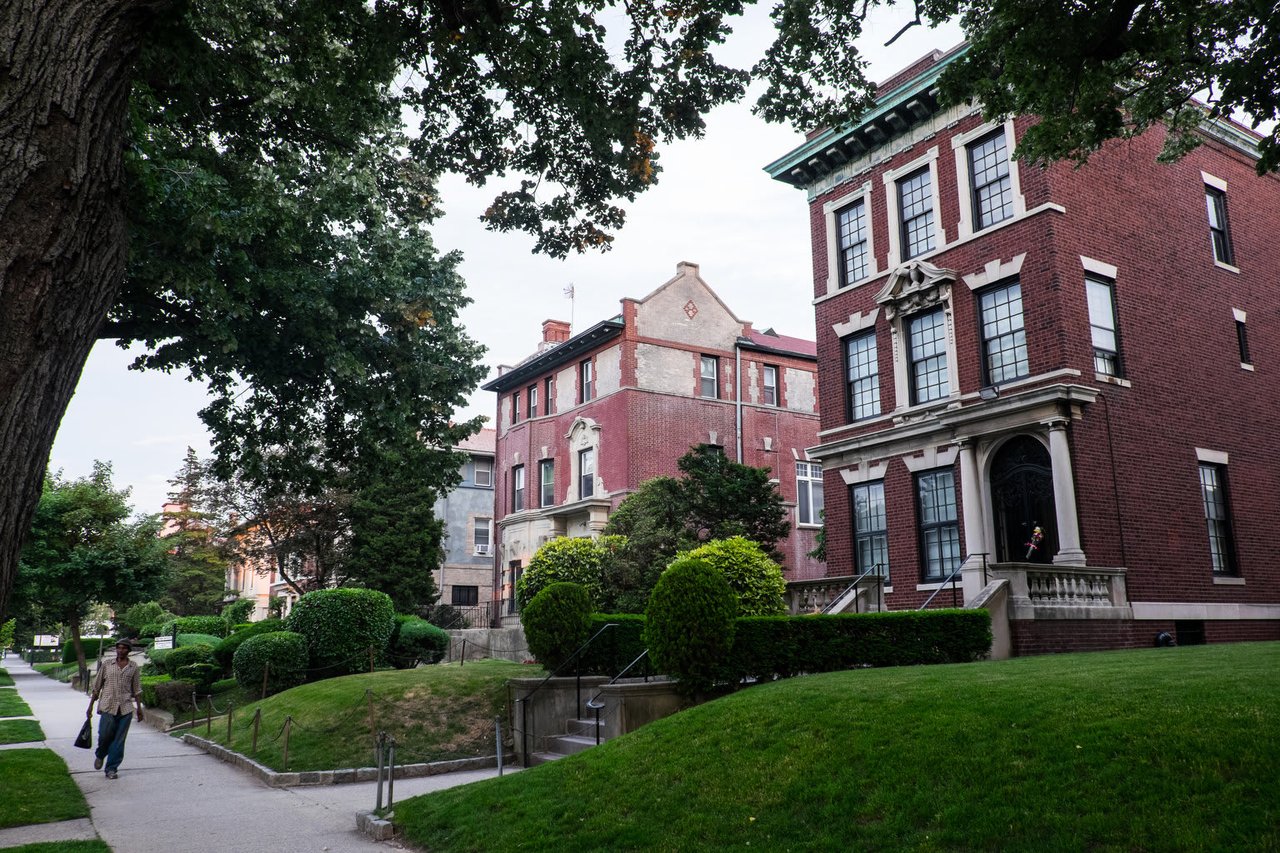
What are homes like in Brooklyn Heights? Older, grander, and more protected than almost anywhere else in New York. The neighborhood sits on a bluff above the East River in zip code 11201, and its housing splits into two great families: landmark rowhouses spanning Federal wood-frames through Greek Revival and Italianate brownstones, and a deep bench of prewar co-op buildings, many with harbor views. In 1965 this became the first historic district ever designated in New York City, which means the streetscape you see today is, by law, pretty much the streetscape you'll see in thirty years.
That permanence is the pitch and the price. More than 600 protected buildings means almost no new supply, so what trades is what owners decide to sell, and the co-op boards that control much of the inventory take their gatekeeping seriously. Add the view premium along the Promenade and the fact that Lower Manhattan sits one or two subway stops away, and you get one of the most patient, competitive markets in the borough.
This guide walks the neighborhood block by block: the housing stock, what drives value, how the four pockets differ, and how to buy well here. When you're ready for a Brooklyn Heights consultation, including homes not yet public, reach out to the Rahmé Team at Compass through our contact form or at (718) 233-3365.
In this guide
- The lay of the land: what defines Brooklyn Heights
- Quick comparison: the four pockets at a glance
- Which pocket is right for you?
- Co-ops, brownstones, and condos: the housing stock
- What drives value in Brooklyn Heights
- Montague Street and the corridors
- The four pockets, up close
- The Rahmé Team Brooklyn Heights market read
- Buying strategy: how to actually win here
- Living here day to day
- How to choose
- FAQs
- Work with a local team
The lay of the land: what defines Brooklyn Heights
Three things: the bluff, the protection, and the shelf of green at the water.
The bluff first, because it explains the whole history. The Heights rises above the harbor directly across from Lower Manhattan, and it's often called New York's first commuter suburb: the streets were surveyed in the early 1800s, and ferry commuters filled the rows long before the bridge existed. That head start is why the housing runs so old here, with wood-frame and Federal houses from the neighborhood's first decades still standing on the northern blocks, followed by waves of Greek Revival brick and Italianate brownstone as the century rolled on.
Then the protection. On November 23, 1965, months after the city's Landmarks Law was signed, Brooklyn Heights became the first historic district designated in New York City, more than 600 pre- and post-Civil War buildings frozen in place. Six decades later that first-district status still defines the market: renovation runs through the Landmarks Preservation Commission, teardowns don't happen, and supply is what it is.
And the shelf of green. The Brooklyn Heights Promenade, officially the Esplanade, opened in stages in 1950 and 1951 after the neighborhood beat back Robert Moses's plan to run the Brooklyn-Queens Expressway through its heart. The compromise pushed the highway to the bluff's edge, stacked it in a triple cantilever, and put an 1,826-foot public walkway on the roof, with the Statue of Liberty, the harbor, and the skyline laid out in front of it. Below it, Brooklyn Bridge Park now runs 85 acres and 1.3 miles along the water, built out on the old shipping piers starting in 2010. A view over parkland that can never be built on is about as durable as a view gets.
Quick comparison: the four pockets at a glance
The neighborhood is compact, but the blocks sort themselves cleanly.
The feel | Housing stock | What stands out | Transit edge | Pace | |
|---|---|---|---|---|---|
The Promenade blocks | The view shelf: Columbia Heights, Willow Street, and the harbor at the end of every cross street. | The grandest houses and view co-ops in the neighborhood. | Harbor and skyline views over parkland. | 2/3 at Clark Street a short walk inland. | Quiet, with Promenade foot traffic at golden hour. |
The north Heights | The fruit streets: Cranberry, Orange, and Pineapple, plus Middagh, the oldest corner of the neighborhood. | Federal and wood-frame houses, small rows, a few apartment buildings. | The earliest architecture and the park stairs nearby. | A/C at High Street, walk to DUMBO and the bridge. | Storybook still. |
The Montague core | The working center: the retail spine, the co-op stacks, Borough Hall at the eastern end. | Prewar elevator co-ops on Montague, Remsen, and Pierrepont, rows in between. | The deepest co-op inventory in the neighborhood. | 2/3/4/5 and R at the Borough Hall and Court Street complex. | Busiest, in a low-key way. |
The south Heights | The garden blocks: Joralemon, Hicks, and State, sloping toward Atlantic Avenue. | Rowhouses and smaller buildings, quieter streets. | The calmest blocks, with BoCoCa across Atlantic. | Borough Hall lines at the top, Atlantic Terminal a longer walk. | Quietest. |
Which pocket is right for you?
Here's the short version before the long one.
If the view is the point, you're shopping the Promenade blocks. If you want the oldest, most storybook streets in Brooklyn, look at the north Heights around the fruit streets. If you want the deepest co-op inventory and the best transit, look at the Montague core. And if you want the quietest rowhouse blocks with BoCoCa a crosswalk away, look south toward Atlantic.
Now the detail.
Co-ops, brownstones, and condos: the housing stock
Three layers, and the first one is the neighborhood's signature.
The prewar co-ops carry this market. Brooklyn Heights holds some of the borough's grandest early-20th-century apartment buildings, stacked along Montague, Remsen, Pierrepont, and Columbia Heights, many with elevator lobbies, thick walls, and harbor views from the west-facing lines. They're also the most accessible way into the neighborhood. The trade-off is the board: a full financial package, an interview, and house rules that vary building to building, and boards here have a reputation for thoroughness they've earned.
The landmark houses are the postcard. The rows span nearly a century of styles, from Federal and wood-frame survivors on the northern blocks, some of the oldest houses in Brooklyn, through Greek Revival brick to Italianate brownstone. Owning one means owning the whole building, and renovating one means working with the Landmarks Preservation Commission, which is entirely doable and covered in the strategy section below.
And there's a thin condo layer: a handful of newer buildings along the park's edge and scattered conversions inside the district. In a neighborhood where almost nothing new gets built, they trade on scarcity of their own kind.
One habit that pays across all three: compare the monthly cost, not just the asking price. Co-op maintenance folds in taxes and building upkeep, condo common charges come with a separate tax bill, and a whole rowhouse makes you the superintendent of a 150-year-old building.
What drives value in Brooklyn Heights
Four forces, and the first has been running since 1965.
Fixed supply comes first. The city's first historic district froze more than 600 buildings in place six decades ago, and no rezoning is coming to add towers to these blocks. What trades is what owners release, which is why patient buyers and fast decisions coexist here.
The view shelf comes second. Promenade-facing and harbor-facing homes look out over the Esplanade and 85 acres of Brooklyn Bridge Park, protected public land between you and the water. Views held over parkland don't get built out, and the market prices that permanence.
Commute geometry comes third. The 2 and 3 stop at Clark Street inside the neighborhood, the Borough Hall and Court Street complex adds the 4, 5, and R, the A and C run at High Street, ferries dock at the park, and Lower Manhattan is one or two stops, or a walk over the Brooklyn Bridge, away. Few neighborhoods anywhere put this much housing this close to that many desks.
And the co-op stock itself rounds it out. Prewar buildings of this quality, in this quantity, with these sightlines exist in a handful of places in New York. That depth keeps a ladder into the neighborhood at more entry points than the townhouse market alone would ever allow.
Montague Street and the corridors
Montague Street is the spine: the run from the Promenade's Montague entrance down to Borough Hall carries the neighborhood's shops, restaurants, banks, and errands, with prewar co-ops stacked above the storefronts. It's the street where the Heights does its daily business, busiest at lunch and after school lets out.
Henry and Hicks are the locals' streets, quieter north-south runs where the cafes and corner spots serve the blocks around them rather than a crowd. And the Promenade itself functions as a corridor of its own: a third of a mile of bench-lined walkway that residents treat as a front porch, a running route, and the place you take every out-of-town guest exactly once before they insist on going back.
The four pockets, up close
The Promenade blocks. Columbia Heights, Willow Street, and the streets that dead-end into the view hold the neighborhood's grandest addresses, houses and co-op lines that look straight across the harbor. One honest note for view buyers: the Brooklyn-Queens Expressway runs in its famous triple cantilever directly beneath the Promenade, its rebuild has been in planning for years, and any purchase on these blocks should come with a current read on the project's status and timeline. We keep one. Best if the view is the point and you want the neighborhood's signature addresses.
The north Heights. The fruit streets, Cranberry, Orange, and Pineapple, plus Middagh, hold the oldest fabric in the neighborhood, including wood-frame and Federal houses from the Heights' first decades. The A and C at High Street sit at the corner, and the park stairs and DUMBO are a short walk downhill. Best if you want the most storybook streets in Brooklyn and houses with real age in their bones.
The Montague core. The central blocks between Clark and Remsen carry the co-op stacks, the retail spine, and the fastest transit in the neighborhood, with the 2, 3, 4, 5, and R clustered at Clark Street and the Borough Hall complex. Best if you want the deepest inventory, an elevator, and the shortest possible commute.
The south Heights. Below Remsen the blocks quiet down: Joralemon's garden rows, Hicks, State Street, and then Atlantic Avenue with Boerum Hill, Cobble Hill, and Carroll Gardens beyond it. Best if you want the calmest streets in the district and a second neighborhood's restaurants one crosswalk away.
The Rahmé Team Brooklyn Heights market read
The honest version: this is the most supply-constrained market in the series, and it behaves like it.
Townhouses on the landmark blocks trade rarely and privately as often as publicly, usually when life changes for long-tenured owners. The prewar co-ops are the consistent source of inventory and the most common first purchase in the neighborhood, with west-facing view lines commanding the premium. The thin condo layer trades on scarcity. And across all three, well-priced homes draw fast competition from buyers who have often been waiting for that exact line or that exact block.
A meaningful share of Brooklyn Heights inventory also never reaches the open market at all. In a neighborhood this settled, hearing about a home before it lists is often the entire game, and that's a network built over years, not weekends.
Buying strategy: how to actually win here
Four moves matter most.
Prep the board package before you bid. Most of this neighborhood's accessible inventory runs through co-op boards, and here more than anywhere, a clean, complete financial package ready in advance can win a tie against a slightly higher offer. Know your debt picture, your post-closing liquidity story, and your references before you fall in love with a line.
Know the landmark process cold. Every building in the district answers to the Landmarks Preservation Commission for exterior work. Interior and non-visible changes usually clear through staff-level approvals like the Certificate of No Effect, often within weeks once complete, while visible facade work and additions take fuller review that can run months. Sixty years of owners have renovated beautifully under these rules. Just budget the timeline, not only the construction.
Ask the infrastructure question on the west edge. For Promenade-block purchases, get the current status of the BQE rebuild beneath the cantilever, what's planned, on what schedule, and what it could mean for the block during construction. The answer changes as the project evolves, so get it fresh, not from an old article.
And verify facts at the source rather than taking any listing's word, ours included: school zones by address through the NYC Department of Education, landmark status through the LPC's maps, building records through city databases. Good agents point you to primary sources; it's also how we'd want to buy.
Living here day to day
The commute. The 2 and 3 at Clark Street sit inside the neighborhood, the Borough Hall and Court Street complex adds the 4, 5, and R, and the A and C run at High Street. Most Lower Manhattan trips take roughly 5 to 15 minutes, Midtown roughly 20 to 30, and on a good morning the walk over the Brooklyn Bridge beats them all for the story.
The park. Brooklyn Bridge Park runs 85 acres and 1.3 miles below the bluff, pier by pier: courts on Pier 2, fields on Pier 5, the big playground and volleyball at Pier 6 by Atlantic Avenue, lawns and harbor edges in between, with ferry landings on the water. The neighborhood treats it as a backyard with a skyline.
The Promenade. The evening ritual barely needs describing: the benches fill, the harbor goes gold, the Statue of Liberty catches the last light, and everyone pretends they're not taking the same photo they took last week. It opened in 1950 and the view still does the work.
Schools. Brooklyn Heights sits in NYC School District 13, and elementary seats are assigned by address to zoned schools. Zone lines can differ block to block, so confirm the current assignment for any specific address with the DOE before you commit. We can help you check.
How to choose
Start with the thing you can't compromise on, then match it to the pocket that delivers it.
If you want... | Look at... |
|---|---|
Harbor views held over parkland | The Promenade blocks and west-facing co-op lines |
The oldest, most storybook streets in Brooklyn | The north Heights and the fruit streets |
The deepest co-op inventory and the fastest commute | The Montague core |
The quietest rowhouse blocks in the district | The south Heights toward Atlantic Avenue |
The lowest cost of entry | Prewar co-ops throughout, especially interior lines |
None of these is a wrong answer, and the whole district crosses in a stroll. The mistake we see is buyers pricing the postcard instead of the paperwork. Two co-op lines in the same building can be different purchases once you compare views, monthlies, and board terms, and a Promenade-block house comes with an infrastructure question a Joralemon garden block doesn't. Walk the blocks at the hours you'd live them, then check the current listings against what you felt on the ground.
FAQs
What are homes like in Brooklyn Heights?
Mostly historic and mostly protected. The housing splits between landmark rowhouses, from Federal wood-frames through Greek Revival and Italianate brownstones, and a deep supply of grand prewar co-op buildings, many with harbor views, plus a thin layer of newer condos near Brooklyn Bridge Park. The whole neighborhood sits inside New York City's first historic district, designated in 1965, so the streetscape is fixed by law and new construction is rare.
Is Brooklyn Heights a good place to buy a home?
For buyers who want landmark architecture, harbor views, and one of the shortest commutes to Manhattan anywhere in the boroughs, yes. The constraints are supply and process: more than 600 protected buildings mean little ever changes hands, co-op boards control much of the accessible inventory, and view-line homes carry a premium. Plan on patience and fast decisions in the same search.
Should I buy a co-op, a brownstone, or a condo in Brooklyn Heights?
It depends on budget and appetite for process. Prewar co-ops are the most common way in and include some of Brooklyn's grandest apartment buildings, with board approval as the trade-off. Landmark rowhouses deliver the full historic experience at the highest cost and the most stewardship. Condos are scarce here, concentrated near the park's edge, and generally trade at a premium for their flexibility.
What does the historic district mean for renovations?
Every exterior change answers to the Landmarks Preservation Commission. Interior work and non-visible changes usually clear through staff-level approvals within weeks once complete, while visible facade work and additions take fuller review that can run months. Owners have renovated beautifully under these rules for sixty years; the key is budgeting the approval timeline alongside the construction one.
How is the commute from Brooklyn Heights to Manhattan?
Among the shortest in New York. The 2 and 3 stop at Clark Street inside the neighborhood, the Borough Hall and Court Street complex adds the 4, 5, and R, the A and C run at High Street, and ferries dock at Brooklyn Bridge Park. Most Lower Manhattan trips take roughly 5 to 15 minutes, and the Brooklyn Bridge itself is walkable from the northern blocks.
What is the Brooklyn Heights Promenade?
A roughly third-of-a-mile public walkway, officially the Esplanade, cantilevered above the Brooklyn-Queens Expressway on the neighborhood's western bluff, with open views of the harbor, the Statue of Liberty, and the Lower Manhattan skyline. It opened in stages in 1950 and 1951 after residents defeated a plan to run the highway through the neighborhood's core, and Brooklyn Bridge Park now runs along the waterfront below it.
What's the difference between the north Heights and the south Heights?
The north Heights, around Middagh and the fruit streets of Cranberry, Orange, and Pineapple, holds the neighborhood's oldest houses, with the A and C at High Street and DUMBO downhill. The south Heights, along Joralemon, Hicks, and State toward Atlantic Avenue, runs quieter and more residential, with Boerum Hill, Cobble Hill, and Carroll Gardens across the avenue. The walk between them takes about fifteen minutes.
How does Brooklyn Heights compare to Boerum Hill, Cobble Hill, and Carroll Gardens?
They share brownstone bones and a border at Atlantic Avenue, but they trade differently. Brooklyn Heights is older, sits directly on the harbor with the Promenade and Brooklyn Bridge Park, and runs co-op-heavy with grand prewar buildings. The BoCoCa neighborhoods run more townhouse-and-garden in character, with smaller-scale streets and their own retail spines. The commute edge goes to the Heights; the trade-offs from there are personal.
Weighing that trade in detail? Our BoCoCa guide to Boerum Hill, Cobble Hill, and Carroll Gardens walks those three neighborhoods the same way, block by block.
Work with a local team
Brooklyn Heights rewards buyers who understand buildings, boards, and blocks in equal measure, and in the city's first historic district, that knowledge has sixty years of case law behind it. The Rahmé Team at Compass brings 40 years of combined experience across Brooklyn, ranks in the top 1.5% of agents nationwide by RealTrends Verified, and has closed more than $800 million in career sales. We work with buyers and sellers on co-op board strategy, landmarked renovations, view-line valuation, and off-market opportunities, the homes you won't find by scrolling.
Ready to see the Heights properly? Start with our Brooklyn Heights neighborhood page, then call the Rahmé Team at (718) 233-3365 or use our contact form for a Brooklyn Heights consultation, including homes not yet public, built around your block preferences, not just your price point.