Is Cobble Hill a good place to buy? If permanence is what you're buying, it's about the purest version Brooklyn sells. The neighborhood runs roughly 22 blocks, most of them protected since 1969, which means the streetscape you fall for is the streetscape you'll still have in thirty years. The catch is arithmetic: a fixed boundary, 796 protected buildings, and owners who don't leave.
The pitch and the price are the same thing here: scarcity by design. Nothing meaningful can be added inside the district, nothing protected can be subtracted, and the borders, Atlantic Avenue, Court, Degraw, and Hicks, are hard edges rather than suggestions. Buyers who want volume and options will do better one neighborhood over. Buyers who want one specific kind of block, held to one standard, tend to end their search here.
This guide walks the neighborhood the way we'd walk it with you: the four pockets and how they differ, a housing ladder that includes two mews with no substitutes anywhere, what actually drives value inside a fixed boundary, and how to buy well in a market that trades quietly and rarely.
In this guide
- The lay of the land: what defines Cobble Hill
- Quick comparison: the four pockets at a glance
- Which pocket is right for you?
- Greek Revival rows, two mews, and boutique co-ops: the housing ladder
- What drives value in Cobble Hill
- Court, Atlantic, and the borderlands
- The four pockets, up close
- The Rahmé Team Cobble Hill market read
- Buying strategy: how to actually win here
- Living here day to day
- How to choose
- FAQs
- Work with a local team

Fouad Rahmé
Founder, the Rahmé Team at Compass
The Rahmé Team advises buyers, sellers, investors, and developers across Brooklyn, with 40 years of combined experience, more than 1,000 clients and transactions, and over $800 million in career sales, $167 million of it since 2020. RealTrends Verified ranks the team in the top 1.5% of real estate professionals nationwide.
Contact the team or call (718) 233-3365.
The lay of the land: what defines Cobble Hill
Start with the hill that isn't there. Dutch farmers called the steep rise near today's Atlantic and Court "Ponkiesbergh," Ratzer's 1766 survey labeled it Cobleshill, and during the Battle of Brooklyn in August 1776 Washington watched the fighting at Gowanus from its top. The British later cut the hill down so it couldn't overlook their Brooklyn Heights headquarters, and the name eventually followed the hill into the archives, until the mid-twentieth century lifted it off the old maps and gave it back to the blocks.
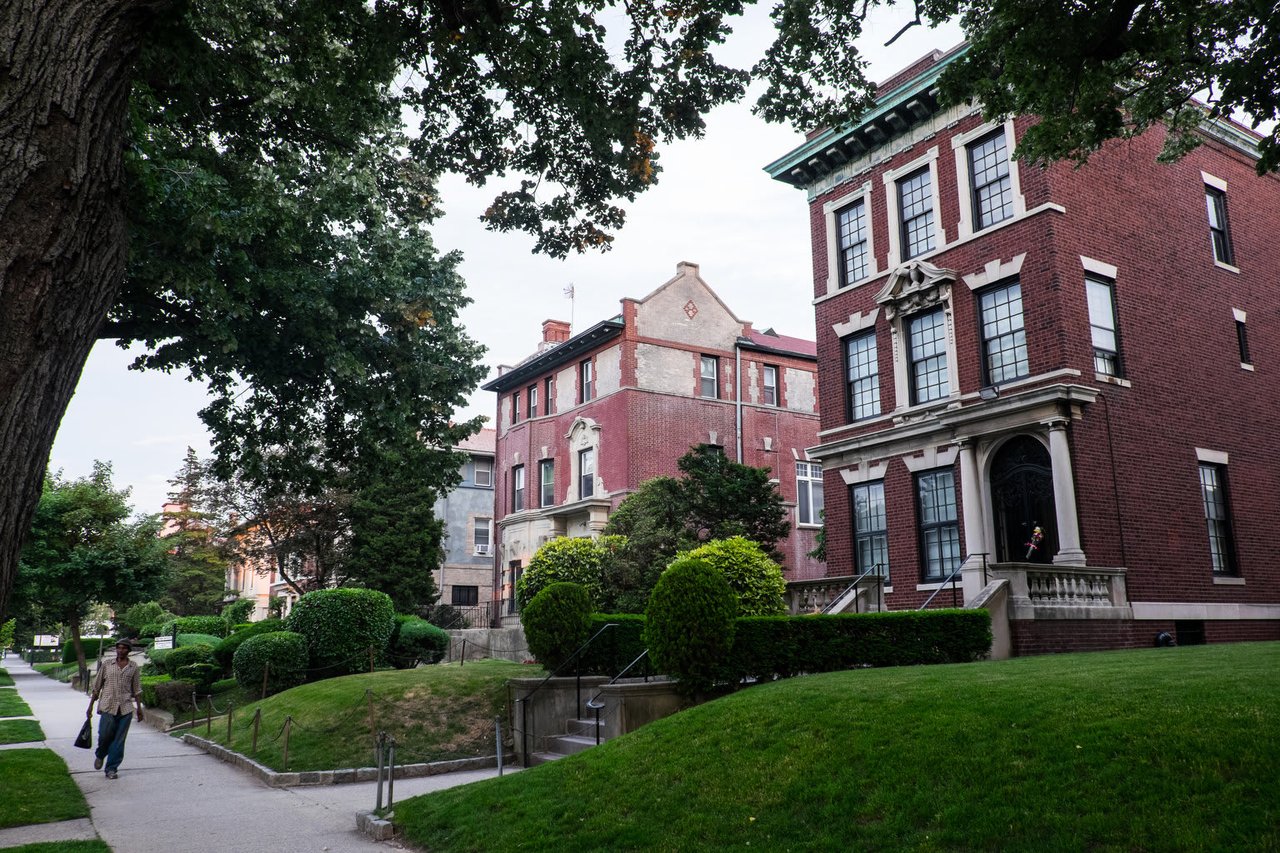
What replaced the farmland still stands, and that's the entire point. Rowhouse development took off in the mid-1830s with Greek Revival rows, followed by Gothic Revival, Italianate, Romanesque Revival, and Queen Anne as the century turned over, and in 1969, four years after the Landmarks Preservation Commission existed at all, the city froze the composition in place. The district was extended in 1988 and joined the National Register in 1976, and today it reads as one continuous nineteenth-century argument for building small and building well.
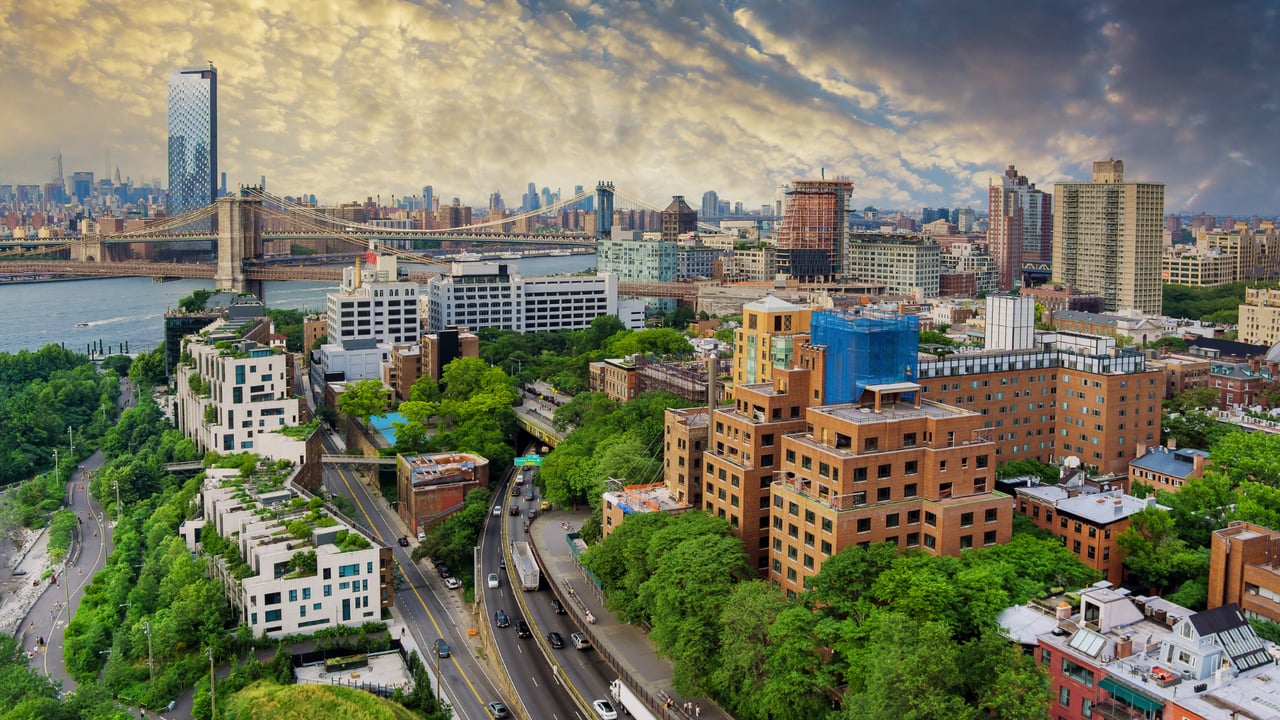
The geography is walkable in an hour: Atlantic Avenue across the top, Court Street down the eastern side, Degraw at the bottom, Hicks and the BQE trench to the west, with Cobble Hill Park roughly in the middle and Bergen Street's F and G at the eastern edge. Everything in this guide happens inside that rectangle, which is precisely why the market behaves the way it does.
Quick comparison: the four pockets at a glance
Small as it is, Cobble Hill still buys differently street by street. Here's the shape of it.
The feel | Housing stock | The pace | Transit | Best if | |
|---|---|---|---|---|---|
The inner landmark blocks | The protected mid-blocks, Amity to Kane, where the composition is the point | Greek Revival rows from the 1830s and 1840s, Italianate brownstones behind them | The quietest register, low-rise and uniform | A walk east to Bergen Street for the F and G | You want the streetscape itself and accept landmark stewardship |
The park cluster | Cobble Hill Park with a carriage-house mews on one edge and a brownstone row on the other | Verandah Place's 1840s stables-turned-houses, Congress Street rowhouses | A slow bench-and-path rhythm around the green | Between Bergen Street and the Borough Hall walk | You want the park as your front yard and history on both sides of it |
The Henry-to-Hicks edge | Quieter western blocks running toward the BQE trench | White's 1876 experiments, the Warren Place cottages and the Hicks Street Towers, plus un-landmarked rows | Steady, with the least foot traffic in the neighborhood | The longest walks to the trains | You want a mews, a courtyard, or value at the district's edge |
The Court and Atlantic borderlands | The two commercial edges, daily errands on one, the spice-and-antiques run on the other | Co-ops and condos above retail, corner buildings, conversions | Livelier, with the neighborhood's foot traffic concentrated here | Closest to Bergen Street and the downtown clusters | You want an elevator, a lower entry, or the corridors at your corner |
Which pocket is right for you?
Ask what the protection is for, in your case. If the answer is the streetscape itself, the even cornices and the block that photographs like 1885, you're shopping the inner landmark blocks and accepting the commission's calendar as part of the deal. If the answer is a story, a courtyard behind an iron gate or a carriage house with a hayloft window, you're waiting on one of the two mews, and waiting is the operative word.
If the answer is simply living here, the borderlands widen the search usefully. Co-ops and condos along Court and Atlantic put the errands at your corner and the entry price meaningfully below a townhouse, and the western blocks toward Hicks trade a longer platform walk for the quietest streets in the neighborhood. You'll find every version shares the same fixed skyline, which is the thing you're actually paying for at every price point.
Greek Revival rows, two mews, and boutique co-ops: the housing ladder
The signature stock is early for brownstone Brooklyn: Greek Revival rows from the 1830s and 1840s, often narrower and more restrained than what came later, with Italianate brownstones filling in behind them. Many run as single-family homes, plenty as two-families with a garden-level rental, and the interiors span everything from museum-grade parlors to gut renovations behind original facades, because the district governs the street face, not your kitchen.
Then come the two mews, and nothing else in Brooklyn substitutes for either. Warren Place holds the 1876 Workingmen's Cottages, two facing rows of eleven-foot-wide houses around a planted courtyard, built by the reformer Alfred Tredway White as a housing experiment and now some of the most quietly coveted small homes in the borough; his Romanesque Towers on Hicks Street came from the same project. Verandah Place is the older cousin, brick carriage houses and stables from the 1840s and 1850s facing Cobble Hill Park, the kind of block where a hayloft window is original equipment.
The apartment layer rounds out the ladder. Boutique co-ops sit inside converted rowhouses and prewar corner buildings, condos are scarce enough to be news when one lists and cluster toward the borderlands, and conversions above the Court Street retail give the neighborhood its few elevator options. It's the shortest housing ladder of the three neighborhoods it borders, and that brevity is half the reason prices behave the way they do.
Know what each rung actually asks of you before you climb it. The small co-ops here come with real boards in buildings of a dozen units or fewer, where the interview is a conversation with your future neighbors rather than a formality. The narrow houses, and the eleven-foot cottages especially, ask you to live vertically and edit ruthlessly, which their owners describe as a feature about a year in. And the two-family rows ask you to be a landlord on a block where your tenant will know your name by Friday.
What drives value in Cobble Hill
A boundary you cannot argue with. The district's roughly 60 acres were drawn in 1969 and every building inside them is accounted for, so supply here isn't tight, it's fixed. When a market can't add product, condition and position do all the pricing, and patience becomes a form of capital. Owners know it, which is why they hold, and why the houses that do trade often never touch a listing site.
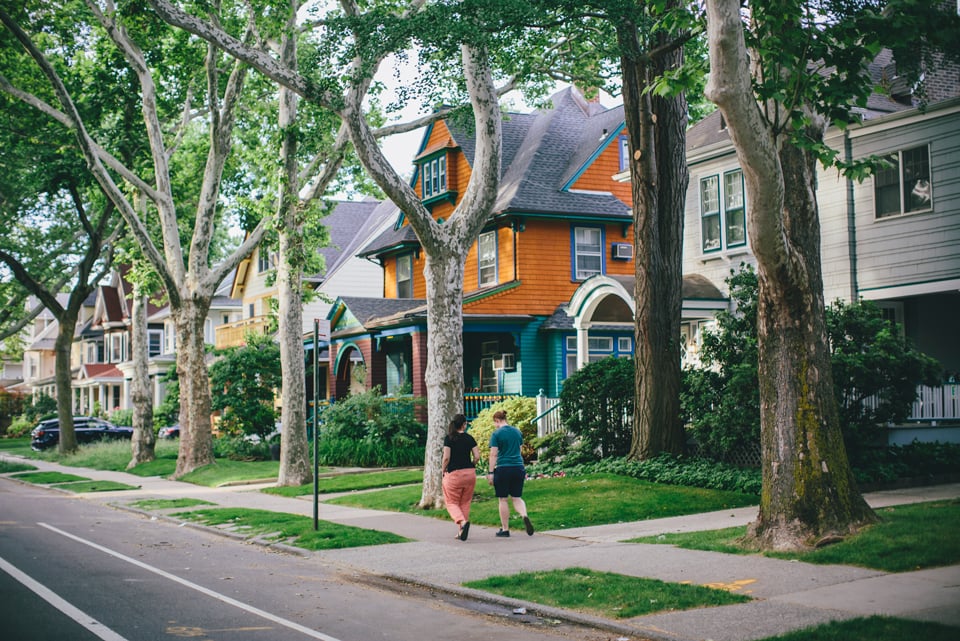
Uniformity pays a premium of its own. Because the blocks read as compositions, a house's value borrows from its neighbors in a way that's rare elsewhere: the protected row is the amenity, and every facade on it is a shareholder. That's also why the commission process, which frustrates some buyers, is properly understood as the maintenance fee on the whole neighborhood's biggest asset.
Adjacency does quiet work too. The LPC's own designation language called Cobble Hill a southerly extension of the Brooklyn Heights Historic District, separated only by Atlantic Avenue, and the market prices that closeness: the neighborhood trades in constant dialogue with the Heights, usually at a friendlier number for a similar century of architecture. When the Heights tightens, some of its buyers cross Atlantic, and the fixed supply on this side does the rest.
Position still splits the market. Mid-block on Amity or Congress is a different purchase from a corner above Court Street retail, the park edges carry their own following, and the closer you get to the BQE trench the more the price acknowledges the highway. The mews price on scarcity alone. None of these differences show up in square footage, which is why this neighborhood, more than most, rewards walking it with someone who has traded on every block.
Court, Atlantic, and the borderlands
Court Street is the daily spine, and its anchor tenant has been on the same corner since 1917: Staubitz Market, at Court and Warren, which bills itself as New York's oldest butcher shop, sawdust floor and all. Around it runs the practical retail, coffee, hardware, groceries, pharmacies, that keeps errands inside a five-minute radius, plus the 1922 limestone bank building at the Atlantic corner, its cornice carrying a hundred carved eagles and a plaque recalling the hill Washington watched from.
Atlantic Avenue plays the other role. It's the shared northern border, wider and busier, and its blocks run a mix the neighborhood is known for: the spice-and-grocery institution Sahadi's, on the avenue since 1948 out of a business founded in Manhattan in 1895, alongside antique dealers, design shops, and restaurants that pull from both sides of the border. Living near it means trading some quiet for the best provisioning walk in brownstone Brooklyn.
Green space here is intimate rather than grand. Cobble Hill Park, created after the neighborhood fought off a supermarket on the site, sits ringed by Verandah Place's carriage houses and Congress Street's brownstones, and it functions as the shared backyard: benches, a playground, and the slow traffic of a neighborhood that mostly walks. Bigger lawns mean Brooklyn Bridge Park down the hill or Prospect Park up it, both close enough for a weekend habit.
The four pockets, up close
The inner landmark blocks, Amity, Congress, Warren, Baltic, and Kane between the corridors, are the district's argument in full. This is where the 1830s and 1840s rows survive intact, cornice lines even, stoops matched, and where the commission's oversight is at its most visible and most valuable. Houses trade rarely, quietly, and to buyers who usually spent a year or more waiting for exactly this.
The park cluster is the neighborhood's postcard. Cobble Hill Park in the middle, Verandah Place's stables-turned-houses along its south edge, Congress Street's brownstone row along the north, and a rhythm set by benches and strollers rather than traffic. Homes facing or flanking the park carry a following of their own, and the carriage houses behind it are the closest thing the neighborhood has to a secret.
The Henry-to-Hicks edge is where the district exhales. White's 1876 experiments live here, the Warren Place courtyard and the Towers on Hicks, alongside un-landmarked rows where renovation runs freer, and the BQE trench beyond Hicks sets the western limit in both geography and price. It's the value seam of the neighborhood, quieter than the core and a longer walk from the trains, and the pocket where first-time neighborhood buyers most often actually land.
The Court and Atlantic borderlands hold the energy. Retail below, co-ops and condos above, corner buildings with real light, and the neighborhood's foot traffic concentrated along two streets. Buyers here trade the composition of the mid-blocks for elevators, entry prices, and the corridors at the door, and for a real share of the market that's exactly the right trade.
The Rahmé Team Cobble Hill market read
With supply fixed, this market moves in single sales rather than trends. One Warren Place cottage or one Amity Street row changing hands can reset expectations for a year, while the co-op and condo layer trades often enough to price predictably. A Cobble Hill number without its block attached is close to meaningless, and we'd rather hand you the current picture than publish one that ages.
For the borough-wide picture, our Brooklyn market report runs the numbers from the closed-sales record itself and refreshes with each edition. For Cobble Hill specifically, call us and we'll pull what actually closed on the blocks you're weighing, matched to the property type, because a protected Greek Revival row and a condo above Court Street are two different markets sharing one zip code.
Buying strategy: how to actually win here
Start earlier than feels reasonable. In a 22-block market, the buyers who win are usually the ones who defined the target a year out, got fully underwritten, and let the neighborhood know they were serious, because by the time a mews house or a core-block row reaches a listing site, its buyer often already exists. That's not folklore; it's how fixed-supply markets clear.
Learn the commission before you bid inside the district. Street-visible work runs through the Landmarks Preservation Commission, in-kind repairs typically through a Certificate of No Effect, and rear or rooftop changes get reviewed case by case, so your renovation timeline needs the commission's calendar built in. Then do the era's due diligence: 1830s and 1840s houses reward inspections that read facade history, party walls, cellars, and the age of every system, and pricing the work in categories, cosmetic, systems, structural, keeps the romance from writing the offer.
Then work off market, because this neighborhood runs on it. A letter to the right block, a call from an agent an owner already trusts, a conversation two years before a sale: that's how a real share of Cobble Hill trades begin. It's the search we run. Start it through our contact form or calibrate against the current listings, and expect preparation plus patience to beat speed every time here.
Living here day to day
Mornings are short walks: the park fills early, the Court Street coffee lines move fast, and the commute sorts by geography, Bergen Street's F and G from the eastern blocks, the walk past Atlantic to the Borough Hall station clusters from the northern ones. The F takes you into Manhattan, the G runs the borough crosstown, and drivers sit unusually close to both the bridge and the tunnel, which matters more here than people expect.
Days run on the two corridors and the fixed streetscape. Errands rarely leave the neighborhood, the provisioning walk along Atlantic is a real pleasure, and school zoning runs by address, with P.S. 29 on Baltic Street the name that comes up most; verify any specific home through the Department of Education's school search rather than a listing's claim. Evenings, the mid-blocks go quiet in a way that feels engineered, because it was. Weekends stretch toward the water, Brooklyn Bridge Park's piers a downhill walk, the harbor light coming up Atlantic in the late afternoon, and the whole neighborhood crossable twice before lunch.
The fine print is honest and short. The BQE trench hums at the western edge, Atlantic carries real traffic, the borderland corners hear their retail, and a fixed streetscape means your renovation dreams answer to a public commission. None of it is hidden, all of it is walkable in an afternoon, and the neighborhood's premise is that the trade is worth it.
How to choose
Sort by priority and the blocks sort themselves.
If this is the priority | Start here |
|---|---|
The protected streetscape itself | The inner landmark blocks, Amity through Kane |
A mews and a story no other block has | Warren Place or Verandah Place, and patience |
The park at your doorstep | The Congress and Verandah edges of Cobble Hill Park |
Entry price into the neighborhood | Co-ops near the corridors and condos on the borderlands |
The quietest possible block | The Henry-to-Hicks edge, away from the corridors |
Shortest platform walk | The eastern blocks near Bergen Street |
FAQs
Is Cobble Hill a good place to buy a brownstone?
If permanence is the point, few places in Brooklyn match it. The neighborhood is small, roughly 22 blocks of it protected since 1969, so what you see is pretty much what the streetscape will stay. The trade is scarcity: with 796 buildings inside a fixed boundary and owners who hold for decades, the right house appears rarely and sells to whoever prepared for it. Buyers who want inventory to choose from should look elsewhere; buyers who want one specific kind of block should start here early.
Why are Cobble Hill brownstones scarce by design?
Because the supply was capped twice. The historic district, about 60 acres roughly bounded by Atlantic Avenue, Court, Degraw, and Hicks Streets, was designated in 1969 and extended in 1988, which froze the building stock in place. And the neighborhood has no room to grow into: those four edges are hard borders, not suggestions. Add owners who measure their stays in generations and you get a market where scarcity is structural, not seasonal.
When was Cobble Hill landmarked, and what does that protect?
The Landmarks Preservation Commission designated the Cobble Hill Historic District on December 30, 1969, after public hearings in 1966, extended it on June 7, 1988, and the district joined the National Register in 1976. Protection covers what's visible from the street: facades, stoops, cornices, ironwork, and rooflines. Interiors mostly renovate under normal permits, which is why so many nineteenth-century shells here hide entirely modern houses.
What are Warren Place and Verandah Place?
Two different mews, often confused. Warren Place is the 1876 block of Workingmen's Cottages, two facing rows of eleven-foot-wide houses around a private courtyard between Warren and Baltic Streets, built by housing reformer Alfred Tredway White. Verandah Place is older, a row of brick carriage houses and stables from the 1840s and 1850s along the south edge of Cobble Hill Park; the novelist Thomas Wolfe lived at No. 40 in 1930 and 1931. Both trade rarely and neither has a substitute anywhere else.
Can I renovate a landmarked Cobble Hill house?
Yes, and most owners eventually do. Street-visible work inside the district runs through the Landmarks Preservation Commission, with in-kind repairs typically handled through a Certificate of No Effect, while interior work proceeds under standard permits. Rear extensions and rooftop changes get reviewed case by case. Budget the commission's calendar into your renovation plan and hire an architect who files with it regularly, because the process rewards experience.
How do school zones work in Cobble Hill?
Zoning runs by address and can differ block to block, so verify any specific home through the Department of Education's school search before you write an offer. The name that comes up most on the neighborhood's blocks is P.S. 29 on Baltic Street. Treat the DOE lookup as the only answer that counts for your address, and treat anything a listing claims about zones as a starting point to check, not a fact.
What is the commute like from Cobble Hill?
The neighborhood's own stop is Bergen Street on the F and G at the eastern edge, one stop north of Carroll Street on the same line. From the northern blocks, the downtown Brooklyn station clusters around Borough Hall are a walk past Atlantic Avenue, which opens up most of the system. The F carries you into Manhattan, the G runs the Brooklyn crosstown, and drivers sit unusually close to both the Brooklyn Bridge and the Hugh L. Carey Tunnel, which almost everyone here still calls the Battery Tunnel.
Cobble Hill, Carroll Gardens, or Brooklyn Heights: how do I choose?
By scale and by what scarcity you're buying. Brooklyn Heights is the grandest and largest of the three, with a promenade and a deeper bench of co-ops. Carroll Gardens trades grandeur for its deep front gardens and a slightly wider housing ladder. Cobble Hill is the smallest and most uniform, a fixed 22-block composition where the streetscape itself is the amenity. Walk all three on the same afternoon; the differences are physical and they settle the question quickly.
Weighing the neighbors too? Our BoCoCa guide and Brooklyn Heights guide walk those markets the same way, and the pages for Brooklyn Heights and the BoCoCa neighborhoods hold the current inventory picture.
Work with a local team
Cobble Hill rewards buyers who understand that the streetscape is the asset and scarcity is the strategy, and in a market this small, relationships move more houses than listings do. The Rahmé Team at Compass brings 40 years of combined experience across Brooklyn, ranks in the top 1.5% of real estate professionals nationwide by RealTrends Verified, and has closed more than $800 million in career sales. We work with buyers and sellers on landmarked renovations, mews and townhouse due diligence, co-op strategy, and the quiet conversations this neighborhood actually trades on.
Ready to see Cobble Hill properly? Start with our BoCoCa neighborhood page, then call the Rahmé Team at (718) 233-3365 or request a Cobble Hill inventory list through our contact form, built around your block preferences, not just your price point.