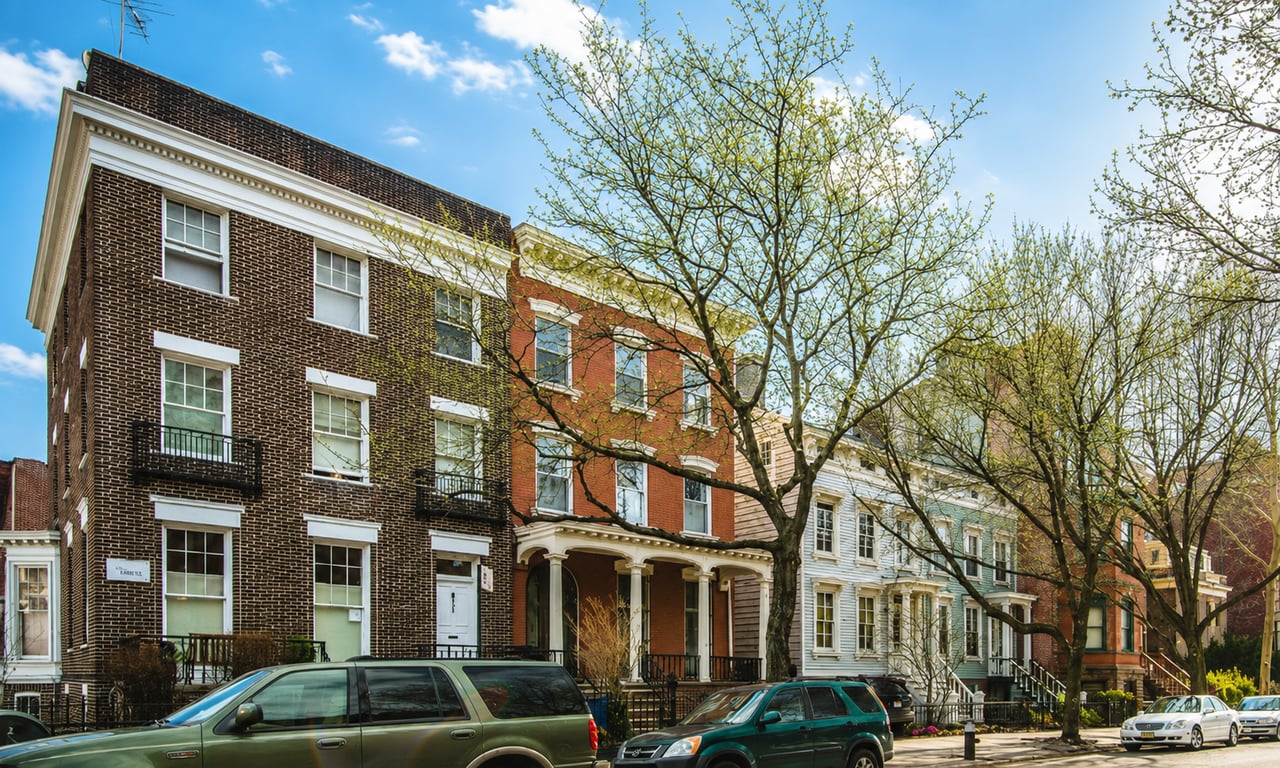
Is Clinton Hill Brooklyn a good place to live? For people who want brownstone Brooklyn at a quieter register, with a 25-acre college campus as the local green and freestanding Gilded Age mansions two blocks from the coffee line, it's one of the best answers in the borough. The neighborhood sits between Fort Greene and Bedford-Stuyvesant, mostly in zip codes 11238 and 11205, and its housing runs an unusually wide ladder: landmark rowhouses, mansion conversions, midcentury co-op towers, carriage houses, and loft conversions on the industrial northern edge.
The pitch and the price are the same thing here: calm. Clinton Hill has no arena, no theater district, and no waterfront crowds, just protected blocks, two century-old institutions, and a historic district designated in 1981 that keeps the streetscape fixed. Turnover on the prime blocks runs thin, the mansions almost never trade, and buyers who want big new amenity buildings will mostly be shopping elsewhere. That's not a flaw. That's the product.
This guide walks the neighborhood block by block: the housing ladder, what drives value, how the four pockets differ, and how to buy well here. When you're ready for a Clinton Hill inventory list, including homes not yet public, reach out to the Rahmé Team at Compass through our contact form or at (718) 233-3365.
In this guide
- The lay of the land: what defines Clinton Hill
- Quick comparison: the four pockets at a glance
- Which pocket is right for you?
- Mansions, rowhouses, and co-ops: the housing ladder
- What drives value in Clinton Hill
- Myrtle, DeKalb, and the corridors
- The four pockets, up close
- The Rahmé Team Clinton Hill market read
- Buying strategy: how to actually win here
- Living here day to day
- How to choose
- FAQs
- Work with a local team

Fouad Rahmé
Founder, the Rahmé Team at Compass
The Rahmé Team advises buyers, sellers, investors, and developers across Brooklyn, with 40 years of combined experience, more than 1,000 clients and transactions, and over $800 million in career sales, $167 million of it since 2020. RealTrends Verified ranks the team in the top 1.5% of real estate professionals nationwide.
Contact the team or call (718) 233-3365.
The lay of the land: what defines Clinton Hill
Three things: the avenues, the campus, and the quiet.
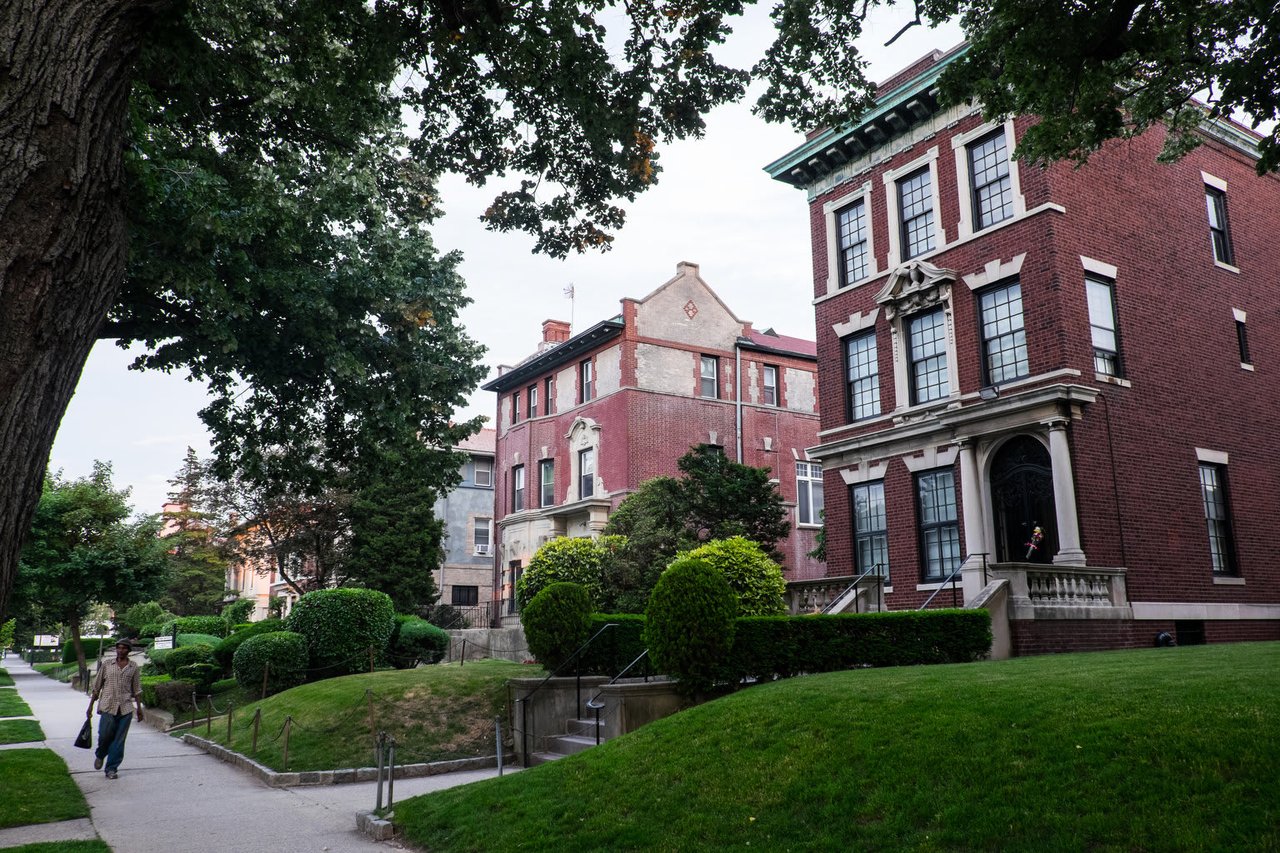
The avenues first, because they made the neighborhood's name. In the 1870s and 1880s, Brooklyn's industrial money built freestanding mansions along Clinton and Washington Avenues, and no one built harder than Charles Pratt, the kerosene pioneer whose Astral Oil Works became part of Standard Oil alongside John D. Rockefeller. Pratt put his own house at 232 Clinton Avenue in 1874, then built mansions across the street as wedding gifts for his sons, and three of those still stand at 229, 241, and 245 Clinton, between DeKalb and Willoughby. The Pfizers and their peers followed, and the press of the day called the avenues Brooklyn's Gold Coast. The avenues were villa country even before the mansions: the Lefferts-Laidlaw House at 136 Clinton Avenue has stood since around 1835, a survivor of the decades when this hill was still suburban estates. A century and a half later the surviving mansions read as architecture you can walk past on the way to the train, which is not a sentence most neighborhoods get to write.
Then the campus. Pratt founded Pratt Institute six blocks from his front door in 1887, open from the start to all students, and its 25-acre Brooklyn campus still anchors the neighborhood's center: brick Romanesque halls, lawns threaded with an outdoor sculpture collection, and the 1896 library building whose predecessor opened in 1888 as the first free public library in Brooklyn, serving anyone who lived or worked in the borough. St. Joseph's University keeps its own Clinton Avenue campus nearby, partly inside the old Pratt house itself. Institutions that have held the same ground since the 1880s are about as steady as neighborhood anchors get.
And the quiet, which the city made permanent. On November 10, 1981, following a public hearing held two years earlier, the Landmarks Preservation Commission designated the Clinton Hill Historic District: roughly 600 structures across block after block of protected rowhouses, mansions, carriage houses, and apartment buildings, spanning Greek Revival through Beaux-Arts and built from the 1840s into the 1920s. The National Register added the district on June 19, 1985. The result is a streetscape that changes about as fast as its cornices, with the busier anchors, BAM's stages, the arena, the waterfront, all sitting one neighborhood over in any direction you point.
Quick comparison: the four pockets at a glance
The neighborhood is compact, but the blocks sort themselves cleanly.
The feel | Housing stock | What stands out | Transit edge | Pace | |
|---|---|---|---|---|---|
The mansion avenues | Clinton and Washington: wide streets, freestanding houses, deep canopy. | Mansions and mansion conversions, grand rows, the Clinton Hill Co-ops' towers, Waverly's carriage houses one block west. | The widest price ladder on any one street in brownstone Brooklyn. | G at Clinton-Washington on Lafayette; C at Clinton-Washington on Fulton below. | Stately calm. |
The campus quarter | The blocks around Pratt's 25 acres: DeKalb to Willoughby, Hall to Classon. | Rows and apartment buildings, with midcentury superblocks on the 1950s renewal wedge south of campus. | The sculpture lawns and the studio-and-cafe rhythm around them. | G at Clinton-Washington and Classon Avenue. | Livelier in term, softer in summer. |
The south rows | Gates, Greene, Cambridge Place, St. James Place, sloping toward Fulton and Atlantic. | Classic brownstone rows, single-family through four-family. | The storybook stoop blocks, Cambridge Place above all. | C at Clinton-Washington on Fulton; Atlantic Terminal a longer walk southwest. | Quiet, with Fulton's hum at the edge. |
The north side | Myrtle up to Flushing and the Navy Yard, the old Wallabout edge. | Early wood-frame survivors, brick rows, and industrial conversions turned lofts. | The value edge, with the Navy Yard's job base beyond. | Longest train walks; Myrtle's buses fill the gap. | Workaday, low-key. |
Which pocket is right for you?
Here's the short version before the long one.
If the mansion, or a piece of one, is the point, you're shopping Clinton and Washington Avenues. If you want the campus-green rhythm and the studios and cafes around it, look at the blocks ringing Pratt. If you want the classic stoop-and-cornice brownstone street, look at the south rows between Gates and Fulton. And if the friendliest numbers and loft-style stock matter most, look north of Myrtle toward the Navy Yard.
Now the detail.
Mansions, rowhouses, and co-ops: the housing ladder
The ladder here runs four rungs deep, which is at least one more than most brownstone neighborhoods can claim.
The mansions sit at the top. A handful of freestanding Gilded Age houses survive on the avenues, some still single-family, others long since divided into apartments or occupied by institutions, and Waverly Avenue, the narrow service street behind Clinton, keeps the carriage houses that once stabled their horses, now some of the most sought-after small homes in Brooklyn. A freestanding house on a brownstone-Brooklyn lot is close to a category of one, and buying a piece of a converted mansion means reading conversion documents as carefully as floor plans.
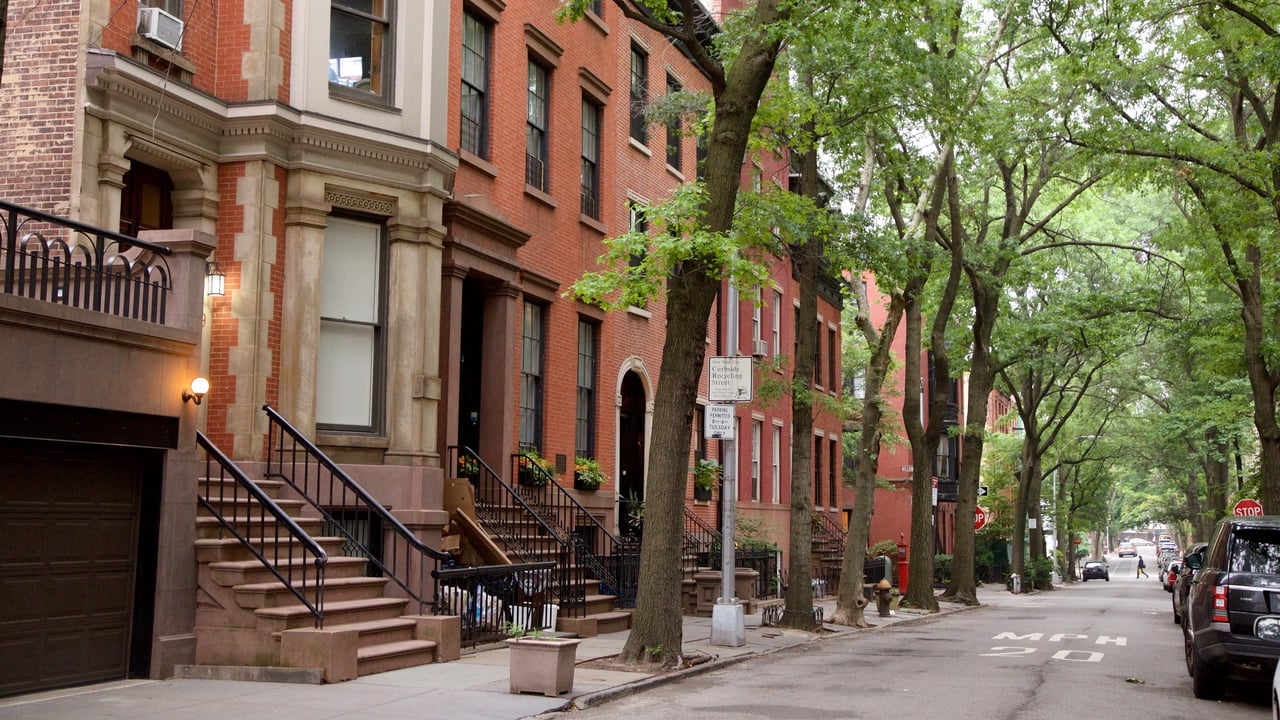
The rowhouses carry the middle. Italianate, Neo-Grec, Romanesque Revival, and Queen Anne rows fill the district, configured everywhere from restored single-family homes to legal two-, three-, and four-family buildings, with the same delivered-vacant and tenant-occupied questions that shape every landmark-district search. All of them answer to the Landmarks Preservation Commission on exterior work.
The co-ops and condos widen the door. The Clinton Hill Co-ops, twelve buildings on two landscaped campuses along Clinton Avenue, went up in the early 1940s, announced by Equitable in 1942 to house Brooklyn Navy Yard workers and designed by Wallace Harrison's firm, the architects behind Rockefeller Center, Lincoln Center, and the United Nations. Converted to co-ops decades later, they remain one of the most accessible ways into the historic district, and a scatter of prewar co-ops and boutique condo conversions rounds out the layer.
And the lofts finish the ladder on the northern edge, where the old Wallabout factory blocks, the Rockwood chocolate works complex among them, have turned a number of their brick Romanesque buildings residential, terra cotta and cast-iron details included. It's the closest thing Clinton Hill has to DUMBO's archetype, at Clinton Hill's register. Whatever the rung, compare the monthly cost, not just the asking price: co-op maintenance folds in taxes, conversions carry shared-system quirks, a loft's character can come with a loft's assessments, and a 140-year-old villa keeps its own repair calendar.
What drives value in Clinton Hill
Start with the one that's been running since 1981.
Fixed supply comes first. The historic district froze the streetscape in November 1981, its rows finished long before the designation, and nothing new gets added to the protected blocks. What trades is what owners release, and on the avenues that can mean once a decade.
The rarity layer comes second. Freestanding mansions on full lots barely exist in brownstone Brooklyn, and when one trades here it makes the borough's luxury lists. Rarity at the top of a market pulls attention to everything beneath it, and the carriage houses ride the same current.
The institutions come third. Pratt has held its 25 acres since 1887 and St. Joseph's keeps its campus on the avenue, which means a permanent population of students, faculty, and staff, a campus green maintained to college standards in the middle of the neighborhood, and demand that doesn't swing with any single industry. Anchors with this much tenure are the kind the market trusts.
And the ladder itself rounds it out. Because the stock runs from co-op studios to freestanding villas, Clinton Hill lets buyers enter, upsize, and stay inside the same twelve blocks, which most one-product neighborhoods can't say. That breadth keeps demand layered through cycles, with comparable architecture to its neighbors and its own anchor mix, campus green instead of cultural district, calm instead of crowds.
Myrtle, DeKalb, and the corridors
DeKalb Avenue is the polished spine, the cafe-and-restaurant run that starts in Fort Greene and keeps its rhythm past Pratt's southern gates, busiest at brunch and in the after-class hours. Myrtle Avenue handles the everyday on the north side, groceries, hardware, takeout, the errand loop students and longtime residents share. Fulton Street carries the southern edge with the C train underneath and a restaurant row that has filled in steadily.
And the campus works as the green corridor. Pratt's lawns and their outdoor sculpture collection sit behind gates that generally stand open to walkers in daytime, functioning as the neighborhood's shared garden. Underwood Park adds the neighborhood's own pocket of green on Lafayette between Waverly and Washington, on the ground where typewriter maker John T. Underwood's mansion and its glass greenhouse stood until his widow and daughter gave the site to the borough in the early 1950s, and the playground under its old trees has been in constant use ever since. Fort Greene Park, a few blocks west of the district line, gets borrowed for the Saturday greenmarket and the bigger lawns, and Grand Avenue runs a quieter line of shops and restaurants up the eastern side. Clinton Hill's trick is having all of it without owning the crowds of any of it.
The four pockets, up close
The mansion avenues. Clinton and Washington between Willoughby and Gates hold the Pratt houses, the surviving villas, the grandest rows, and, in a twist of history, the Clinton Hill Co-ops' 1940s towers standing among them, which is why one street runs from co-op studio to freestanding mansion. Waverly's carriage houses hide one block west. Best if the top of the ladder, or the most storied address, is the point.
The campus quarter. The blocks ringing Pratt, DeKalb to Willoughby and Hall Street across to Classon, move to an academic clock: studio lights late in term, sidewalk tables full in the afternoon, a noticeably softer hum in July. The 1950s urban-renewal wedge just south of campus explains the midcentury superblocks there, a useful thing to understand when a listing's surroundings don't match the postcard. Best if you want the campus-green rhythm and the fastest walk to the G.
The south rows. Gates, Greene, Cambridge Place, and St. James Place carry the classic stoop blocks, with Cambridge Place in particular earning its reputation as one of the prettiest short streets in Brooklyn. Lefferts Place, at the southeast corner, shows how new construction behaves inside this neighborhood's gravity: its 2013 mews infill was designed to echo the historic rows rather than argue with them. Fulton Street hums at the bottom edge with the C underneath, and the Atlantic Terminal complex sits a longer walk southwest. Best if the storybook brownstone street is the point and you want the strongest subway math in the neighborhood.
The north side. Above Myrtle the district gives way to the old Wallabout edge: early wood-frame survivors from before the brownstone era, brick rows, and factory conversions, with the Navy Yard's job base just beyond Flushing Avenue. The train walk is the trade, and the numbers tend to acknowledge it. Best if value per square foot, loft-style space, or a short hop to the Yard matters most.
The Rahmé Team Clinton Hill market read
The honest version: this is a patience market at the top and a speed market in the middle.
The mansions and carriage houses trade on rarity, sometimes privately, always as events, and pricing them means pricing a category with almost no comps. The rowhouse middle behaves like the rest of landmark Brooklyn: thin turnover, fast competition for turnkey homes on the prime blocks, and configuration, vacant versus occupied, driving each deal's buyer pool. The co-op and conversion layer moves quickest, with the Clinton Hill Co-ops functioning as the district's front door for first purchases, and the northern lofts drawing buyers priced out of the DUMBO archetype.
A meaningful share of Clinton Hill inventory also moves quietly. Owners here hold for decades, the first conversation about selling often happens long before a listing does, and being in the room for it is a network built over years, not weekends.
Buying strategy: how to actually win here
Four moves matter most, and the first one happens before you tour anything.
Pick your rung. A co-op purchase, a rowhouse with tenants, a carriage house, and a piece of a converted mansion are four different transactions with four different document stacks, and knowing yours lets you read a listing in thirty seconds. Mansion conversions deserve special care: shared systems, unusual layouts, and conversion documents that predate modern standards all reward a slow read.
Know the landmark process cold. Every building in the district answers to the Landmarks Preservation Commission for exterior work. Interior and non-visible changes usually clear through staff-level approvals like the Certificate of No Effect, often within weeks once complete, while visible facade work, window replacements, and stoop rebuilds take fuller review that can run months. Owners have renovated beautifully under these rules since 1981. Budget the timeline, not only the construction.
Inspect for the building's actual age. The rows date to the 1860s through 1890s, the villas earlier still, and the wood-frame houses north of Myrtle are their own inspection discipline entirely. An engineer's report tuned to old construction, roofs, cornices, masonry, party walls, original mechanicals, beats a standard checklist here, and on freestanding houses the roof math scales with the footprint.
And verify facts at the source rather than taking any listing's word, ours included: school zones by address through the NYC Department of Education, landmark status through the LPC's maps, certificates of occupancy and building records through city databases. Good agents point you to primary sources; it's also how we'd want to buy.
Living here day to day
The commute. Clinton Hill's advantage is that the trains are inside the neighborhood rather than at the edge of it. The C runs beneath Fulton Street at its own Clinton-Washington Avenues station, giving a direct ride into Lower Manhattan with no transfer, and the G crosses the middle of the neighborhood at a second station confusingly sharing the same name on Lafayette Avenue, connecting north to Williamsburg and Greenpoint and south to its transfer points. The southern blocks can walk to the Atlantic Terminal complex and its nine lines plus the LIRR, which is the fastest option for anyone headed to Midtown or out to Long Island. Which of the three you use depends on your block more than your destination.
The campus and the park. Pratt's lawns and sculpture collection serve as the neighborhood garden, a five-minute detour that makes an ordinary errand better, Underwood Park handles the everyday swing-set-and-bench duty, and Fort Greene Park's greenmarket Saturdays and big lawns sit a few blocks past the district line. Between the three, Clinton Hill gets more green than its own map suggests.
The rhythm. Mornings belong to DeKalb's coffee lines and the school run, afternoons to the studio crowd and the stoops, evenings to dinner on DeKalb or Fulton and the walk home under the canopy. The whole place runs about one notch quieter than its neighbors, by design and by zoning, and August, when the students thin out, might be the quietest brownstone month anywhere in the borough.
Schools. Clinton Hill sits in NYC School District 13, and elementary seats are assigned by address to zoned schools. Zone lines can differ block to block, so confirm the current assignment for any specific address with the DOE before you commit. We can help you check.
How to choose
Start with the thing you can't compromise on, then match it to the pocket that delivers it.
If you want... | Look at... |
|---|---|
A freestanding mansion, or a piece of one | Clinton and Washington Avenues between Willoughby and Gates |
The classic stoop-and-cornice brownstone block | The south rows, Cambridge Place and St. James Place above all |
Carriage-house charm at rowhouse scale | Waverly Avenue behind the mansions |
The friendliest entry price into the historic district | The Clinton Hill Co-ops and the prewar apartment layer |
Loft-style space and the value edge | The north side conversions above Myrtle |
None of these is a wrong answer, and the whole neighborhood crosses in a stroll. The mistake we see is buyers pricing the postcard instead of the paperwork. A mansion conversion and a rowhouse at the same number are two different ownership lives, two co-op lines in the same 1940s tower can differ on light and layout more than price suggests, and buyers set on glass towers and big amenity decks usually end up happier in DUMBO or Downtown Brooklyn anyway. Walk the blocks at the hours you'd live them, a term-time Tuesday and an August Sunday tell different stories here, then check the current listings against what you felt on the ground.
FAQs
Is Clinton Hill Brooklyn a good place to live?
For people who want brownstone Brooklyn at a quieter register, yes, and buyers tend to stay. The neighborhood pairs a landmark district of rowhouses, mansions, and carriage houses with Pratt Institute's 25-acre campus green, and its housing ladder runs from accessible co-ops to freestanding villas. The trade-offs are thin turnover on prime blocks, a smaller new-construction layer than nearby neighborhoods, and a commute that usually involves the C, the G, or a walk to Atlantic Terminal.
What are the Clinton Avenue mansions, and why is it called Brooklyn's Gold Coast?
In the 1870s and 1880s, Brooklyn's industrial money built freestanding mansions along Clinton and Washington Avenues, led by Charles Pratt, whose Astral Oil Works became part of Standard Oil. Pratt put his own house at 232 Clinton Avenue in 1874 and built mansions across the street as wedding gifts for his sons; three of those survive at 229, 241, and 245 Clinton, alongside his own at 232. The concentration of Gilded Age wealth earned the avenues the Gold Coast nickname, and the surviving houses anchor the historic district today.
Should I buy a rowhouse, a mansion conversion, or a co-op or condo in Clinton Hill?
It depends on how much building you want to run and where you're entering the market. Rowhouses deliver the classic experience, often with rental income and always with landmark stewardship. Mansion conversions trade grandeur for shared systems and documents that deserve a slow read. The co-op and condo layer, led by the Clinton Hill Co-ops and the northern loft conversions, is the simplest way in. Compare the full monthly cost of each before deciding.
What are the Clinton Hill Co-ops?
A twelve-building co-op complex on two landscaped campuses along Clinton Avenue, built in the early 1940s after Equitable announced the project in 1942 to house Brooklyn Navy Yard workers, and designed by Wallace Harrison's firm, the architects behind Rockefeller Center, Lincoln Center, and the United Nations. Converted to co-ops decades later, they remain one of the most accessible ways to buy inside the historic district.
What does the Clinton Hill Historic District mean for renovations?
The Landmarks Preservation Commission designated the district on November 10, 1981, covering roughly 600 structures built from the 1840s into the 1920s, and the National Register added it in June 1985. Every exterior change inside it answers to the commission. Interior work and non-visible changes usually clear through staff-level approvals within weeks once complete, while visible facade work, window replacements, and stoop rebuilds take fuller review that can run months. Owners have renovated well under these rules for decades; budget the approval timeline alongside the construction one.
How does Pratt Institute shape the neighborhood?
Pratt has held its 25-acre campus at the neighborhood's center since Charles Pratt founded it in 1887, and its lawns, sculpture collection, and historic library building, heir to the first free public library in Brooklyn, function as shared local ground. Day to day it sets a rhythm: livelier sidewalks and cafe traffic in term, a noticeably quieter neighborhood in summer, and a permanent institutional presence that steadies demand through market cycles.
How is the commute from Clinton Hill to Manhattan?
The useful thing about Clinton Hill is that the trains sit inside the neighborhood rather than at its edge. The C runs beneath Fulton Street at Clinton-Washington Avenues for a direct, no-transfer ride into Lower Manhattan. The G crosses the middle of the neighborhood at a separate station that shares the same name on Lafayette Avenue, connecting to Williamsburg, Greenpoint, and its transfer points. And the southern blocks can walk to the Atlantic Terminal complex, where nine subway lines meet the LIRR, which is generally the quickest route to Midtown. Which one you use depends on your block more than your destination.
How does Clinton Hill compare to Fort Greene and Bedford-Stuyvesant?
They share brownstone bones in a row, then split on anchors and scale. Fort Greene has the park, the BAM cultural district, and the Atlantic Terminal complex, and prices its energy accordingly. Bedford-Stuyvesant, across Classon Avenue, holds the deepest protected rowhouse inventory of the three across a much larger map. Clinton Hill sits between them with the mansion layer, the campus green, and the quietest daily register, comparable architecture with a calmer anchor mix.
Weighing brownstone Brooklyn more broadly? Our BoCoCa guide and Park Slope guide walk those markets the same way, block by block, and our Bedford-Stuyvesant neighborhood page covers the deep-stock side of the decision.
Work with a local team
Clinton Hill rewards buyers who can read a conversion document as fluently as a cornice, and in a market where the best homes trade on relationships as often as listings, that reading decides the outcome. The Rahmé Team at Compass brings 40 years of combined experience across Brooklyn, ranks in the top 1.5% of real estate professionals nationwide by RealTrends Verified, and has closed more than $800 million in career sales. We work with buyers and sellers on rowhouse and mansion-conversion due diligence, co-op strategy, landmarked renovations, and the quiet conversations that move a real share of these homes.
Ready to see Clinton Hill properly? Start with our Clinton Hill / Fort Greene neighborhood page, then call the Rahmé Team at (718) 233-3365 or request a Clinton Hill inventory list through our contact form, built around your block preferences, not just your price point.