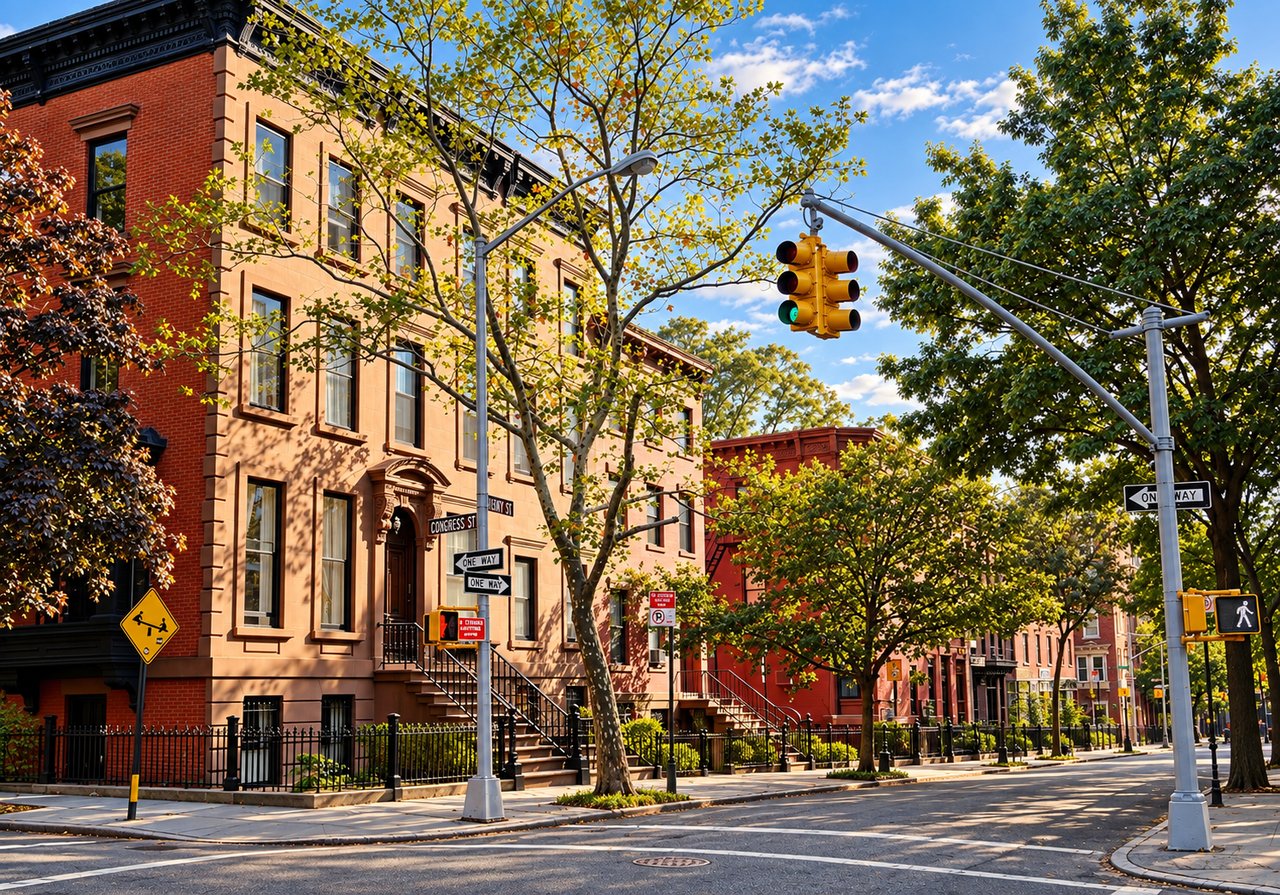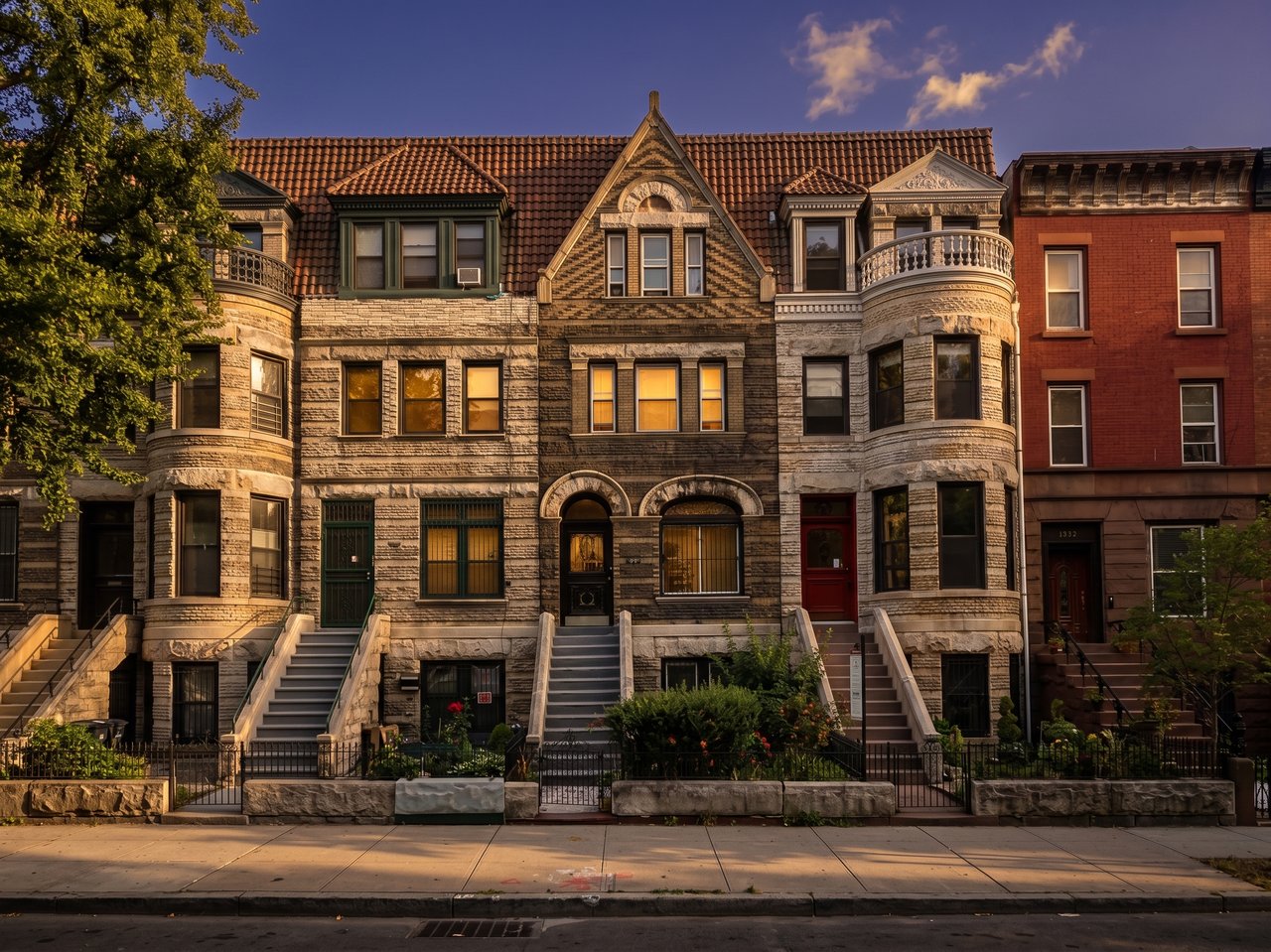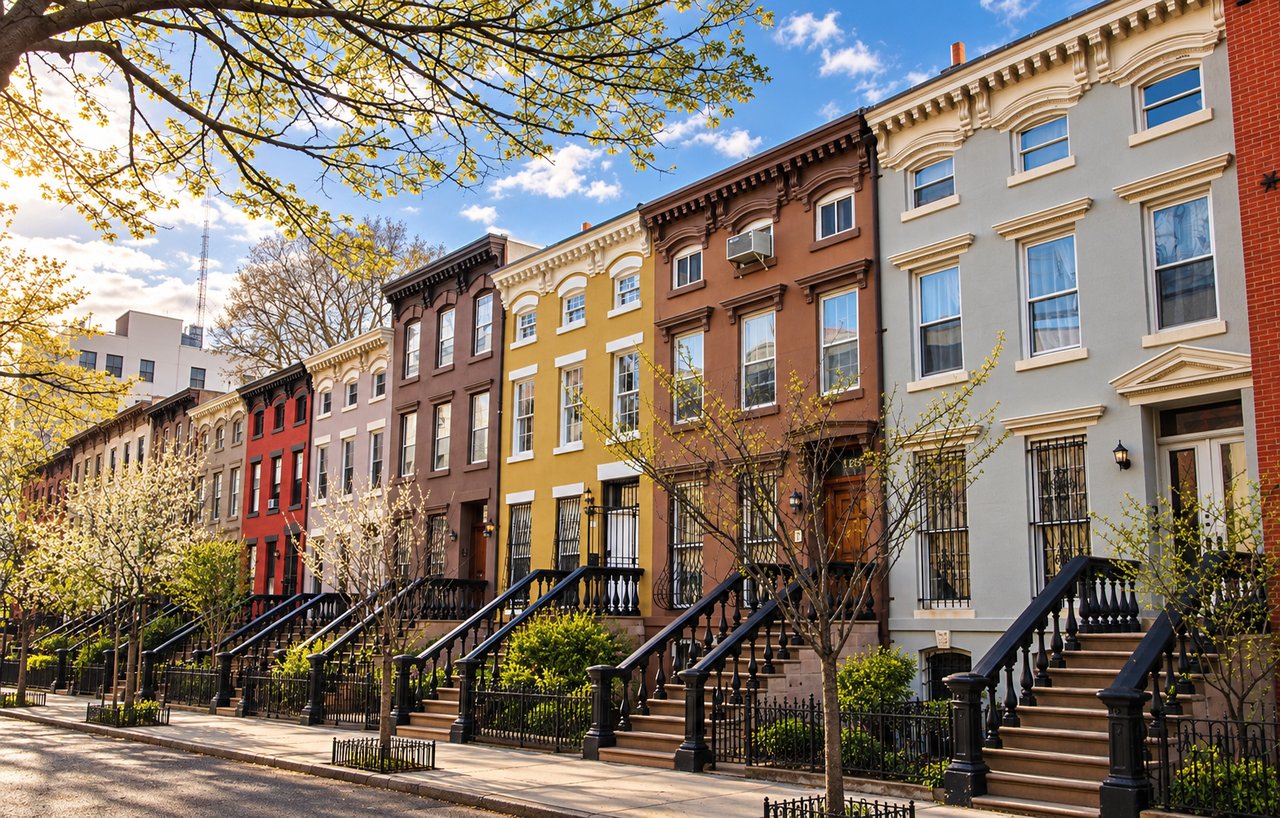
Fort Greene is one of Brooklyn's most architecturally significant neighborhoods, with a concentration of 19th-century brownstones, Italianate rowhouses, and limestone-fronted townhouses that draws buyers from across the borough and from outside New York entirely. If you're considering a brownstone purchase here, the market has specific characteristics that are worth understanding before you make an offer.
What the Fort Greene Brownstone Market Looks Like
Fort Greene's residential market is anchored by single-family and two-family townhouses on its historic tree-lined blocks - South Oxford Street, South Portland Avenue, DeKalb Avenue, and Lafayette Avenue among the most sought-after. These properties typically trade between $1.8M and $4.5M depending on condition, block, and configuration. Well-renovated single-family conversions on the strongest blocks have reached $5M+.
Search volume for Fort Greene as a residential keyword has risen 41 percent over the past year, which tracks with the neighborhood's sustained buyer attention. Supply remains structurally low: owners of large brownstones on premium blocks tend to hold for extended periods, so active inventory at any given time is limited.
Brownstone Types in Fort Greene
Most Fort Greene brownstones are row houses built between 1870 and 1910 in one of several styles. Italianate brownstones - characterized by bracketed cornices, arched windows, and high stoops - are the most common. Greek Revival and Queen Anne styles appear less frequently but represent some of the most desirable properties on the market when they come available.
The majority of Fort Greene brownstones are configured as two-family or three-family properties with original floor-through apartments. Many have been converted to single-family use over the past two decades. Legal configuration matters for financing, tax treatment, and what you can do with the property - verify the Certificate of Occupancy before making any assumptions.
What Drives Pricing
Condition is the primary driver of price within any given block in Fort Greene. A fully renovated brownstone with updated mechanicals, a modern kitchen, and preserved original detail commands a significant premium over a comparable property that needs full gut renovation. The spread between turnkey and needs-work can exceed $500,000 on the same block.
Block quality matters as much as renovation quality. Blocks within or adjacent to the Fort Greene Historic District carry a premium. South Oxford Street and South Portland Avenue between DeKalb and Lafayette are among the neighborhood's most desirable residential addresses; buyers should expect competition on any well-priced listing here.
Due Diligence for Brownstone Buyers
Buying a brownstone requires a different approach than buying a condo or co-op. A thorough inspection is essential - and in Fort Greene, the inspection scope should include: structural assessment of the facade and rear wall, roof condition, foundation, all mechanical systems, and a review of any open DOB violations or unpermitted work.
Historic district properties are subject to Landmarks Preservation Commission (LPC) review for exterior alterations. If you're planning modifications to the facade, stoop, or roof, understand what requires an LPC application before closing.
Financing a Fort Greene Brownstone
Two-family and three-family properties in Fort Greene are eligible for both residential mortgages (up to four units) and certain investment property financing structures. Jumbo financing applies to most Fort Greene brownstone purchases above $1.15M. Work with a lender who has direct experience with jumbo product in New York City.
Getting Around Fort Greene
Fort Greene is one of the best-served transit neighborhoods in Brooklyn. The C train stops at Lafayette Avenue and Clinton-Washington Avenues. The G train stops at Fulton Street. The B, Q, R, and 2/3/4/5 trains are accessible at Atlantic Terminal, a five-minute walk from the heart of the neighborhood. For buyers commuting to Manhattan, Grand Central is reachable in under 25 minutes via the 2/3 express.
Atlantic Terminal is also the transit hub for the Long Island Rail Road, which gives Fort Greene buyers direct access to Long Island and Queens. The neighborhood is flat and bikeable; the Manhattan Bridge and Brooklyn Bridge bike paths are reachable within 15 to 20 minutes. For buyers who own a car, the BQE and Atlantic Avenue provide easy highway access, though parking is competitive throughout the neighborhood.
Schools and Families in Fort Greene
PS 20 (Clinton Hill) and PS 11 are among the public schools serving Fort Greene. The Brooklyn Academy of Music, BAM Harvey Theater, and Bam Fisher are cultural anchors within walking distance and form a significant part of the neighborhood's identity. Fort Greene Park, the oldest park in Brooklyn, provides open space, a farmers market, and tennis courts.
Fort Greene draws young families in part because of its central location and park access. The neighborhood is residential in character despite its transit connectivity, with a mix of families and professionals who value the walkability and proximity to Downtown Brooklyn and the Brooklyn Cultural District.

Fouad Rahmé
Founder, the Rahmé Team at Compass
The Rahmé Team advises buyers, sellers, investors, and developers across Brooklyn, with 40 years of combined experience, more than 1,000 clients and transactions, and over $800 million in career sales. RealTrends Verified ranks the team in the top 1.5% of real estate professionals nationwide.
Contact the team or call (718) 233-3365.
Frequently Asked Questions
What is the price range for Fort Greene brownstones?
Fort Greene brownstones typically range from $1.8M to $3.5M for a full building, depending on size, condition, and block. Properties closest to Fort Greene Park command the highest prices. Fully renovated, well-configured two- or three-families can push above $3M. Unrenovated properties offer a path to entry at a lower price, with renovation budgets typically running $300,000 to $700,000 for a full gut.
How does Fort Greene compare to Clinton Hill?
Fort Greene and Clinton Hill share similar brownstone architecture and price ranges, but Fort Greene generally prices at a slight premium due to its park proximity and transit access. The line between the two neighborhoods is porous, and buyers should look at both before committing to one side of the border. Clinton Hill often offers comparable product at 5 to 10 percent lower cost per square foot.
Is Fort Greene competitive for buyers?
Yes, particularly for well-renovated brownstones and two-families in the low-to-mid $2M range. Properly priced properties attract multiple offers and can go above ask. The market above $3.5M is slower with fewer competing buyers, giving those buyers more negotiating room. Speed of decision matters throughout, but the high end offers more time.
What should brownstone buyers inspect in Fort Greene?
A structural engineer is advisable in addition to a general home inspector. Foundation and basement conditions vary by block and by original construction. Buyers should review DOB records for open violations and unpermitted work. For buildings with existing tenants, lease review and rent stabilization status should be part of attorney due diligence before going to contract.
Work With the Rahmé Team
Fouad Rahmé works with buyers throughout Fort Greene, Clinton Hill, Prospect Heights, and surrounding neighborhoods. If you are looking at brownstones or townhouses in Fort Greene, he can help you understand block-by-block pricing, navigate the due diligence process on a pre-war building, and position your offer to compete effectively.
Making a Competitive Offer in Fort Greene
Fort Greene moves quickly, particularly for brownstones in good condition on the best blocks. Preparation before you start looking is not optional. That means mortgage pre-approval from a lender who understands New York City jumbo financing, clarity on what inspection contingencies you are willing to include, and a realistic view of your renovation budget if you are considering an unrenovated property.
Sellers in Fort Greene tend to be experienced and well-advised. A below-ask offer with thin justification will not get far. An offer that is structured well - reasonable timeline, clear financing, appropriate contingency terms - often wins even when it is not the highest number.
For off-market brownstones, which do trade hands in Fort Greene, working with an agent who has relationships in the neighborhood matters more than any search algorithm.
Financing a Fort Greene Brownstone
Most Fort Greene brownstones fall above the conventional loan limit, putting buyers firmly in jumbo territory. Lenders approach jumbo underwriting differently than conforming loans - reserves requirements are higher, income documentation is more detailed, and some lenders apply stricter debt-to-income standards.
For two- and three-family townhouses, lenders also underwrite the rental income and the building's condition. An inspector flagging deferred maintenance on a multi-family building is not just a repair cost issue - it can affect loan approval. Do the inspection before you get emotionally committed to a property.
LPC landmark status affects what you can change on the exterior and can affect the appraisal if planned alterations require approval. Your attorney should review any plans against LPC guidelines before you rely on them in an offer.
What the Fort Greene Market Actually Looks Like Right Now
Fort Greene is a small neighborhood with a highly differentiated inventory. The parcels closest to Fort Greene Park, particularly along Washington Avenue, Cumberland Street, and the adjacent blocks, command the strongest prices. Properties that trade on those blocks establish the ceiling. The rest of the neighborhood, including the blocks west of Flatbush and south of Atlantic, can trade at meaningfully different levels even for similar physical product.
Brownstone buyers in Fort Greene compete most directly for properties in the $2M to $3.5M range, which is where the bulk of the available inventory lands after accounting for the premium location blocks. Properties below $1.8M are increasingly rare and tend to require significant renovation when they do appear. Above $3.5M, the market has slowed; buyers at that price point have more options across the borough, and sellers who price aggressively often find themselves adjusting after 60 to 90 days.
Fort Greene vs. Clinton Hill and Prospect Heights
Clinton Hill is immediately to the east and offers a nearly identical housing stock at prices that typically run 5 to 10 percent lower for comparable brownstones. The difference comes down to block quality, school zoning, and in some cases proximity to the G train versus the C. Buyers who have done serious research on Fort Greene almost always spend time in Clinton Hill; the neighborhoods are functionally similar and the price gap makes the comparison worthwhile.
Prospect Heights to the south trades at comparable prices to Fort Greene, but the inventory mix is different. Prospect Heights has more condos and co-ops relative to single-family and multi-family brownstones, which gives buyers at different price points more options. Buyers focused specifically on owning a brownstone will find more availability in Fort Greene and Clinton Hill than in Prospect Heights.
Brownstone vs. Condo in Fort Greene: Which Makes More Sense
A brownstone in Fort Greene is typically a multi-family structure that owners often convert to single-family or keep as a two-family with a rental unit. The rental income can offset carrying costs meaningfully. Fort Greene is a strong rental market and a garden-floor or parlor-floor unit can generate $3,500 to $5,000 per month depending on size and condition. Buyers who finance based on the combined income can sometimes access a higher price point than a pure owner-occupied calculation would support.
Condos in Fort Greene are newer product, generally concentrated in the BAM (Brooklyn Academy of Music) Cultural District area and along Flatbush Avenue. Common charges run high on newer buildings. For buyers who want urban convenience without the maintenance responsibilities of a brownstone, the trade is worth evaluating, but the math on condos in Fort Greene is tighter than in neighborhoods with more new development.