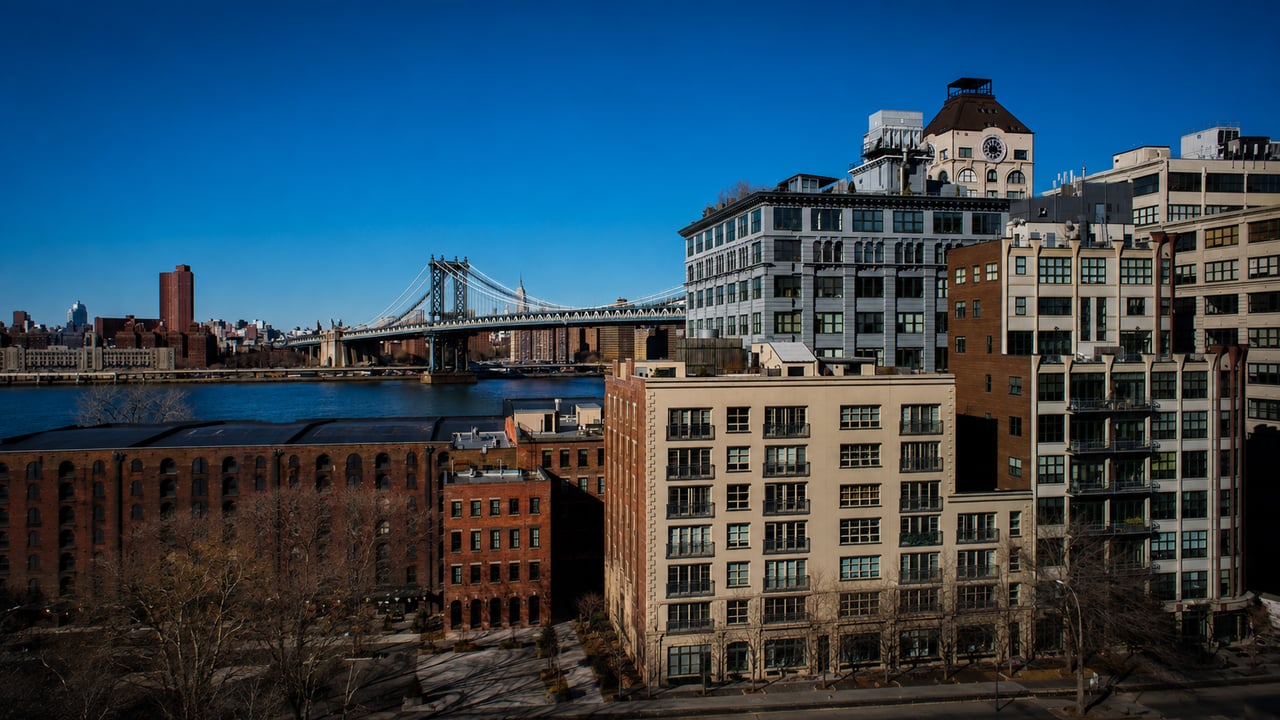
Brooklyn Heights and DUMBO are a five-minute walk from each other. They share a waterfront, the same views of lower Manhattan, and a general address that many people consider the most desirable in Brooklyn. They could not be more different in what they actually offer day to day. Choosing between them is not just about budget. It's about what kind of life you want to come home to every evening.
We work in both neighborhoods constantly, and buyers regularly ask us to help them decide. Here is the honest comparison.
The Basic Character of Each Neighborhood
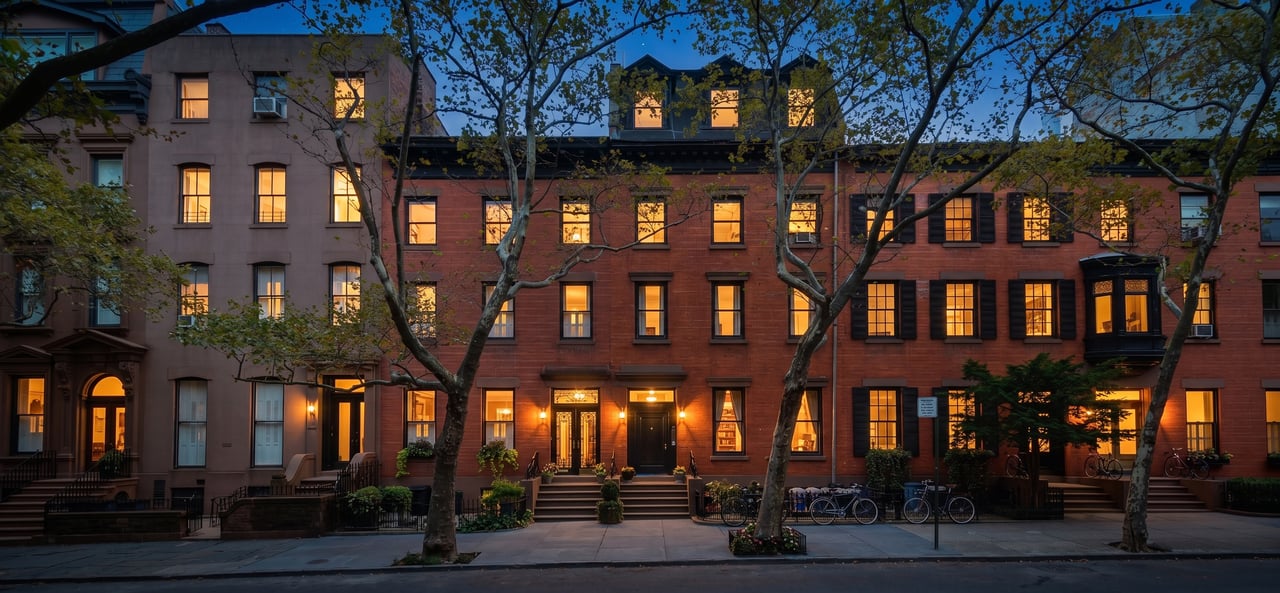
Brooklyn Heights is quiet, residential, and deeply established. It is the oldest recognized historic district in New York City, designated in 1965, and it has changed less in the past 50 years than almost any other part of Brooklyn. Walking the blocks of Willow, Cranberry, or Middagh Streets feels like being inside a preserved 19th-century neighborhood, because in many ways you are. The residents tend to be professionals, longtime Brooklyn families, academics, and people who came here years ago and decided they were never leaving. The pace on the residential streets is genuinely unhurried. There is no nightlife to speak of, and the restaurants are solid without being particularly adventurous.
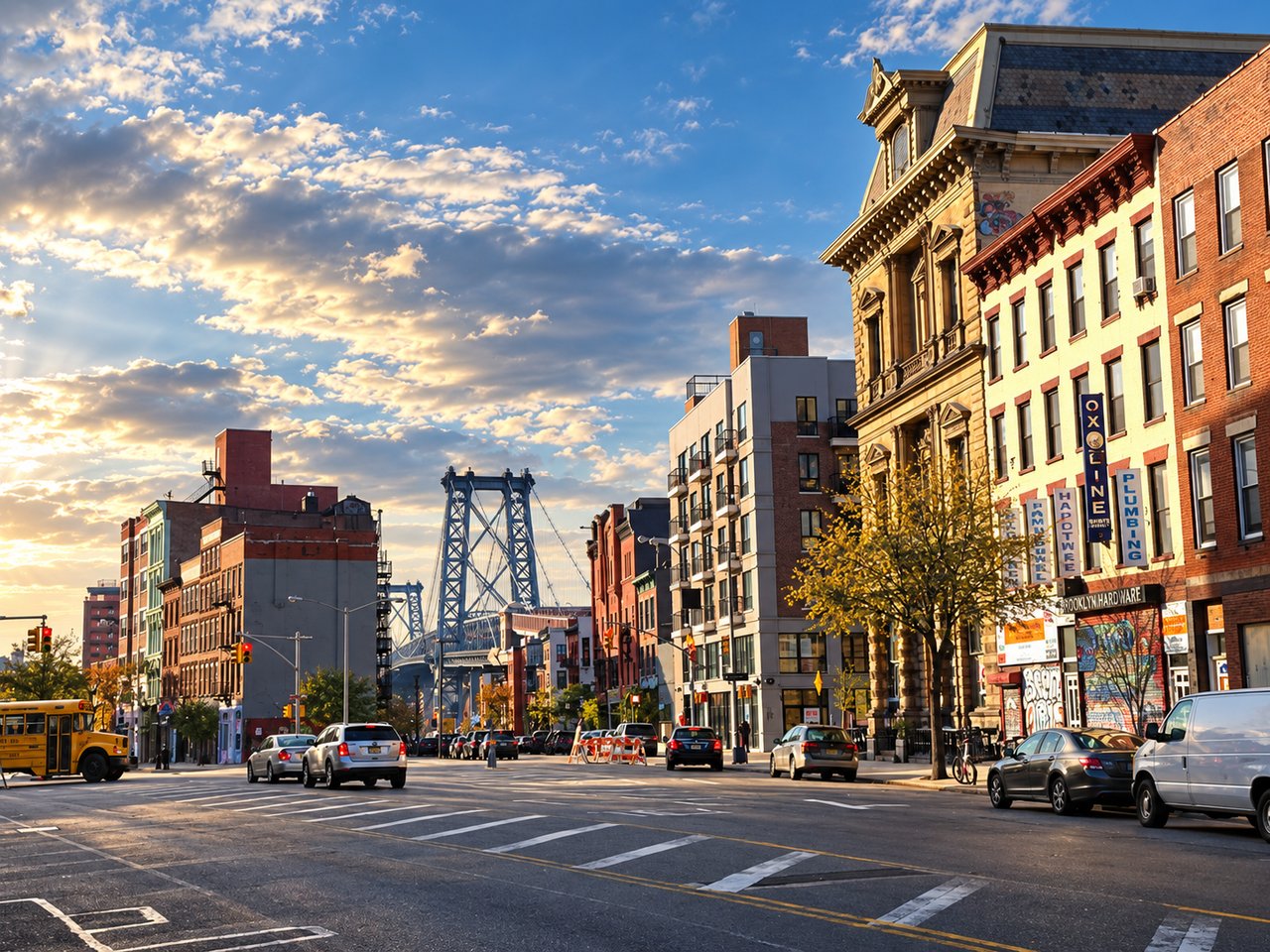
DUMBO is the opposite in almost every respect. It was raw industrial space as recently as the 1990s, and the transformation into one of Brooklyn's most expensive neighborhoods happened fast and intentionally. The cobblestone streets and granite pavers are a remnant of the industrial era; everything built on top of them is new or newly renovated. The converted warehouse lofts, the luxury condominium towers, the tech offices, the galleries, and the restaurant cluster around Front and Water Streets all arrived within the past 25 years. The character is energetic, design-conscious, and skews younger than the Heights. There are also significantly more tourists, particularly on weekends when the Manhattan Bridge archway frames photographs that apparently compel people to stand in the middle of the street.
Housing Stock: What You're Actually Buying
This is where the two neighborhoods diverge most significantly for buyers.
Brooklyn Heights housing stock is predominantly pre-war construction across a range of eras. You have Federal-period rowhouses from the 1820s and 1830s on the landmarked blocks closest to the water. Brownstone-faced townhouses from the mid-to-late 19th century on most of the interior blocks. Limestone-faced rowhouses from the turn of the 20th century, which are common on the blocks closest to Montague Street. Larger pre-war apartment buildings, including some that were converted to condos and some that remain rentals. And a small number of mid-century buildings that represent the least interesting part of the Heights housing stock.
What you do not find in Brooklyn Heights is new construction at any meaningful scale, because the landmark district designation has effectively frozen the built environment. If you are buying in the Heights, you are buying into a building that is at minimum 60 to 70 years old and more likely over 100. That means pre-war construction quality, which is often excellent, combined with systems that have been updated over the decades in varying degrees of completeness. Apartments tend to have higher ceilings than post-war buildings, more architectural detail, and floor plans that can feel unconventional by modern standards. Windows are original in some units and replaced in others. Kitchens and bathrooms in unrenovated units often show their age clearly.
DUMBO's housing stock is almost entirely one of two things: converted factory and warehouse lofts from the neighborhood's industrial past, or new condominium construction built within the past 20 years. The loft buildings are the ones that draw the most attention. Buildings like 1 Main Street, 30 Main Street, and 70 Washington Street converted warehouse and factory floors into residential units with ceiling heights of 11 to 14 feet, exposed brick or concrete walls, oversized windows, and open floor plans. These are genuine lofts, not the approximation of loft living that you get in many Manhattan buildings. Square footage runs large by Brooklyn standards. A two-bedroom in a DUMBO loft conversion might have 1,400 to 1,800 square feet, which is simply not available in most Brooklyn Heights pre-war buildings where floor plans are more constrained.
The newer condominium towers that have risen along the waterfront and in the surrounding blocks represent a different product: modern amenities, contemporary finishes, concierge service, rooftop decks, and pricing that reflects all of that. Buildings like One John Street and the projects along Front and Water Streets have attracted buyers who want the DUMBO address with full-service building amenities.
Price Per Square Foot
Both neighborhoods are expensive. The pricing gap between them has narrowed over the past several years as DUMBO has matured, but they remain distinct markets.
In Brooklyn Heights, condos in pre-war converted buildings typically trade in the range of $1,100 to $1,500 per square foot. Renovated units in prime buildings, or units with Promenade or water views, will push above that range. Townhouses on the landmarked blocks start around $4,000,000 for a standard four-story example and climb well past $7,000,000 for the exceptional properties, particularly on the streets with the best position and most intact historic detail.
In DUMBO, the converted loft buildings trade at $1,300 to $1,700 per square foot, with the best-positioned and most distinctive units pushing higher. The newer condominium buildings, particularly those with direct water views, trade at $1,500 to $2,000 per square foot and occasionally above that for penthouses and exceptional units. Townhouses in DUMBO exist but are rare; the neighborhood is not primarily a townhouse market.
What you actually get for the money differs. In Brooklyn Heights at $1.8M, you might buy a renovated two-bedroom in a pre-war building with period details, approximately 1,000 to 1,200 square feet, and a view over rooftops toward the harbor. In DUMBO at $1.8M, you might buy a two-bedroom loft with 1,400 square feet, 12-foot ceilings, and original brick walls. Both are excellent properties. The question is which experience you want.
Commute
Both neighborhoods have strong transit access to lower Manhattan, and both are close enough to the Financial District to make walking across one of the bridges a real option for some buyers.
Brooklyn Heights is exceptional for transit. The A and C trains stop at High Street/Brooklyn Bridge, which deposits you directly at Broadway-Nassau in lower Manhattan or runs north to midtown. The 2, 3, 4, and 5 trains all stop at Borough Hall, a short walk from most Heights addresses. The F and G trains are accessible at Bergen Street and at Jay Street/MetroTech in nearby Downtown Brooklyn. For people working in the Financial District, midtown, or anywhere on those trunk lines, Brooklyn Heights delivers one of the shortest and most reliable commutes in all of Brooklyn. The Brooklyn Bridge is a 20-minute walk to City Hall Park for those who prefer it.
DUMBO's transit is good but slightly less comprehensive. The A, C, and F trains stop at High Street/Brooklyn Bridge and Jay Street/MetroTech, both within walking distance depending on where in DUMBO you are. The Manhattan Bridge is walkable across to Canal Street. For lower Manhattan, the commute is genuinely fast. For midtown, it requires either a longer subway ride or a connection. Buyers who work uptown should factor in slightly longer commute times from DUMBO compared to Brooklyn Heights.
Waterfront and Green Space
Both neighborhoods have access to the Brooklyn Bridge Park, which stretches along the waterfront from Atlantic Avenue north through DUMBO and up toward Vinegar Hill. The park includes athletic facilities, lawns, a restored historic pier, a seasonal pool, a carousel, and some of the best public waterfront access in New York City.
Brooklyn Heights residents access the park primarily from the Promenade level, descending through the Squibb Park Bridge or the Cranberry Street stairs to reach the water. The Promenade itself is one of the most distinctive public spaces in New York, an elevated esplanade with unobstructed views of the lower Manhattan skyline, the Brooklyn Bridge, and the harbor. It is extraordinary in the morning and at night, and for residents of the Heights, it functions as a daily amenity.
DUMBO residents step essentially directly into the park. The cobblestone plazas at the base of the Manhattan Bridge, the Empire Stores building, Jane's Carousel, and the immediate waterfront are all within a few minutes' walk of most DUMBO buildings. This physical integration with the waterfront is something DUMBO offers more completely than the Heights, where the Promenade is wonderful but the park itself requires a more deliberate descent.
Schools
School district quality and specific building options vary, and parents should verify current performance data and enrollment options directly. Both neighborhoods fall within District 13, which covers a broad swath of Brooklyn including the Heights, DUMBO, and neighboring areas. PS 8 Robert Fulton in Brooklyn Heights has historically been one of the more sought-after district schools in Brooklyn, with strong community involvement and consistent performance. PS 307 John Huss in DUMBO is a newer option for the neighborhood.
Private school families in both neighborhoods have access to some of the strongest K-12 private options in New York City. Brooklyn Heights is home to Saint Ann's School, one of the most academically distinctive independent schools in the city. The Packer Collegiate Institute, also in the Heights, offers another strong option. These schools draw families to the Heights specifically, and proximity to them is a real consideration for parents in the private school market.
Restaurants and Daily Life
Brooklyn Heights has a solidly functional restaurant and retail base along Montague Street, Henry Street, and Atlantic Avenue. You will not be under-served. But the neighborhood is not a dining destination in the way that areas like Park Slope, Williamsburg, or Carroll Gardens have become. The restaurants are reliable, the options are reasonable, and the overall commercial energy is calm. Atlantic Avenue offers a few genuinely good options and has improved over the years.
DUMBO punches above its residential population in restaurants and food. The Jane restaurant at Empire Stores, the options along Front and Water Streets, and the concentration of quality food and coffee in a relatively small area make DUMBO feel more culinarily active than the Heights despite having fewer residents. The neighborhood also hosts a weekend market, art gallery openings, and cultural programming that gives it a more public-facing energy. If you want a neighborhood where you regularly encounter people and activity outside your building, DUMBO delivers that more reliably than the Heights.
2026 Market Conditions
Both neighborhoods are performing well in 2026, driven by constrained inventory and sustained demand from buyers who want the waterfront Brooklyn experience at the top of the market. Brooklyn Heights has seen strong activity in the $2M to $5M townhouse range, where out-of-borough buyers, particularly those crossing from Manhattan, are finding value relative to comparable properties on the Upper West Side or Tribeca. Days on market for well-priced Heights properties has compressed, with good listings moving in two to four weeks when correctly positioned.
DUMBO is experiencing particular strength in the loft segment, where the combination of authentic industrial character, scale, and waterfront proximity continues to draw buyers who cannot find a comparable product elsewhere in Brooklyn. The price-per-square-foot gap between DUMBO and comparable Manhattan neighborhoods like Tribeca remains wide enough to attract buyers who are doing the arithmetic on what they can own for the same monthly payment.
Both neighborhoods have very little speculative inventory. What comes to market tends to be sold property from long-term owners, which means condition varies and renovation costs factor into many purchase decisions. Buyers should budget for updates in Brooklyn Heights pre-war buildings in particular, where mechanicals, kitchens, and bathrooms may reflect decades of use.
Who Belongs in Each
Brooklyn Heights is the right choice if you want quiet, permanence, and a neighborhood with deep historic identity. If you are raising children and prioritize the school options, the park, and the residential character, the Heights delivers. If you work in lower Manhattan or the Financial District and want the shortest possible commute from a Brooklyn address, the Heights is hard to beat. If you want a pre-war apartment with high ceilings, original detail, and the feeling of a building with history, you will find it here.
DUMBO is the right choice if you want scale. If you need 1,500 square feet of open loft space with 12-foot ceilings, you are not finding it in Brooklyn Heights at any realistic price. If the design quality of the space itself, the exposed brick, the wide-plank floors, the oversized windows matters to you as much as the neighborhood identity, DUMBO is where that product lives. If you want to be more embedded in a scene, restaurants around the corner, a weekend market, more activity visible from your windows, DUMBO gives you that.
Some buyers want both and spend weeks going back and forth. When that happens, we usually tell them to spend a weekday morning in each neighborhood and a Saturday afternoon. The experience on the ground settles the question more clearly than any price-per-square-foot comparison.
We know both markets well and have sold in both. If you want to talk through which is the better fit for your situation, call us or send a message.

Fouad Rahmé
Founder, the Rahmé Team
The Rahmé Team advises buyers, sellers, investors, and developers across Brooklyn, with 40 years of combined experience, more than 1,000 clients and transactions, and over $800 million in career sales. RealTrends Verified ranks the team in the top 1.5% of real estate professionals nationwide.
Contact the team or call (718) 233-3365.
Deciding between Brooklyn Heights and DUMBO?
The Rahmé Team has sold in both neighborhoods and can walk you through what's currently available in each. Call (718) 233-3365 or contact us.
Frequently Asked Questions
Is DUMBO or Brooklyn Heights more expensive per square foot?
DUMBO typically runs higher on a price-per-square-foot basis for condos, driven by the large loft units with industrial finishes that command premium pricing. Brooklyn Heights pricing varies significantly between pre-war rental-conversion buildings and newer condos, and the mix of property types makes a direct comparison less straightforward. In both neighborhoods, location within the neighborhood, building quality, and unit condition affect price more than the neighborhood label alone.
Which neighborhood is better for families, Brooklyn Heights or DUMBO?
Brooklyn Heights has long been considered one of Brooklyn's premier family neighborhoods, with proximity to Brooklyn Bridge Park, P.S. 8, and a residential character that suits families well. DUMBO has become more family-friendly over the past decade as the neighborhood has matured and more amenities have arrived, but it remains more oriented toward adults in its day-to-day character. If school zoning is a deciding factor, verify the current zoning for any specific building before making an offer, as zone lines can shift.
Which neighborhood has better subway access, Brooklyn Heights or DUMBO?
Brooklyn Heights has excellent subway access, with the 2, 3, 4, 5 at Borough Hall and the A, C, F at Jay Street-MetroTech all within walking distance. DUMBO's transit options are more limited on the subway side, with the F at York Street being the primary option, though the neighborhood's proximity to the Manhattan Bridge makes cycling and rideshare practical alternatives. For commuters who rely on the subway daily, Brooklyn Heights has a meaningful transit advantage.
Are there more purchase options available in Brooklyn Heights or DUMBO?
Brooklyn Heights has a larger and more diverse inventory at any given time, with a mix of brownstones, limestone rowhouses, pre-war apartment buildings, and newer condos. DUMBO's inventory is smaller and more concentrated in converted loft buildings and newer developments. Brooklyn Heights gives buyers more options to filter across building types and price points. DUMBO's inventory is more specialized, which means when the right unit comes up, you move quickly or miss it.
Can I find outdoor space in either Brooklyn Heights or DUMBO?
Both neighborhoods have strong park access. Brooklyn Bridge Park spans both neighborhoods and is one of the best urban parks in New York City. Brooklyn Heights offers the Promenade with its Manhattan views. Within individual properties, private outdoor space is available in both neighborhoods but commands a significant premium, particularly in DUMBO where terrace or roof access in a loft building is relatively rare and priced accordingly.