Cobble Hill is one of Brooklyn's smaller and most consistently in-demand neighborhoods. It sits between Atlantic Avenue to the north, Degraw Street to the south, Court Street to the east, and the BQE to the west - a tight footprint that keeps inventory limited and prices firm.
Buyers come here for the brownstones, the proximity to Carroll Gardens and Boerum Hill, the low-key commercial strip on Court Street, and the relative quiet compared to Brooklyn Heights. What they find is a market that moves quickly and rewards preparation.
What the Cobble Hill Market Looks Like
Active inventory in Cobble Hill typically runs 8 to 15 listings at any given time. Because the neighborhood is small, a handful of new listings can shift the picture week to week. As of September 2026, the market is competitive but not overheated.
Townhouses and row houses trade between $2.8M and $5M or more depending on condition, width, and outdoor space. Condos generally range from $1.1M to $1.8M. Co-ops, which are less common here than in some other Brooklyn neighborhoods, can be found below $1M for smaller units, though board approval and building financials matter significantly.
Days on market for well-priced properties run 20 to 35 days. Overpriced listings sit longer, and sellers who adjust quickly tend to close closer to ask than those who hold firm too long.
Property Types in Cobble Hill
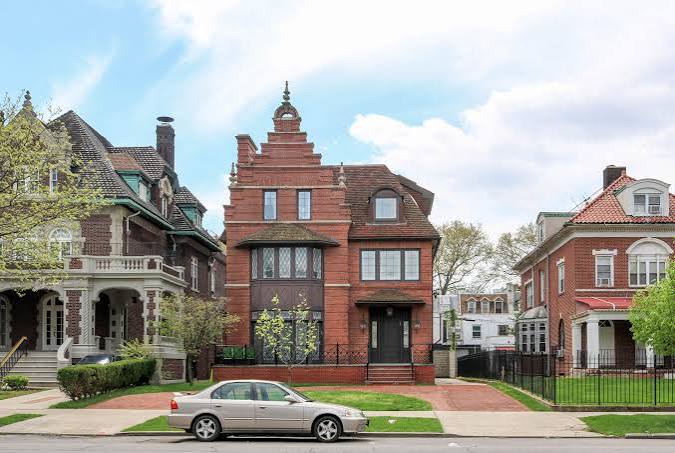
Brownstones and townhouses are the defining property type. The best blocks - Verandah Place, Kane Street, Congress Street - trade at premiums. A renovated 20-foot wide brownstone with a garden and parlor floor in good condition will typically attract multiple offers. Wider homes (22 feet or more) on better blocks push toward $4M to $5M and above.
Condos are concentrated in a handful of newer or converted buildings. They appeal to buyers who want the neighborhood but prefer a lower-maintenance ownership experience. Common charges and taxes vary significantly by building, so underwriting the full carrying cost matters.
Co-ops in Cobble Hill tend to be in smaller buildings. Board approval can add 60 to 90 days to a closing timeline, and most buildings have restrictions on financing, subletting, and renovations. Review the building's financials and meeting minutes before going to contract.
What Drives Pricing in Cobble Hill
Block quality is the single biggest driver after size and condition. Kane Street and Verandah Place are among the most desirable residential blocks in South Brooklyn. A home on a quieter interior block will generally trade at a discount to equivalent homes on the best blocks.
Outdoor space adds measurable value. A renovated garden-level unit or a townhouse with a landscaped backyard commands a premium over otherwise comparable properties without it. Roof access and private terraces in condo buildings have similar effects.
Condition matters, but buyers here are generally sophisticated about renovation costs. A gut-renovated home trades at a significant premium to an original-condition one, but buyers who can take on a project often find better value in unrenovated stock - if they have the patience and the financing structure to support it.
Due Diligence Considerations
Cobble Hill is part of a NYC Landmarks Preservation Commission historic district. Exterior alterations require LPC approval, and buyers planning significant changes should understand what that process involves before going to contract.
For townhouses, structural due diligence is essential. A thorough inspection should cover the foundation, rear extension (if any), roof, and any visible evidence of work done without permits. DOB records are public and worth reviewing before making an offer.
For condos and co-ops, review the offering plan, financials, reserve fund, and any open litigation. Buildings with thin reserves or pending assessments can create carrying cost surprises after closing.

Fouad Rahmé
Founder, the Rahmé Team at Compass
The Rahmé Team advises buyers, sellers, investors, and developers across Brooklyn, with 40 years of combined experience, more than 1,000 clients and transactions, and over $800 million in career sales. RealTrends Verified ranks the team in the top 1.5% of real estate professionals nationwide.
Contact the team or call (718) 233-3365.
Frequently Asked Questions
How competitive is Cobble Hill for buyers?
Cobble Hill is consistently competitive. The neighborhood is geographically limited, which keeps supply tight. Well-priced properties on good blocks will receive multiple offers; the listing-to-contract timeline for properly priced brownstones is often under three weeks. Buyers should come to the market pre-approved, prepared to move quickly, and without contingencies they are not willing to waive.
What is the price difference between a renovated and unrenovated townhouse in Cobble Hill?
The gap between a turnkey property and a gut renovation project in Cobble Hill can be $400,000 to $600,000 or more, depending on size and block. Buyers who can take on renovation work find value; buyers who want move-in condition pay accordingly. Neither approach is wrong, but the math needs to be done carefully given renovation costs in this part of Brooklyn.
Is Cobble Hill good for families?
Yes. Cobble Hill is one of the more family-oriented neighborhoods in South Brooklyn. PS 29 has a strong reputation and is one of the more sought-after elementary schools in Community School District 15. The neighborhood is walkable, quiet by Brooklyn standards, and close to Brooklyn Bridge Park, which provides waterfront green space a short walk or bike ride away.
How do Cobble Hill condos compare to co-ops?
Condos in Cobble Hill trade at a premium over co-ops for a comparable unit size. Condos are easier to finance and easier to rent, which makes them attractive to buyers who may not stay long-term. Co-ops require board approval and come with subletting restrictions, but they are generally priced lower per square foot. Buyers who are certain they will stay and do not need subletting flexibility often find better value in a co-op.
What should buyers budget for closing costs in Cobble Hill?
Buyers purchasing in Cobble Hill should budget approximately 2 to 4 percent of the purchase price for closing costs, depending on the deal structure. This includes mortgage taxes, title insurance, attorney fees, and any mansion tax due on purchases above $1M. For purchases above $2M, the mansion tax increases. A buyer's attorney can provide a detailed estimate specific to any individual transaction.
Getting Around Cobble Hill
Cobble Hill is served primarily by the F and G trains at Bergen Street, and the F and R at Smith-9th Streets at its northern edge. The neighborhood is walkable; most residents can handle daily errands on foot. Atlantic Avenue runs along the northern boundary and provides easy access to transit connecting to both Manhattan and the outer boroughs.
Cycling is practical throughout Cobble Hill. The neighborhood connects easily to the Brooklyn Bridge Park paths and to the bike lanes running along Degraw Street. For buyers commuting to lower Manhattan, the F train to Delancey or the walk over the Brooklyn Bridge are both viable options depending on destination.
Parking is limited, as it is throughout this part of Brooklyn. Street parking is competitive on nights and weekends. Buyers who own a car should factor parking costs into their budget if they intend to keep one near the apartment.
Schools and Families
PS 29 (John M. Harrigan) serves Cobble Hill and is consistently one of the stronger-performing elementary schools in District 15. The school draws families from throughout the surrounding neighborhoods and is a significant factor for buyers with children. The Brooklyn Heights Montessori School and Brooklyn Heights Montessori are within accessible distance for families looking at private options.
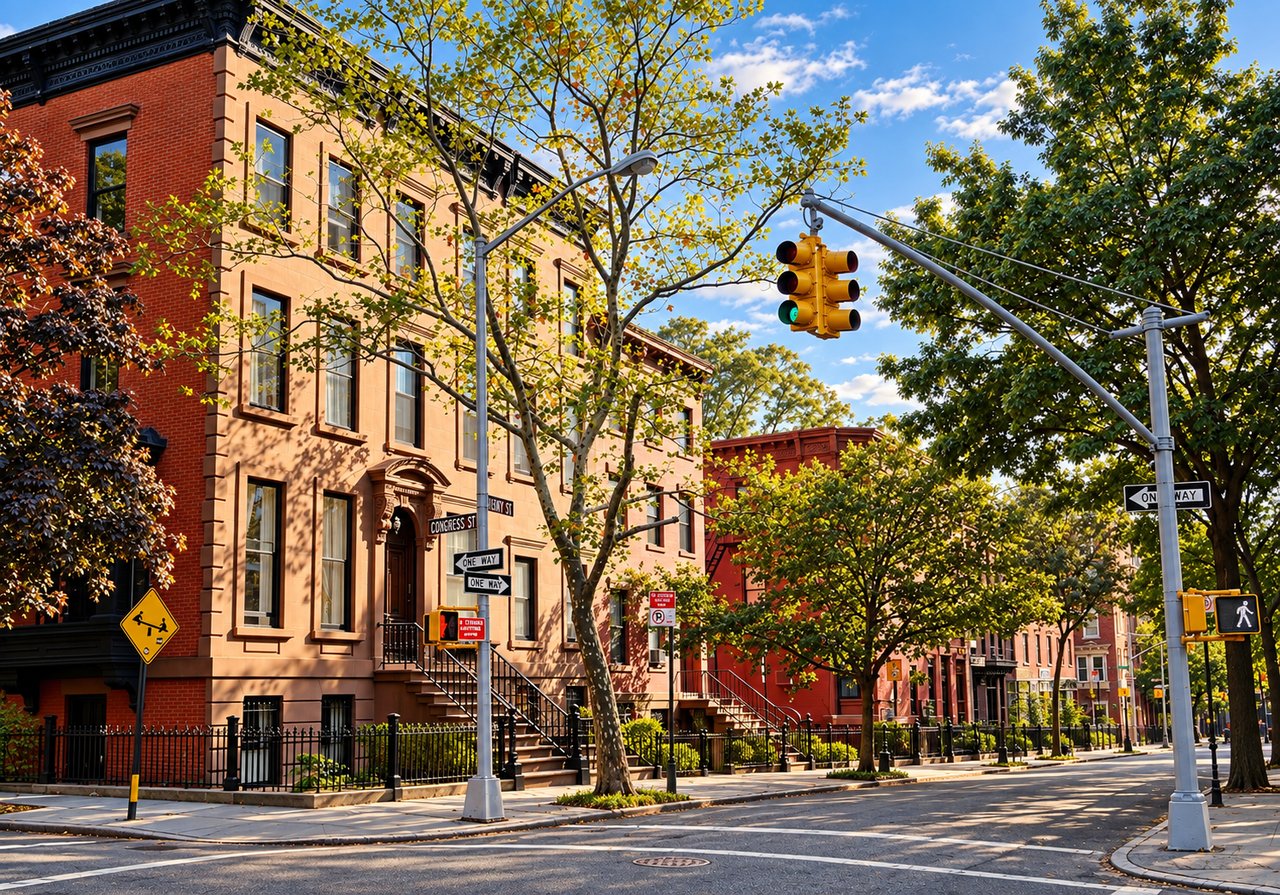
Cobble Hill Park, on Congress Street between Henry and Clinton Streets, is the neighborhood's central green space and a gathering point for families. The proximity to Brooklyn Bridge Park gives residents access to a larger recreational area along the waterfront, including sports fields, playgrounds, and the seasonal Pier 2 skating rink.
Streets and Blocks Worth Knowing
Warren Street, Baltic Street, and Kane Street are among the most sought-after residential streets in Cobble Hill. The blocks between Clinton and Henry Streets are particularly competitive for townhouse buyers, combining quiet residential character with walkable access to Smith Street and the Bergen Street train stop.
Smith Street is the neighborhood's commercial spine, running north-south through Cobble Hill and Carroll Gardens. The street has a dense concentration of restaurants, bars, and retail. Court Street parallels Smith Street one block east and carries more everyday commercial activity. Atlantic Avenue at the north end of the neighborhood is a mixed-use corridor with restaurants and specialty shops.
Work With the Rahmé Team
Fouad Rahmé and Kasia Dabrowski-Bardi work with buyers throughout South Brooklyn, including Cobble Hill, Carroll Gardens, Park Slope, and surrounding neighborhoods. If you are preparing to buy in this market, they can help you understand what is available, what is realistic for your budget, and how to position an offer competitively.
Competing Successfully in Cobble Hill
In a market with limited inventory, preparation separates buyers who close from those who lose deals. Start with mortgage pre-approval in hand before scheduling showings. Sellers in Cobble Hill take financing seriously, and an unverified buyer slows the process in ways that cost deals.
When a well-priced property comes on the market, expect competition. Multiple offers are common on brownstones in good condition on desirable blocks. The offer strategy matters as much as the number. Price is one factor, but terms - contingency periods, inspection rights, and closing timeline flexibility - are often equally important to a seller.
Buyers who can move fast without waiving protections they need tend to win. Know what you will and will not accept on the due diligence side before the offer is due, not after.
Financing a Cobble Hill Purchase
Much of the Cobble Hill market falls into jumbo loan territory. Properties priced above the conventional conforming loan limit require a different set of lenders and underwriting standards. Work with a lender experienced in jumbo mortgages in New York City before you start your search.
For co-ops, financing approval is a two-step process: your lender has to approve you, and then the building does. Some co-op buildings limit financing to 50 or 60 percent of the purchase price, or restrict it further. Know the building's financing requirements before you fall in love with a unit.
For condos, standard financing applies, but lenders will underwrite the building as well as the borrower. Buildings with a high percentage of investor-owned units, deferred maintenance, or thin reserves can complicate conventional financing approval.
How the Cobble Hill Market Actually Works
Cobble Hill inventory is thin by design. The neighborhood is geographically compact: bounded by Atlantic Avenue, Court Street, the BQE, and Henry Street, which limits what comes to market at any given time. Buyers who wait for the perfect listing often find themselves competing for the same three or four brownstones that surface simultaneously. The buyer who has done their homework on pricing and is pre-approved closes; the buyer still researching loses.
Brownstones sell fastest when priced within 5% of recent comparable sales and presented in move-in condition. Properties needing a full gut renovation have a longer market time; buyers factoring in $300,000 to $600,000 in work are deliberate, and sellers who test aggressive prices on distressed properties almost always adjust. Condos in the neighborhood move more quickly, particularly two-bedrooms under $1.2M, which draw both first-time buyers and downsizers simultaneously.
Cobble Hill vs. Carroll Gardens and Boerum Hill
All three neighborhoods share borders and buyers routinely compare them. Carroll Gardens extends south and west, with a higher concentration of four-story rowhouses and a neighborhood character that has softened but not disappeared. Prices tend to run 5 to 10 percent below comparable Cobble Hill brownstones, which makes it worth evaluating seriously if square footage matters more than the specific address.
Boerum Hill sits northeast of Cobble Hill along Atlantic Avenue, with more modern condos and a developed resale market. It typically prices at a slight discount to Cobble Hill for equivalent square footage. Buyers who prioritize the F and G trains may find Boerum Hill more convenient. Cobble Hill commands a premium because of school access, walkability, and a neighborhood identity that has held through multiple cycles. Whether that premium makes sense depends on how long you plan to stay and what you intend to do with the property.
What to Verify Before Closing
In co-ops, the board packet is as important as the unit itself. Review building financials, reserve fund levels, maintenance trends over the past five years, and the percentage of investor-owned units. A co-op with thin reserves and rising maintenance will be more difficult to sell when the time comes, and that difficulty starts compounding from the day you close.
In condos, look at the unit mix. Buildings with a high proportion of non-owner-occupied units can have less cohesive management. The meeting minutes will tell you about ongoing disputes, upcoming capital projects, and the general health of the building's governance, information that is not in the offering plan and not visible during a showing.
For brownstones, a structural inspection is non-negotiable. Most Cobble Hill rowhouses were built between 1850 and 1875, and while well-maintained brick shells are generally sound, the interior structures (joists, headers, plumbing chases) vary considerably. Buyers who skip or waive inspection to strengthen an offer sometimes absorb six-figure surprises in the first year of ownership.