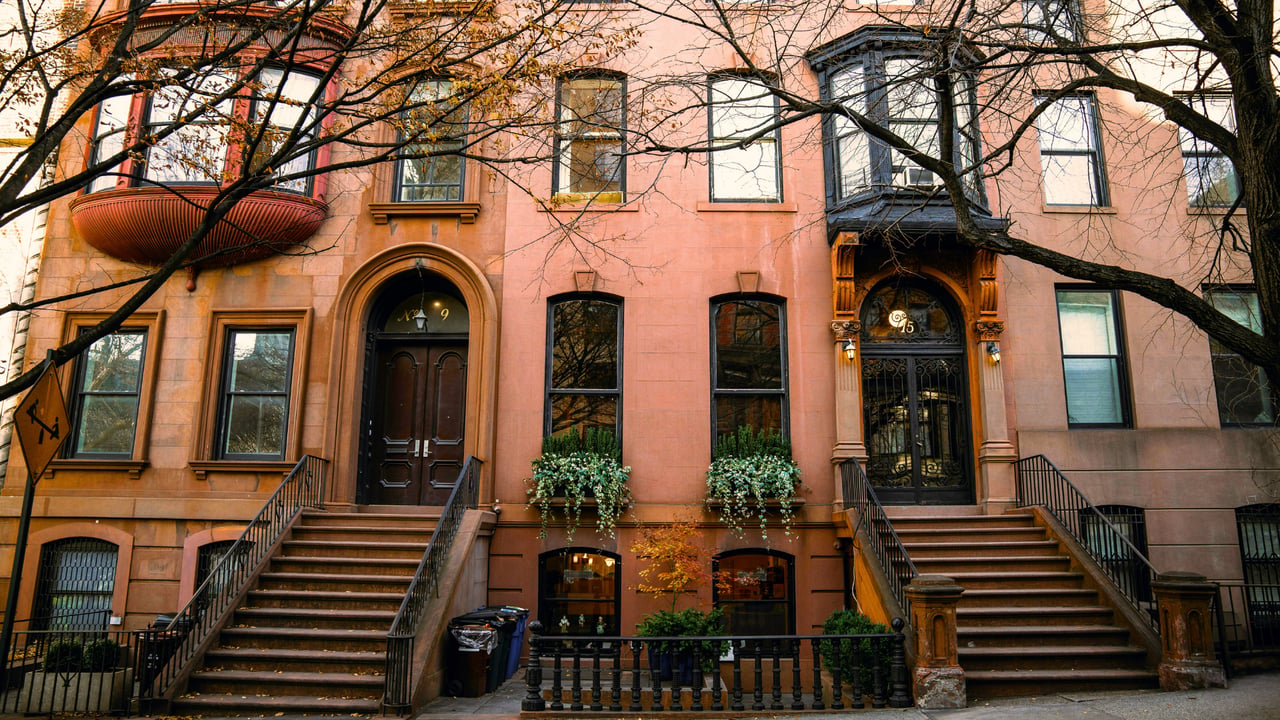
If you've spent any time looking at Brooklyn real estate listings, you've probably seen the words "brownstone" and "townhouse" used as though they mean the same thing. Sometimes they're interchangeable. Often they're not. The confusion costs buyers real money and leads to bad decisions, because the distinction between these building types matters when it comes to inspections, systems, maintenance costs, and what you're actually getting for your money.
Here is what each term actually means, how they overlap, and what you need to know before you make an offer on either.
What "Brownstone" Actually Means
Brownstone is a material, not a building type. It refers to a specific sedimentary sandstone, quarried primarily in Connecticut and New Jersey, that was the dominant facade material for residential rowhouses constructed in New York City and surrounding areas roughly between 1840 and 1910. The stone has a distinctive reddish-brown color, which is where the colloquial name comes from. The actual geological term is Triassic-era sandstone, and it was chosen because it was cheap, abundant, and easier to carve into decorative detail than granite or limestone.
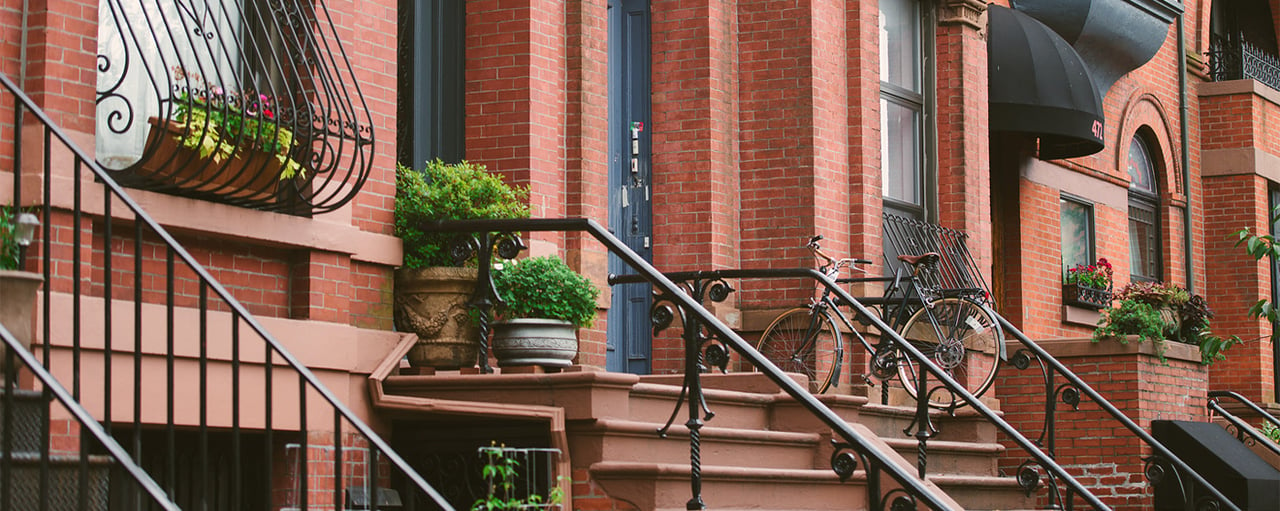
So when someone says "brownstone," they are technically describing a building faced with that specific sandstone, built during that specific era. The structure behind the facade is almost always brick. The brownstone itself is an applied facing material, carved into the stoops, cornices, lintels, window surrounds, and decorative panels that give the buildings their recognizable look.
The problem is that "brownstone" has become cultural shorthand in New York for any 19th-century rowhouse, regardless of what the facade is actually made of. You will hear people call brick-faced rowhouses brownstones. You will hear limestone-faced houses from the 1890s and 1900s called brownstones. In common usage, the word has stretched to mean any of the narrow, attached rowhouses that line the streets of Brooklyn's historic neighborhoods. That loose usage is understandable, but when you're buying one, the distinction between real brownstone, brick, and limestone matters considerably.
What "Townhouse" Means
Townhouse is a structural description, not a material description. It refers to a building type: an attached or semi-detached multi-story residential structure where one owner controls the full building from the foundation to the roof. In Brooklyn usage, townhouse typically implies a narrow, multi-story building, usually 18 to 25 feet wide, on a lot that runs 60 to 100 feet deep. The building may contain one residential unit (single-family), or it may be configured as multiple units stacked vertically.
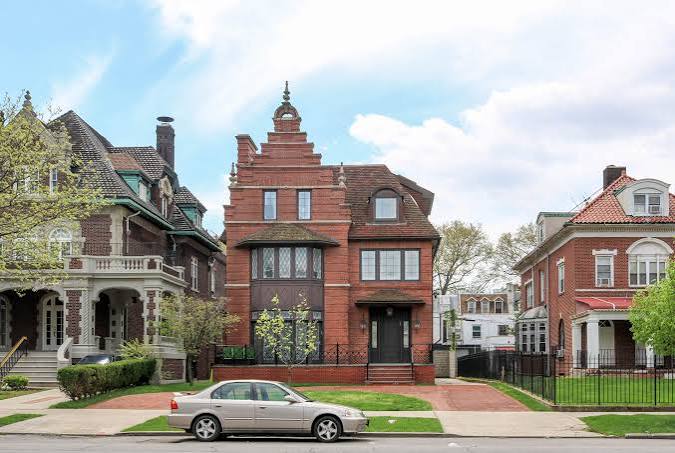
A townhouse can be faced with brownstone. It can be faced with brick. It can be limestone, stucco, or modern cladding. The term describes the ownership and structural configuration, not the exterior material. In this sense, every brownstone is a townhouse, but not every townhouse is a brownstone. A new construction attached rowhouse in Greenpoint with a glass and metal facade is a townhouse. A 1970s brick-faced rowhouse in Bay Ridge is a townhouse. Neither is a brownstone, though both share the same general structural type.
How They Overlap in Brooklyn
The overlap happens because the vast majority of Brooklyn's historically desirable townhouses were in fact built with brownstone facades during the great development boom of the mid-to-late 19th century. In neighborhoods like Park Slope, Carroll Gardens, Cobble Hill, Brooklyn Heights, Fort Greene, and Clinton Hill, the typical rowhouse on a typical block is a three-to-four story attached structure, built between 1860 and 1900, with a brownstone-clad facade, a raised stoop entry, and a brick structure behind.
When a broker or seller says "brownstone" in these neighborhoods, they almost always mean a building that is both: it is brownstone-faced and it is a townhouse in its structure. In that context, the words are used interchangeably because the overlap is nearly complete. The confusion arises when you move outside those neighborhoods and those eras, or when you're trying to evaluate the specific condition and maintenance needs of what you're buying.
Why the Material Distinction Matters When You're Buying
Brownstone, the actual stone, has serious maintenance implications. Triassic sandstone is soft and porous. It absorbs water, expands, and spalls over time. The deterioration shows up as surface scaling, deep cracks, and eventually structural loss in the carved decorative elements. Brownstone stoops and facades that have not been properly maintained and re-pointed on a regular cycle can be in genuinely poor condition even on buildings that look attractive in listing photos.
A proper brownstone inspection includes a close assessment of the facade condition, the pointing quality, any previous repairs (brownstone patch versus high-quality limestone or cast stone replacement), and the condition of the stoop, railings, and entry. Deferred facade maintenance on a brownstone building can run from $30,000 for minor repointing and stoop work to $150,000 or more for significant facade restoration if spalling and deterioration are extensive.
Brick-faced rowhouses from the same era do not have this problem. Brick is far more durable than brownstone, weathers better over time, and requires repointing on a much longer cycle. If you are comparing two otherwise similar buildings, one faced in brick and one in original brownstone, the brick building will have lower long-term facade maintenance costs, assuming neither has been recently restored.
Limestone-faced buildings, which were common from roughly 1895 through 1930 in neighborhoods like Brooklyn Heights and parts of Park Slope, sit between the two. Limestone is harder and more durable than brownstone but still requires periodic maintenance. Many of the limestone townhouses in Brooklyn Heights are in excellent condition because the material has held up well and many were maintained by the same families or institutions for decades.
How Age Affects Systems and What You Need to Know Before the Inspection
Whether you are buying a brownstone or a brick townhouse, if the building was constructed before 1920, you are buying a building that is between 100 and 160 years old. That age affects systems in ways that buyers who are used to apartment living often underestimate.
Plumbing in pre-war Brooklyn townhouses was typically installed in waves. Original cast iron and galvanized steel pipes are often still in place in parts of the building. Galvanized pipes corrode from the inside out, reducing water pressure and eventually failing. A building with original or partially original galvanized supply lines is facing a significant plumbing upgrade. Expect $20,000 to $60,000 for a full replumb of a three-to-four story Brooklyn townhouse, depending on the scope and configuration.
Electrical systems in pre-1960 buildings were often wired in a way that does not meet modern load requirements and is not insurable without upgrades. Knob-and-tube wiring, which was standard through the 1930s, and early aluminum wiring from the 1960s and 1970s are both issues that insurance companies will ask about and that buyers should verify before closing. A full electrical upgrade typically runs $15,000 to $40,000 depending on panel capacity and the extent of re-wiring needed.
Heating systems vary enormously. Steam heat is common in pre-war buildings and works well when maintained, but the distribution system (radiators, valves, steam traps) requires periodic servicing. Forced-air systems are rarer in older Brooklyn townhouses. Many buildings have been converted to gas-forced hot water heat, which is more controllable but requires that the original steam or hot water radiation be compatible. Oil-to-gas conversions have been common over the past 20 years, and most buildings have completed that transition. If you see an oil tank still in use, factor in the cost of removal and conversion.
Roofs on flat-roof Brooklyn townhouses have a lifespan of 15 to 25 years depending on the membrane material and maintenance. A roof near the end of its life is a negotiating point, and replacement typically costs $15,000 to $35,000 for a standard Brooklyn townhouse footprint. Always ask for documentation of the last roof replacement date.
Price Differences Between Building Types
In the neighborhoods where they coexist, genuine brownstone-faced buildings command a premium over brick-faced buildings, all else being equal. Part of this is aesthetic: the carved stonework, the stoops, and the material itself carry cultural cachet. Part of it is simply that brownstone-facade buildings tend to be from an earlier era and often have more elaborate interior detail, higher ceilings, and more decorative plasterwork.
That premium is real but not enormous. A well-maintained brownstone-facade townhouse on a prime Park Slope block might trade at 5 to 10 percent above a comparable brick building on a comparable block. The premium compresses when the brownstone facade has significant deferred maintenance, because the buyer is effectively paying for future restoration costs alongside the purchase price.
New construction townhouses, which appear in Brooklyn in neighborhoods like Greenpoint, Williamsburg, Bushwick, and parts of Crown Heights, are a different category entirely. They trade on amenity, efficiency, and modern systems rather than historical character. A new construction townhouse is not a brownstone in any sense, but it can be a more attractive purchase for buyers who want modern mechanicals, open floor plans, and no deferred maintenance. Pricing on new construction townhouses tends to run $700 to $1,100 per square foot in most Brooklyn submarkets, which can be comparable to or slightly below the pricing on well-located, restored historic buildings.
What Neighborhoods Have What
Park Slope has a large concentration of genuine brownstone-faced rowhouses, particularly in the north Slope between Flatbush Avenue and about 9th Street. The blocks between First and Eighth Streets on the numbered cross streets are classic brownstone territory. The south Slope has more brick-faced buildings and a somewhat later construction vintage.
Brooklyn Heights has a mix of Federal-era rowhouses, brownstone buildings, and the limestone-faced buildings that came in the 1890s and early 1900s. The landmarked blocks on Willow, Cranberry, and Pineapple Streets include some of the oldest surviving residential buildings in Brooklyn. The variety of materials and eras here is larger than in Park Slope.
Carroll Gardens has strong brownstone coverage on the garden blocks, and the configuration of those blocks, with the extended front gardens between the stoop and the sidewalk, creates something genuinely unusual in the Brooklyn streetscape. The garden block designation is specific to the streets between Court and Henry from Carroll to First Place, and buyers should understand that not every block in Carroll Gardens has that feature.
Cobble Hill and Boerum Hill have a mix of brownstone and brick buildings from the same general Victorian era. Clinton Hill and Fort Greene also have genuine brownstone-face buildings but contain more brick rowhouses per capita than the brownstone belt neighborhoods to the west.
Crown Heights has large brownstone buildings, many of which are wider than the narrower Park Slope examples. Some of the finest surviving examples of late Victorian brownstone construction in Brooklyn are on Eastern Parkway and the nearby cross streets. These often come at prices that represent real value compared to equivalent buildings further west.
Clearing Up the Terminology for Buyers
Here is the practical summary: when a listing says "brownstone," treat it as a starting point, not a definition. Ask whether the facade is original brownstone, painted brownstone, brick, or limestone. Ask when the last facade repointing was done and whether there are any active facade issues. Ask about the age and condition of the roof, plumbing, and electrical systems. These questions are not exotic, and any seller of a 19th-century Brooklyn rowhouse should be able to answer them.
When a listing says "townhouse," understand that the term covers everything from a fully restored 1875 brownstone to a brand-new attached house built last year. The word tells you about ownership structure and general building configuration. Everything else, material, age, condition, systems, requires direct investigation.
The inspections on these buildings are not optional and are not a formality. A skilled inspector who knows pre-war Brooklyn construction will find things that a general inspector will miss. We always recommend inspectors who have specific experience with this building stock, and we can point you toward ones we trust. The inspection report on a 130-year-old rowhouse is often 40 to 60 pages long. Reading it carefully, understanding what is cosmetic versus structural, and knowing which findings change the price is exactly what the buying process in this market requires.
If you want to talk through a specific building, what to look for, and what questions to ask before the inspection, call us. That's a conversation we have regularly and one that we're glad to have before you make an offer.

Fouad Rahmé
Founder, the Rahmé Team at Compass
The Rahmé Team advises buyers, sellers, investors, and developers across Brooklyn, with 40 years of combined experience, more than 1,000 clients and transactions, and over $800 million in career sales. RealTrends Verified ranks the team in the top 1.5% of real estate professionals nationwide.
Contact the team or call (718) 233-3365.
Buying a brownstone or townhouse in Brooklyn?
The Rahmé Team has represented buyers through hundreds of Brooklyn brownstone and townhouse transactions. We know the inspection questions to ask and the condition issues to watch for. Call (718) 233-3365 or contact us.
Frequently Asked Questions
What is the actual difference between a brownstone and a townhouse in Brooklyn?
A brownstone is a townhouse or rowhouse with a facade clad in brown sandstone, a specific material that was quarried and widely used in New York construction from roughly 1840 to 1900. A townhouse is a broader term that refers to the ownership structure and building configuration: an attached or semi-detached residential building occupied by one owner. All brownstones are townhouses, but not all townhouses are brownstones. The facade material is what distinguishes a true brownstone from a brick, limestone, or other rowhouse.
Are brownstones more expensive than other Brooklyn townhouses?
Brownstones are prized for their historical character and typically command a price premium over comparable brick rowhouses in the same neighborhood. That said, the condition, interior renovation quality, block, and size of the building matter more than the facade material in setting the final price. A fully gut-renovated brick rowhouse will sell for more than a brownstone in original condition with significant deferred maintenance. The facade is a factor, not the entire story.
Which is better for investment, a brownstone or a newer townhouse?
Brownstones in Brooklyn's core neighborhoods have historically appreciated well, and their scarcity means supply remains constrained. Newer construction townhouses may require less immediate maintenance investment but tend to appreciate more in line with the broader market rather than at a premium. If you are buying as a primary residence with long-term appreciation as a secondary goal, a well-located brownstone in good condition is a strong choice. If you are evaluating pure rental yield, newer buildings often have lower operating costs.
How much does it cost to maintain a Brooklyn brownstone?
Budget realistically. Facade repointing runs $15,000 to $40,000 or more depending on the scope. Roof replacement for a typical Brooklyn rowhouse is $20,000 to $50,000. Boiler replacement runs $8,000 to $20,000. These are not frequent expenses, but they are large when they arise, and pre-war buildings require ongoing attention. Buyers should build a reserve fund from day one and use the inspection report to forecast what major expenses are likely in the first five to ten years of ownership.
What questions should I ask before buying a brownstone in Brooklyn?
Ask when the roof was last replaced and whether there is documentation. Ask about the plumbing and electrical systems and whether they have been updated. Ask whether any work was done with permits and whether those permits were closed. Ask about the basement and whether there has been any history of water infiltration. Ask about the facade and when it was last pointed. These questions are standard and any seller should be able to answer them.