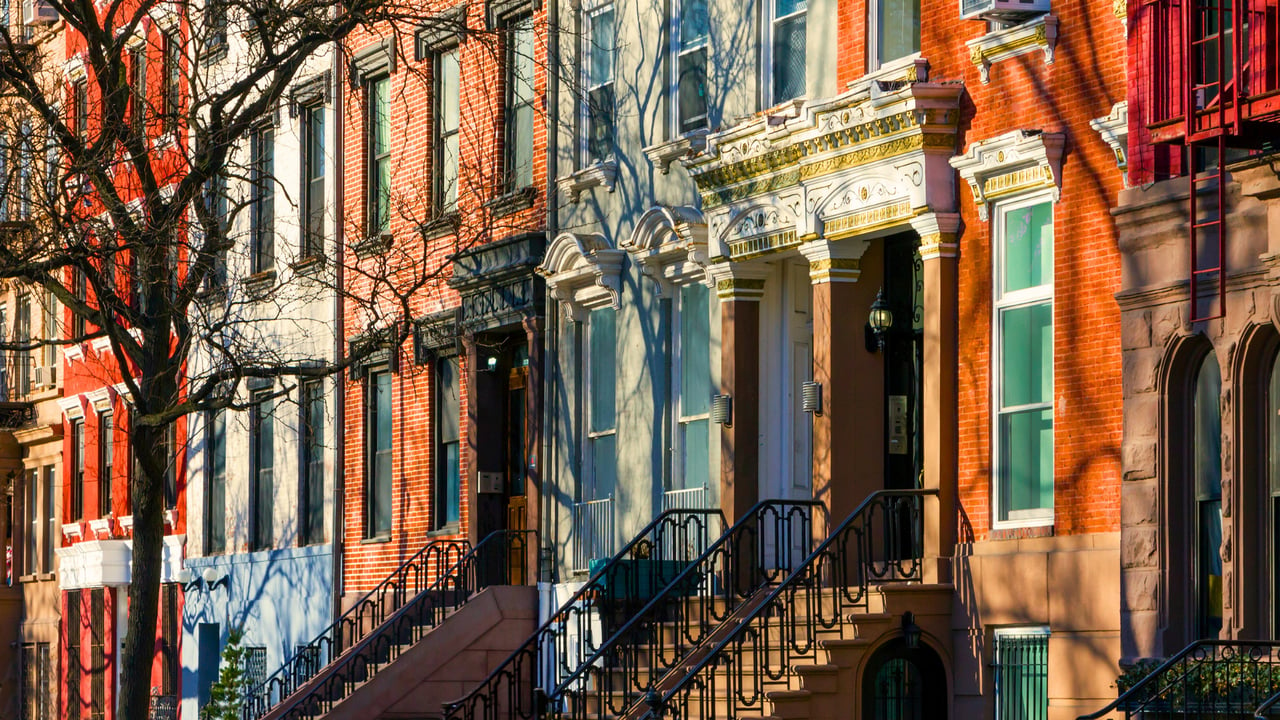
People ask us constantly which Brooklyn neighborhood is "the best." The honest answer is that it depends entirely on how you live, where you work, how much you have to spend, and what kind of building you want to wake up in every morning. What we can tell you is exactly what each neighborhood delivers, what it costs, and who tends to thrive there. We work across all of these markets, and this is what we actually see on the ground.
Park Slope
Park Slope is the neighborhood that people often picture when they imagine Brooklyn at its best: tree-lined streets, intact brownstone rows, Prospect Park at the front door, and a commercial strip on Fifth and Seventh Avenues that covers everything from coffee to hardware to serious restaurants. It has been one of Brooklyn's most desirable addresses for decades, and the market reflects that durability.
Price ranges in Park Slope sit roughly between $900 per square foot on the lower end and $1,400 per square foot or more for renovated, well-proportioned homes on the good blocks. A full-floor condo in a converted brownstone will run $1.1M to $1.6M depending on condition and floor. A single-family townhouse or brownstone in the north Slope, particularly between Flatbush Avenue and Third Street, will start around $3.5M and climb well past $5M for the wide houses with good exposures and original detail intact.
Who belongs here: Families with children who want to be inside the PS 321 or PS 10 zones, buyers who want walkability without sacrificing space, and people who want a neighborhood with genuine permanence. The demographic skews toward professionals in their late 30s through 50s, many of whom have lived in Brooklyn for a while and are making their long-term move.
Commute: Exceptional. The F and G trains run under Fourth Avenue, and the 2 and 3 run along Eastern Parkway. You can be in midtown in 25 to 35 minutes. That accessibility has sustained Park Slope's pricing through multiple market cycles.
Brooklyn Heights
Brooklyn Heights is Brooklyn's oldest and most architecturally cohesive neighborhood, and it carries itself accordingly. The housing stock ranges from Federal-era rowhouses on Willow and Cranberry Streets to solid pre-war limestone buildings on Montague, to larger apartment buildings near the water. The Brooklyn Heights Promenade offers some of the most singular views of lower Manhattan in existence, and the neighborhood borders Cobble Hill to the south and sits directly across from the Financial District.
Pricing here reflects the scarcity and prestige of the product. Condos in converted buildings run from $1,100 to $1,500 per square foot. Single-family townhouses, especially on the historic landmark streets, start around $4M and climb toward $8M or higher for the grandest examples. New construction exists but is limited. The neighborhood is almost entirely built out, which is part of what keeps values stable.
Who belongs here: Buyers who want a quieter, more residential version of the waterfront experience. People who work in lower Manhattan or the Financial District and want a short commute. Those who care deeply about architectural preservation and walkable access to the Brooklyn Bridge Park.
Commute: Excellent. The 2, 3, 4, 5, A, C, F, and R trains all run within a reasonable walk, and the walk across the Brooklyn Bridge is a genuine option for those going to lower Manhattan.
DUMBO
DUMBO stands for Down Under the Manhattan Bridge Overpass, and it has transformed from an industrial backwater into one of Brooklyn's most expensive neighborhoods over the past 25 years. The housing stock is almost entirely converted warehouse lofts and newer condominium towers. Ceilings are high, square footage runs large, and the light in the best units is spectacular. The cobblestone streets and granite-block pavers give it a look that photographs well, which has made it a magnet for people who want that combination of scale and design.
Pricing in DUMBO is among the highest in Brooklyn. Expect $1,400 to $1,800 per square foot for well-positioned units in buildings like One John Street, 1 Main Street, or the newer towers along the waterfront. Two-bedroom units routinely trade above $2M. Three-bedrooms and penthouses push considerably higher.
Who belongs here: Buyers who want the loft lifestyle, meaningful square footage, and proximity to both the waterfront park and the bridge. Tech and creative industry buyers who work in or near the Brooklyn Tech Triangle. People who prioritize a specific architectural experience over proximity to traditional neighborhood amenities like a supermarket on the corner.
Commute: Good. The A, C, and F trains are accessible at High Street and York Street, and the walk to lower Manhattan over the bridge is genuinely pleasant when the weather allows.
Carroll Gardens
Carroll Gardens has one of the most intact Italian-American residential blocks in New York City, and parts of the neighborhood still have that character, particularly on the garden blocks between Court and Henry Streets where front gardens extend to the sidewalk in a configuration unique to this neighborhood. It has also evolved significantly, with a restaurant scene on Smith Street and a population that has broadened considerably from its traditional roots.
Pricing sits somewhat below Park Slope but has been closing the gap. Condos run $850 to $1,200 per square foot. Single-family townhouses trade between $2.5M and $4.5M depending on block and condition. The garden blocks command a premium because they are simply different from anything else in Brooklyn.
Who belongs here: People who want slightly more value per square foot than they can find in Park Slope or Cobble Hill, a strong residential character, and access to the F and G trains. Buyers who appreciate the neighborhood's mix of old Brooklyn texture and new Brooklyn energy.
Commute: The F and G trains run under Smith Street, putting most of midtown and lower Manhattan within 30 to 40 minutes.
Cobble Hill
Cobble Hill is a small neighborhood, roughly 15 square blocks, and that compression makes it feel intimate and consistent in a way larger neighborhoods cannot replicate. Atlantic Avenue along the northern edge has a strong food and retail corridor. Court Street is quieter and more residential-feeling. The housing stock is primarily 19th-century rowhouses and brownstones, with limited condo inventory by Brooklyn standards.
Because inventory is constrained, Cobble Hill holds value well and moves quickly when good product comes to market. Pricing runs $1,000 to $1,400 per square foot for condos, and townhouses on the best blocks trade from $3M into the mid-fives.
Who belongs here: Buyers who want an extremely walkable, coherent neighborhood with a strong local identity. People who don't need large-building amenities and want to be in a house or a small condo building. It skews slightly older in buyer profile than Williamsburg or Greenpoint.
Commute: F and G trains on Bergen Street, and the 2, 3, 4, 5 on Atlantic Avenue are all within walking distance.
Boerum Hill
Boerum Hill sits east of Cobble Hill and south of downtown Brooklyn. It has gentrified considerably over the past decade and offers some of the best value among the brownstone belt neighborhoods. Atlantic Avenue and Smith Street provide commercial activity, and the neighborhood benefits from proximity to the Barclays Center transit hub without suffering the game-night congestion because most of the residential streets sit far enough away to insulate from it.
Condo pricing runs $800 to $1,150 per square foot. Townhouses are in the $2M to $3.5M range, with the blocks closer to Bergen Street and Pacific Street fetching the higher end of that spread.
Who belongs here: Buyers who want brownstone belt character at a somewhat lower price point, particularly those who are priced out of Cobble Hill or Carroll Gardens.
Commute: Exceptional transit access. The A, C, G, F, 2, 3, 4, 5, B, D, N, Q, and R trains all converge around Atlantic Terminal and Barclays, making this one of the best-connected spots in Brooklyn.
Clinton Hill
Clinton Hill is a neighborhood that has been ascending for 15 years and still offers value relative to Park Slope or Carroll Gardens. It has some of the grandest rowhouses and freestanding mansions in Brooklyn, along with a strong Pratt Institute presence that gives the neighborhood an artistic undertone. The housing stock is varied, ranging from large single-family homes on DeKalb and Washington Avenues to converted buildings and newer condominium development.
Condo pricing runs $750 to $1,050 per square foot. Townhouses span a wide range from $1.8M to $4M or more for the exceptional examples on Underhill or Clinton Avenues.
Who belongs here: Buyers who want significant space and architectural character at a price point below the brownstone belt's top tier. Artists, academics, and creative professionals tend to gravitate here.
Commute: The C train on Clinton and Washington Avenues, and the G train on Classon Avenue provide access to most of the city within 35 to 45 minutes to midtown.
Fort Greene
Fort Greene sits next to Clinton Hill and shares some of its character, but it has a more developed restaurant and cultural scene centered around DeKalb Avenue and the area around BAM (Brooklyn Academy of Music). The park at the center of the neighborhood is beautiful and well-used. Housing stock includes renovated brownstones, converted apartment buildings, and a small amount of new construction.
Pricing runs parallel to Clinton Hill, with condos at $800 to $1,100 per square foot and townhouses in the $2M to $4M range for most of what trades. Blocks immediately adjacent to the park command a notable premium.
Who belongs here: Buyers who want a lively cultural scene, proximity to BAM and the surrounding arts district, and access to strong transit. It attracts buyers who want neighborhood life without the quieter, more suburban feel of Park Slope.
Commute: Multiple C train stations, G train access on Fulton, and proximity to downtown Brooklyn's transit hub make Fort Greene well-connected.
Prospect Heights
Prospect Heights has emerged as one of Brooklyn's most competitive markets over the past several years. It sits at the convergence of several desirable draws: Grand Army Plaza and the entrance to Prospect Park, the Brooklyn Museum, the Brooklyn Botanic Garden, and Vanderbilt Avenue, which has become one of the better restaurant and bar streets in Brooklyn. The housing stock mixes brownstones and pre-war apartment buildings with some newer condo development.
Pricing has been rising faster than neighboring Crown Heights. Condos run $900 to $1,250 per square foot. Townhouses in the blocks closest to the park start around $2.5M and climb toward $4.5M for the best examples.
Who belongs here: Buyers who want proximity to Prospect Park and the museum strip without paying full Park Slope prices. People who prioritize restaurant and nightlife access alongside green space.
Commute: The 2 and 3 trains run along Eastern Parkway, and the B and Q trains stop at Grand Army Plaza, providing fast service to midtown in about 30 minutes.
Crown Heights
Crown Heights offers some of the best value in central Brooklyn. The neighborhood has a strong Caribbean and African-American cultural identity alongside a growing population of transplants attracted by the price-to-space ratio. The housing stock includes large pre-war apartment buildings and intact brownstone rows on Rogers, Nostrand, and New York Avenues. Franklin Avenue has developed into a genuine local commercial corridor with restaurants, bars, and cafes.
Condos run $650 to $950 per square foot, representing real value relative to the surrounding neighborhoods. Townhouses trade between $1.5M and $3M for renovated examples, with some untouched properties still available below those levels for buyers comfortable with renovation projects.
Who belongs here: Buyers who prioritize space and value over prestige address, people who want a neighborhood with genuine cultural depth, and buyers who believe the trajectory of Franklin Avenue and the surroundings points toward continued appreciation.
Commute: The 2, 3, 4, and 5 trains run along Eastern Parkway and Nostrand Avenue, providing solid access to midtown and lower Manhattan.
Williamsburg
Williamsburg, particularly the waterfront and the blocks between Bedford Avenue and the water, is now fully mature as a luxury market. The condo towers along the East River waterfront, buildings like One Williamsburg and the various projects on North 5th and North 4th, trade at pricing that competes with Manhattan north of 14th Street. The neighborhood has some of the best restaurants in Brooklyn, strong nightlife, and the Bedford Avenue L train corridor has one of the most reliable transit connections in the outer boroughs.
Waterfront condos run $1,400 to $2,000 per square foot. Interior condos away from the water pull back to $900 to $1,300 depending on building and position. Townhouses in Williamsburg are rarer but trade between $2.5M and $5M for good ones on the residential streets south of Metropolitan Avenue.
Who belongs here: Buyers who want the densest urban lifestyle in Brooklyn, proximity to Manhattan via the L train, access to the waterfront, and don't need the suburban quietness of the brownstone neighborhoods. Media, tech, and finance buyers who work in lower Manhattan or want short access to the whole city.
Commute: The L train to Union Square runs every few minutes at peak hours and remains one of Brooklyn's fastest Manhattan connections. The G train on Lorimer and Metropolitan provides cross-borough access without going into Manhattan.
Greenpoint
Greenpoint sits at the northern tip of Brooklyn, bordering Long Island City in Queens. It has maintained a stronger Polish-American identity than Williamsburg and offers a slightly quieter, more residential character. The waterfront here has developed significantly with new condominium buildings, some of which have direct water views toward Manhattan. The neighborhood also has a strong independent restaurant and coffee scene along Manhattan Avenue and Nassau Avenue.
Waterfront condos run $1,200 to $1,700 per square foot. Interior condos and conversions in the landmarked blocks pull back to $800 to $1,100. Single-family townhouses trade between $2M and $3.5M for good examples.
Who belongs here: Buyers who want Williamsburg's general character with slightly more breathing room, people who work in Long Island City or Manhattan and want the G train connection, and those attracted to the neighborhood's more established, less scene-driven personality.
Commute: The G train runs from Greenpoint Avenue and Nassau Avenue north to Long Island City and south through Brooklyn. The L train at Bedford and Lorimer in Williamsburg is a short walk for many Greenpoint residents. The commute to midtown Manhattan is longer than from neighborhoods with express train access, roughly 40 to 50 minutes depending on origin point.
Bay Ridge
Bay Ridge is the neighborhood where buyers who want serious space and real value come. It sits in the southwestern corner of Brooklyn along the water, with Narrows Avenue and Shore Road providing views of the Verrazzano and the Upper New York Bay. The housing stock is different from central Brooklyn: more detached and semi-detached houses, larger apartment buildings, and far fewer brownstones. The commercial strips on Third Avenue and Fifth Avenue serve a middle-class residential neighborhood that has changed less than many parts of Brooklyn over the past 20 years.
Pricing is among the most accessible in Brooklyn for the amount of space you receive. Condos run $550 to $800 per square foot. Single-family and semi-detached houses trade between $1.2M and $2.5M for good examples in good condition.
Who belongs here: Buyers who need significant square footage per dollar, people who drive to work or work in Staten Island or New Jersey, buyers with children who want a more suburban residential environment, and those who value water views at a price point well below DUMBO or Brooklyn Heights.
Commute: The R train runs along Fourth Avenue and provides access to lower Manhattan and midtown, but the trip is long, often 45 to 60 minutes from the deeper Bay Ridge stations. This is the tradeoff buyers make for the additional space and value.
How to Choose
The question we ask buyers before we do anything else is not which neighborhood they like best. It's: where do you need to be within 30 minutes, how much space do you need, and what does your life actually look like day to day. Then we match the answer to the market.
If commute time to midtown is a hard constraint, Park Slope, Prospect Heights, and Fort Greene give you the best combination of transit access and neighborhood quality. If space is the priority and you're flexible on neighborhood character, Crown Heights and Bay Ridge deliver square footage at price points that simply aren't available in the brownstone belt. If the architectural experience of a converted warehouse or a true pre-war loft matters to you, DUMBO and Williamsburg's waterfront are your markets.
What we also tell buyers is this: pick the neighborhood, then pick the block. Within any of these areas, a block can shift the value significantly. A brownstone on a fully renovated, tree-lined block in Carroll Gardens is worth materially more than a comparable house two blocks away on a street with deferred maintenance and heavier foot traffic. The neighborhood sets the floor; the specific location sets the ceiling.
We know these markets in detail. If you're trying to figure out where you belong in Brooklyn, that's a conversation we're good at.

Fouad Rahmé
Founder, the Rahmé Team at Compass
The Rahmé Team advises buyers, sellers, investors, and developers across Brooklyn, with 40 years of combined experience, more than 1,000 clients and transactions, and over $800 million in career sales. RealTrends Verified ranks the team in the top 1.5% of real estate professionals nationwide.
Contact the team or call (718) 233-3365.
Ready to find your Brooklyn neighborhood?
The Rahmé Team works across all of Brooklyn's core neighborhoods and can help you match your lifestyle, commute, and budget to the right market. Call (718) 233-3365 or contact us.
Frequently Asked Questions
Which Brooklyn neighborhood offers the best value for buyers right now?
Crown Heights and Prospect Lefferts Gardens consistently offer more square footage per dollar than the brownstone belt neighborhoods, and both have seen meaningful improvements in retail and dining over the past several years. Bay Ridge offers large homes at lower price points with good transit access and a strong local community. The definition of "best value" depends on what you need: space, commute, neighborhood character, and appreciation potential all factor in differently for different buyers.
Is Brooklyn Heights worth the price premium?
For buyers who value walkability to lower Manhattan, historic architecture, quiet tree-lined blocks, and a genuine sense of neighborhood permanence, yes. Brooklyn Heights commands a premium for real reasons, and properties there have held their value consistently over long periods. If you are primarily optimizing for interior square footage per dollar, you will find better options in other neighborhoods. The Heights is about the whole living experience, not just the apartment.
Which Brooklyn neighborhoods are up and coming right now?
Prospect Lefferts Gardens, East Flatbush, and Bushwick continue to attract buyers ahead of further price appreciation, though each carries different risk and lifestyle profiles. Gowanus has significant new development underway around the rezoning area. The challenge with up-and-coming neighborhoods is that the timeline for appreciation is rarely predictable, and buyers need to be comfortable with the neighborhood as it exists today, not just as it might look in five years.
How do I know if I'm overpaying for a Brooklyn home?
Ask your broker to pull comparable sales for similar properties within the same neighborhood, the same building type, and a similar condition level within the past six months. Price per square foot is a useful starting point but not the whole picture; lot size, ceiling height, outdoor space, and condition all affect value significantly. A broker who knows the specific neighborhood can tell you where a given property sits relative to recent transactions and whether the asking price is reasonable.
Does the specific block matter as much as the neighborhood in Brooklyn?
In many cases, yes. Within a single Brooklyn neighborhood, values can shift meaningfully from block to block based on the quality of the building stock, tree coverage, street character, and proximity to commercial corridors or parks. A brownstone on one of Carroll Gardens' best tree-lined blocks commands a different price than a comparable building two blocks away near a busier street. Your broker should give you a block-level read, not just a neighborhood-level one.